California's pathways to 30x30: progress, challenges, and Prop. 4

California has now passed the halfway mark in its effort to conserve 30% of its lands and coastal waters by 2030. According to the latest Pathways to 30×30 Annual Progress Report, the state has conserved 26.1% of its lands and 21.9% of its coastal waters.
Before we get into the numbers, it’s important to understand what qualifies as “conserved.” As defined by Pathways, qualified 30×30 conservation areas are “land and coastal water areas that are durably protected and managed to sustain functional ecosystems, both intact and restored, and the diversity of life that they support.” To be conserved, land and water must not only be protected from development, but also actively cared for over the long term through stewardship and adaptive management that integrates the best available science and Traditional Ecological Knowledge, ensuring ecosystems can function and respond to change over time.
Over the past year, California advanced its 30×30 goals by approximately one percentage point—adding about 853,000 acres of conserved land and 191,000 acres of coastal waters toward the totals. In a state as big as California, that one percentage point represents a huge amount of land and water, but we’ll need to pick up the pace if we want to reach 30% by 2030.
In November 2024, California voters approved Proposition 4, a climate and nature-focused bond intended to support biodiversity, climate resilience, and conservation work across the state. The approval of Prop 4 demonstrated strong public support—over 65% in Sonoma County—for protecting nature. However, much of the Prop 4 funding is currently frozen, creating uncertainty about when and how those resources will be mobilized to support 30×30 actions on the ground.
“Getting Prop 4 funds released is critical in advancing 30×30 goals,” Ariana Rickard, Policy Director, says. “We need our legislators to pass legislation to exempt Proposition 4 funds from the Administrative Procedure Act (APA) process. This will allow agencies—like CAL FIRE, Wildlife Conservation Board, the State Coastal Conservancy—to get Prop 4 funding out the door for urgent climate, wildfire resilience, water, and conservation projects.”
Meeting the 30×30 target will require conserving millions more acres of land and water over the next four years. This will demand sustained funding, strong political leadership, and coordination among local land trusts, tribes, public agencies, and community partners.
In Sonoma County, conservation efforts are making slow but meaningful strides. Local data from the Bay Area Greenprint shows that, as of January 2026, Sonoma County has conserved roughly 23% of its land base—up 1% from last year. If we were to rank Bay Area counties by the percentage of land protected by fee ownership or conservation easement, that puts us at 7th out of 9th place—above San Francisco but below Alameda counties. It’s not a competition, though! The more land and water protected, the better for everyone. We’re all in this together! It does however mean that we have to increase the pace and scale of this effort to reach our goals.
While land protection has advanced steadily, water conservation remains a key challenge across the state. Coastal waters and inland aquatic ecosystems—like freshwater streams and wetlands—are critical for biodiversity, carbon sequestration, and climate adaptation, yet they remain the areas furthest from 30×30 targets. Accelerating protection and restoration of marshes, estuaries, rivers, and coastal waters is an urgent priority.
Looking ahead, the path to 30×30 will depend on using public and private resources effectively. That includes making strategic investments, like those promised through Prop 4, paired with regional conservation strategies and community partnerships. Conservation at this scale will require sustained commitment and innovative approaches to protecting nature in a changing climate, both meteorological and political.
The progress documented in this latest report shows that 30×30 is attainable! California has built a strong foundation with clear conservation pathways in place, sustained funding mechanisms established, improved systems for data tracking, and active partnerships across tribes, land trusts, agencies, and communities statewide. The question now is less whether California can reach its conservation goals, but more how quickly and equitably we can get there—especially for our coastal waters.
Need a refresher on 30×30? Learn more about 30×30 here and how our work supports 30×30 here.
Los caminos de California hacia el 30x30: avances, retos y la Prop. 4
California ya superó la mitad del objetivo de su esfuerzo por conservar el 30 % de sus tierras y aguas costeras para 2030. Según el último Informe de progreso anual sobre las vías hacia 30×30, el estado conservó el 26,1 % de sus tierras y el 21,9 % de sus aguas costeras.
Antes de entrar en las cifras, es importante que comprendamos qué se considera “conservado”. Según la definición del informe, las áreas de conservación calificadas como 30×30 son “zonas de tierra y de agua costera protegidas y gestionadas de forma duradera para mantener ecosistemas funcionales, tanto intactos como restaurados, y la diversidad de vida que estos sustentan”. Para conservarse, la tierra y el agua no sólo se deben proteger del desarrollo urbano, sino que también se deben cuidar activamente a largo plazo mediante una gestión y protección responsable y adaptativa que integre los mejores conocimientos científicos disponibles y los Conocimientos Ecológicos Tradicionales (Traditional Ecological Knowledge, TEK), garantizando que los ecosistemas puedan funcionar y responder a los cambios a lo largo del tiempo.
Actualizaciones en todo el estado
El año pasado, California avanzó aproximadamente un punto porcentual hacia sus objetivos 30×30, añadiendo a la cifra total unos 853.000 acres de tierras conservadas y 191.000 acres de aguas costeras. En un estado tan grande como California, ese punto porcentual representa una gran cantidad de tierra y agua, pero tendremos que acelerar el ritmo si queremos alcanzar el 30 % para 2030.
En noviembre de 2024, los votantes de California aprobaron la Proposición 4, un bono centrado en el clima y la naturaleza, destinado a apoyar la biodiversidad, la resiliencia climática y el trabajo de conservación en todo el estado. El público demostró su fuerte apoyo a la protección de la naturaleza con la aprobación de la Proposición 4: más del 65 % de los votantes en Condado de Sonoma estuvieron de acuerdo. Sin embargo, en este momento gran parte de la financiación de la Proposición 4 está bloqueada, lo que crea incertidumbre sobre cuándo y cómo se movilizarán esos recursos para apoyar las acciones de los objetivos 30×30 en el campo.
Ariana Rickard, directora de política, afirma: “Conseguir que se liberen los fondos de la Proposición 4 es fundamental para avanzar en los objetivos de 30×30. Necesitamos que nuestros legisladores aprueben una legislación que exima los fondos de la Proposición 4 del proceso de la Ley de Procedimiento Administrativo (Administrative Procedure Act, APA). Esto permitirá que las agencias (como CAL FIRE, Wildlife Conservation Board, State Coastal Conservancy) obtengan fondos de la Proposición 4 y puedan utilizarlos para proyectos urgentes de clima, resiliencia a los incendios forestales, agua y conservación”.
Cumplir el objetivo 30×30 exigirá conservar millones de acres más de tierra y agua durante los próximos cuatro años. Esto exigirá una financiación sostenida, un fuerte liderazgo político y la coordinación entre los fideicomisos de tierras locales, las tribus, los organismos públicos y los socios comunitarios.
Progreso en el condado de Sonoma
En el condado de Sonoma, los esfuerzos de conservación avanzan de manera lenta pero significativa. Los datos locales de Bay Area Greenprint muestran que, en enero de 2026, el condado de Sonoma ya conservó aproximadamente el 23 % de su base territorial, un 1 % más que el año pasado. Si tuviéramos que clasificar los condados del Área de la Bahía por el porcentaje de tierras protegidas por derechos de propiedad o servidumbres de conservación, nos situaríamos en el 7º de 9 lugares: por encima del condado de San Francisco pero por debajo del condado de Alameda. ¡Pero no es una competencia! Cuanta más tierra y agua se protejan, mejor es para todos. Estamos todos juntos en esta tarea. Sin embargo, esto significa que tenemos que aumentar el ritmo y la escala de este esfuerzo para alcanzar nuestros objetivos.
Desafíos
Aunque la protección del terreno ha avanzado de forma constante, la conservación del agua sigue siendo un desafío clave en todo el estado. Las aguas costeras y los ecosistemas acuáticos en el interior (como los arroyos de agua dulce y los humedales) son fundamentales para la biodiversidad, el secuestro de carbono y la adaptación al clima. Sin embargo, siguen siendo las zonas más alejadas de los objetivos del 30×30. Acelerar la protección y restauración de marismas, estuarios, ríos y aguas costeras es una prioridad urgente.
De cara al futuro, la vía hacia el 30×30 dependerá de la utilización eficaz de los recursos públicos y privados. Eso incluye realizar inversiones estratégicas, como las prometidas mediante la Proposición 4, junto con estrategias regionales de conservación y asociaciones comunitarias. La conservación a esta escala exigirá un compromiso sostenido y planteos innovadores para proteger la naturaleza en un clima cambiante, tanto meteorológico como político.
¡Los avances documentados en este último informe demuestran que el objetivo 30×30 sí se puede alcanzar! California ha construido una base sólida con vías de conservación claras, mecanismos de financiación sostenidos, sistemas de seguimiento de datos mejorados y asociaciones activas entre tribus, fideicomisos de tierras, agencias y comunidades de todo el estado. El asunto ahora no es tanto si California puede alcanzar sus objetivos de conservación, sino más bien con qué rapidez y equitatividad podemos conseguirlos, especialmente en cuanto a nuestras aguas costeras.
¿Necesitas un repaso sobre el objetivo 30×30? Puedes obtener más información sobre el objetivo 30×30 aquí y sobre cómo nuestro trabajo apoya el objetivo 30×30 aquí.
Are the birds alright?

There are innumerable reasons to love birds— their stylish plumage, their intricate vocalizations, their graceful and playful antics. They’re also sensitive and highly adaptable, responding quickly to changes in their environment. Because of this, monitoring birds can give us insight into how their ecosystems are faring, too.
To find out how local avian populations are doing, the San Francisco Bay State of the Birds report has tracked the trends observed in our local avian populations and combines them with long-term monitoring data about their habitats across the estuary— tidal marshes, mudflats, and open waters— tracking whether conservation and restoration efforts are delivering measurable results. In 2025, a new website was launched that lets us take a peek into datasets, key updates, and more.
The State of the Birds initiative was created by the San Francisco Bay Joint Venture in partnership with Point Blue Conservation Science to protect migratory birds. In San Francisco Bay, Point Blue’s keystone monitoring efforts began 30 years ago , providing one of the most comprehensive records of tidal marsh bird populations anywhere in the region. More recent datasets, including the Pacific Flyway Shorebird Survey led by Point Blue since 2010, expand that lens to tidal flats and migratory shorebirds across the West Coast.
Together, these datasets form the scientific backbone of the State of the Birds report. They allow researchers and land managers to evaluate habitat quality over time, identify emerging threats, and adjust conservation strategies based on scientific evidence.
Overall, some clear trends emerge. Marsh birds—those endemic species that depend on tidal wetland habitats around the Bay—are doing well. Shorebird populations, on the other hand, are declining. That’s a trend seen across the Pacific Flyway, not just in the Bay Area.
Even as some bird populations continue to struggle locally and across the Pacific Flyway, investments in habitat restoration are clearly paying off. Since voters approved Measure AA in 2016, over 7,800 of acres around San Francisco Bay have been restored with Measure AA funding. These successful restoration efforts demonstrate the collective power of science and regional collaboration backed by sustained public support, united by the shared cause of caring for the bay. Continued monitoring will be essential to understand what’s working and to guide the next chapter of bay stewardship.
This is the science that’s leading us to put resources into restoration efforts for endangered Ridgway’s rails in the Sonoma Creek Baylands—and the data shows that it’s working!
The website features three conservation success stories from around the bay, and our work in the Baylands is one of them. Here’s what Julian Meisler, associate director of stewardship and Baylands program manager reports:
Restoring Habitat in the North Bay: Sears Point to the Sonoma Baylands
By Julian Meisler
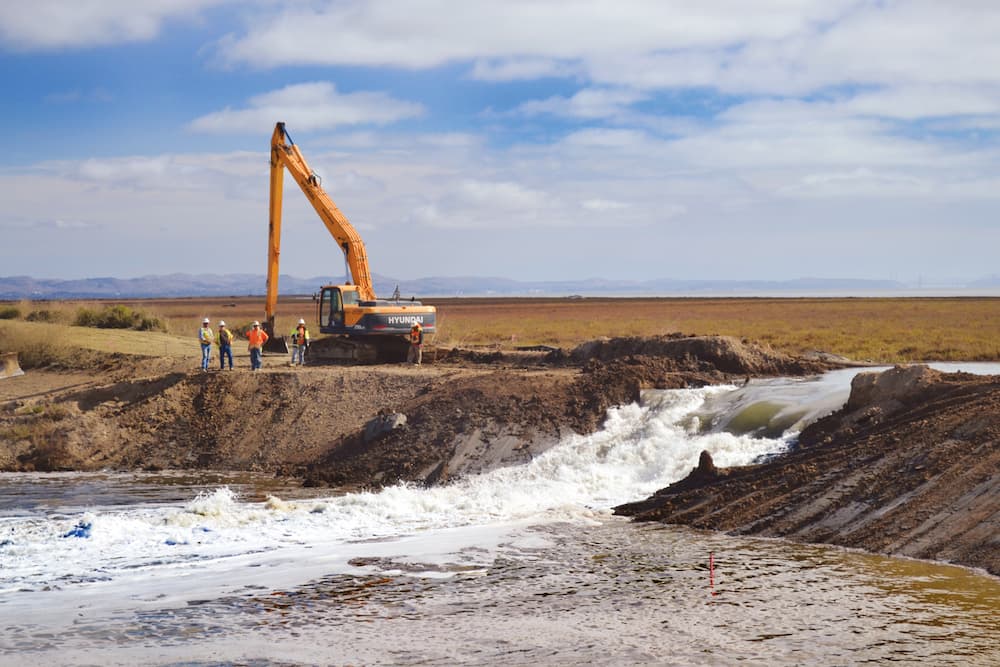
In October 2015, Sonoma Land Trust, Ducks Unlimited, and partners breached the century-old levee at Sears Point, restoring tidal action to 970 acres of former agricultural baylands on the north shore of San Pablo Bay. The response from wildlife was immediate—seals, otters, bat rays, schools of fish, and thousands of shorebirds and waterfowl returned to the site within weeks. Since then, Sonoma Land Trust has conducted more than seventy surveys to document how bird use has shifted as the habitat evolves. Initially, the deeper waters supported diving ducks, such as Canvasbacks and scaup, but as sediment has accumulated and created expansive mudflats, large numbers of shorebirds, including Western and Least Sandpipers, now utilize the area during migration.
As the site continues to accumulate sediment and transition into a vegetated marsh, cordgrass and pickleweed are establishing, setting the stage for marsh-dependent birds. The endangered California Ridgway’s Rail is expected to colonize first, followed by Black Rails. Nearby examples point to this trajectory, such as the Sonoma Baylands site, restored in the mid-1990s and now part of the San Pablo Bay National Wildlife Refuge, which supports some of the highest densities of Ridgway’s Rail in the North Bay.
Sears Point remains in transition, moving from open subtidal habitat toward a more complex tidal marsh system. Continued monitoring will be critical to tracking these changes and understanding how the site supports a diverse bird community over time. Like other large-scale restoration projects in the bay, Sears Point illustrates both the challenges and the promise of bringing tidal wetlands back for the benefit of wildlife and people alike.
Nature-based solutions rank top choice for climate change

As climate pressures intensify across Sonoma County—from hotter summers to stronger storms and shifting water cycles—nature-based solutions are becoming the most effective tools we have for adapting to change. These approaches work by restoring natural systems—like wetlands, floodplains, forests, grasslands, and streams—so they can do what they’ve always done best: slow floodwaters, store carbon, filter and recharge water, reduce wildfire risk, and support wildlife and human communities at the same time.
We’ve been applying nature-based solutions across Sonoma County since long before the term was coined. For example, we know that healthy wetlands slow floodwaters and recharge groundwater. By restoring floodplains and reconnecting them to their creeks, we can prevent flooding further downstream while allowing water to sink into the ground. Additionally, when land is wet, it’s more resilient to fire. Another thing we know is that protecting large, connected landscapes gives plants and wildlife room to adapt as conditions change. Healthy creeks, wetlands, grasslands, and forests stabilize soils, store carbon, and help buffer communities from extreme heat, drought, flooding, and fire. After 50 years of working with landowners, scientists, and communities, we’ve seen again and again that when nature is allowed to do what it does best, it becomes one of our most powerful tools for climate resilience.
At our Sears Point Ranch Preserve, restoration of grasslands, streams, and wetlands is helping reestablish natural hydrology while keeping the land in working agriculture. The Lakeville Creek restoration project on the southern slope, is returning a deeply eroded channel to a more natural, gently-inclined valley floor, allowing water to spread out, soak in, and support wetlands, raising the water table and improving resilience to drought and wildfire. (Check out our new video for an update on the Lakeville Creek restoration).
We have a lot of exciting work in motion in the Russian River watershed, where we’re focused on securing freshwater flows, restoring riparian corridors, and reconnecting creeks and floodplains to support salmon and steelhead, all while improving water reliability during dry months. These efforts are guided by long-term strategy and decades of investment.
Nature-based solutions also play an important role in community spaces. Expanding parks, greenways, and tree canopy helps cool neighborhoods, manage stormwater, and bring nature closer to where people live.
Across all of this work, the emphasis is on how landscapes function over time—how water moves, how soils hold moisture, and how ecosystems adapt. In a changing climate, solutions that work with natural processes remain the most durable and effective tools we have.
One nature-based solution we’re really excited about is our work in the Sonoma Baylands that’s entering it’s next chapter. Once restored, it will improve rare wetland habitat for tens of thousands of birds and riparian wildlife while helping the North Bay adapt to sea level rise. If you’re on our mailing list, keep an eye out in your mailbox for a special edition print!
What We Can Do Together: A Powerful Start to 2026

2025 Fundraising Goal Met
We’re beginning 2026 with tremendous momentum, made possible by a remarkable community of more than 1,400 donors who came together to support Sonoma Land Trust’s End of Year Challenge. United by a shared love for Sonoma County, you helped us reach an ambitious $1.8 million goal, including $185,000 raised in the final six days of the year. This achievement is a testament to what’s possible when our community acts together.
We are especially grateful to the generous donors who stepped forward with matching gifts during Giving Tuesday and the final matching gift opportunity of the year. Their leadership inspired others to give and multiplied the impact of every contribution at moments when it mattered most.
Because of your collective generosity, Sonoma Land Trust enters the year ahead with strength and resolve. Your support is helping launch one of the largest restoration projects in Bay Area history at the Sonoma Baylands, restoring 10,000 acres of vital wetlands while helping North Bay communities adapt to sea level rise. Thanks to you, we’re securing permanent protection for special places, like Osprey Hill Ranch, that sustain wildlife, support healthy ecosystems, and build climate resilience. We’re also inspiring the next generation through award-winning environmental education and youth programs serving students from third through twelfth grade across Sonoma County.
Thank you for showing what community-powered conservation looks like. Together, you are making a lasting difference today and protecting the lands and waters we love for generations to come.
News
Californians Invited to Help Guide Future of Trails

California is launching a statewide effort to help shape future investments in recreational trails.
Calling all hikers and trail lovers: the California Natural Resources Agency (CNRA) and California State Parks want to hear from you! Starting today, trail users, advocates and professionals can share their experiences and insights by completing an online survey that will help inform the future of trail access and connectivity throughout California.
This is your chance to help blaze a new path forward and guide critical trail investments included in the voter-approved Proposition 4 (Climate Bond). The online survey is open through February 2026, when virtual public meetings are also scheduled for further engagement.
Climate Ride

Attention all cyclists and cycling enthusiasts!
We invite you to join our cycling team in the Green Fondo Climate Ride on May 15-17, 2026. Registration is $75 if you take advantage of the subsidized registration offer before January 15th. The fundraising requirement for each participant is $250.
To join our team:
- Go to the Registration Link:
- Select “Join Our Team” to continue registration
- Choose Sonoma Land Trust as your sole beneficiary so that all your donations support our mission
- Share with others and start fundraising!
Registration is filling quickly, so please register soon.
Even if you’re not able to ride that weekend, there’s still a place for you on our team as a non-riding member.
Welcoming new staff members
Hillary Jarcik, Deputy Director of Philanthropy

Please join us in welcoming our new Deputy Director of Philanthropy Hillary Jarcik. Hillary brings over 15 years of experience in philanthropy and a master’s degree in nonprofit management, with a career dedicated to raising funds for causes she cares deeply about. She is passionate about connecting donors’ values with programs that create meaningful, lasting impact and is proud to call Petaluma home, where she enjoys raising her family and exploring Sonoma County’s hills, rivers, and coastline.
Maryrose Kulick, GIS Program Manager

And we are thrilled to also welcome our new GIS Program Manager Maryrose Kulick. Maryrose joins Sonoma Land Trust as our new GIS Program Manager, bringing eight years of geospatial expertise from the National Park Service and East Bay Regional Park District, along with dual bachelor’s degrees in Geography and English from UCLA. Driven by her love of nature and maps, she values GIS as a tool for understanding land and the connections between people, wildlife, and natural systems, and looks forward to supporting conservation efforts here in Sonoma County.
Free Language of the Land Webinars

Language of the Land:
Soils and Grassland Restoration in California
Wednesday, January 21, 7pm
Soils are wondrous living systems beneath our feet, shaping biodiversity and the landscapes we depend on. Join this talk with Yamina Pressler, Associate Professor of Soil Science and Restoration Ecology at Cal Poly, to dig into how soils form, function, and change—and how everything from tiny soil organisms to plant–soil partnerships can transform restoration in California grasslands. Drawing on work from her Coastal Soil Horizons & Ecology Lab (C-SHEL), she’ll also show you how to start noticing, exploring, and caring for the soils right where you are.
Free outings

Join us out in nature this winter! In addition to our monthly bilingual Familias al Aire Libre/Families Outdoors outing, we’re hosting a series of weekend hikes across the county!
Many of these hikes are in partnership with Sonoma County Ag + Open Space.
Staff recommendation

KneeDeep Times is a great Bay Area-focused digital magazine that covers climate resilience and nature-based solutions in the Bay Area. KneeDeep Times reports stories about how communities, scientists, planners, and local leaders are responding to climate impacts and using natural systems to adapt and build resilience. You can read it online here.