Blog
A land trust grows in Sonoma Valley
The Sonoma Valley Story: Chapter 1
How Sonoma Land Trust got its start and the people who launched a movement!
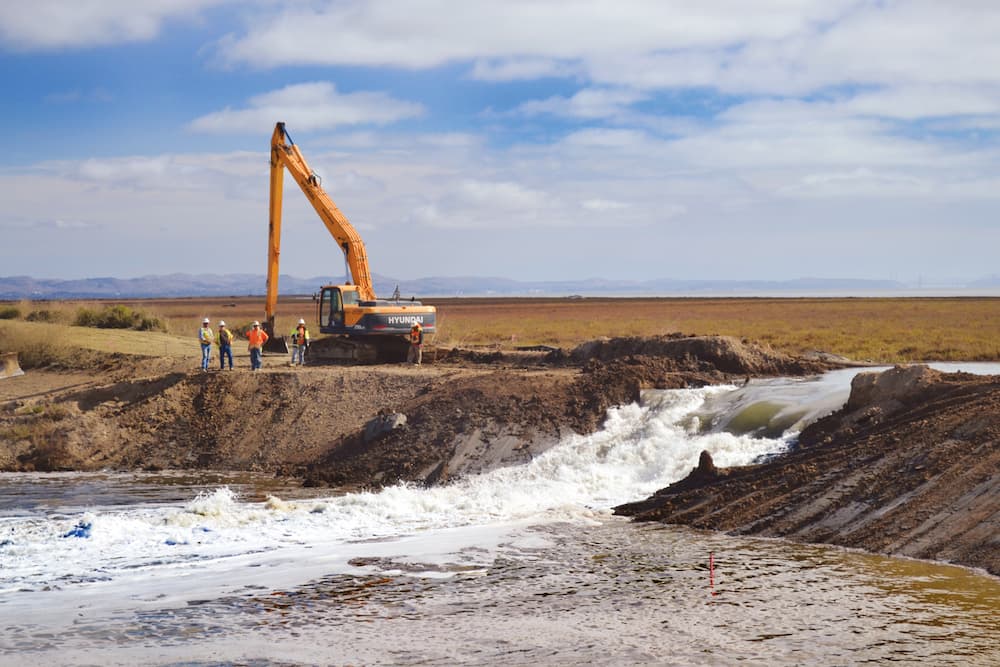
From leading one of the largest wetland restoration projects on the West Coast in the Sonoma Creek Baylands to bold efforts to bring salmon back to Stuart Creek, Sonoma Land Trust today is a nationally recognized leader in conservation and climate resilience, with projects that are held up as models across California and beyond. But 50 years ago, Sonoma Land Trust was just an idea being cooked up around the kitchen tables of concerned and recently galvanized community members in Sonoma Valley.
In the early 1960s, a nuclear power plant was approved and almost built at Bodega Head, next to the then-tiny fishing village of Bodega Bay. Nicknamed “Hole in the Head” for the gaping pit that was dug to house the reactor, it was the local public’s first real awakening to the environmental threats right at their doorsteps. Not only would it have been a visual blight on the beautiful, rugged coast, but the reactor would have sat squarely on top of the San Andreas fault. Officials declared it safe and politicians sided with the energy company, but a grassroots group of environmental organizers were persistent, creative, and determined to do what was right. After three years of demonstrations and contentious legal battles, they finally won in both the court of public opinion and law, and the project was axed.
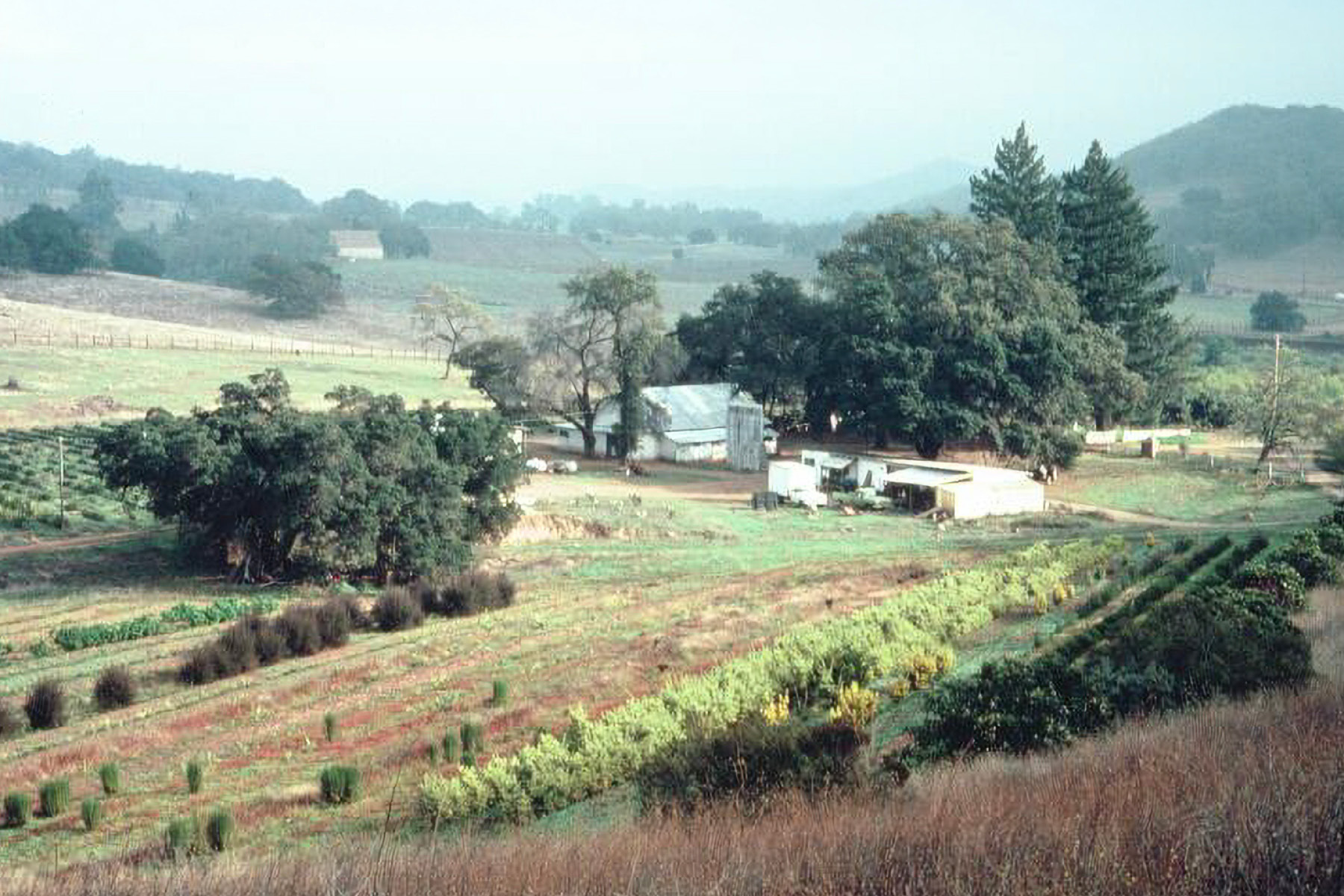
That was the backdrop for Sonoma County. Across the Bay Area, rapid population growth was pushing development into open spaces. Subdivisions were creeping outward as industrial development loomed over the Baylands. And in Sonoma Valley, roads and infrastructure projects threatened to reshape the rugged landscape into something far more gray, sprawling, and suburban. In 1964, Sonoma Valley’s General Plan—the highest-level planning document for the region’s land use—emphasized urban growth and highways. The vision was to expand Highway 12, which runs right down the center of Sonoma Valley, into a four-lane freeway with on- and off-ramps. Sonoma County’s farmlands and open spaces were at risk of being lost to the urban sprawl already seen elsewhere around the Bay Area, and indeed, the entire U.S.
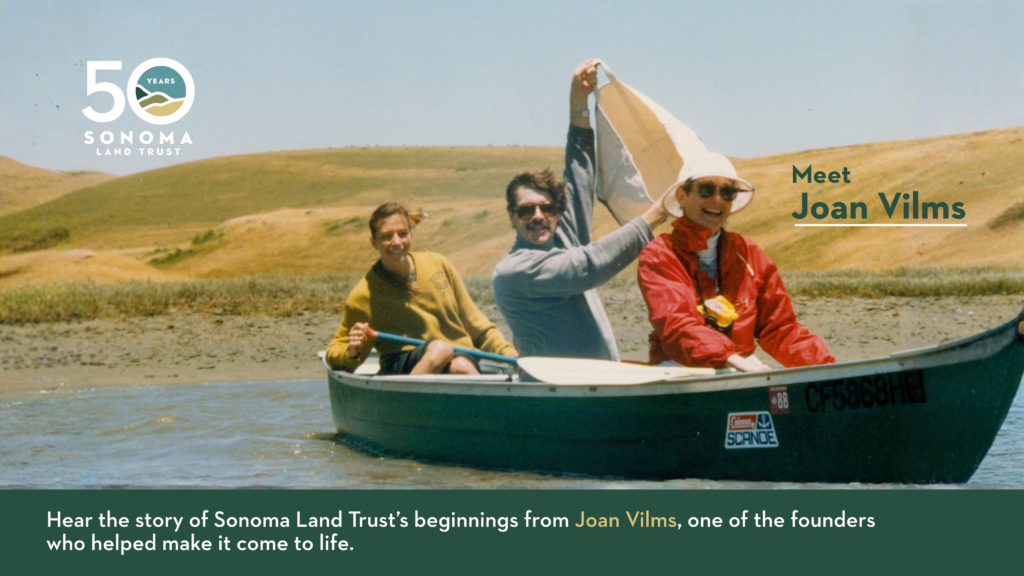
During that time, a young land-use planner named Joan Vilms was working for the county on a Specific Plan for South Sonoma Valley. As town halls and public hearings about Sonoma Valley development progressed, she witnessed many community members coming to the planning meetings, speaking out about the future of the valley—about subdivisions planned for farmland, roads cutting across wetlands, and the possibility that the landscape they loved could disappear within a generation. These people were farmers, journalists, land use planners, artists, environmental advocates, from different social circles and walks of life, but brought together by their connection to Sonoma Valley and way of living close to the land. They started putting their heads together to figure out what they could do to ensure that the land they loved was protected. That early group of people included Luella Williamson, Otto Teller, Marilyn Goode, Paul Jess, Frank Bartholomew, George Nicholas, Phillip Carlson, Ransom Cook, Robert Zinkhan, and William Lynch.
As it turns out, they were in luck. After the Trust for Public Land was founded in San Francisco in 1972, one of its early efforts was to travel to communities across Northern California and encourage residents to create their own local land trusts. Sonoma Valley residents—including Otto Teller and Marilyn Goode—met with representatives from the organization hoping it might take on the work of protecting the Valley’s open spaces. Instead, they were told that the region had too many important places to save for an outside group to manage. In other words, Sonoma needed its own land trust, and on March 30, 1976, Sonoma Land Trust became officially incorporated in the State of California, becoming one of the early pioneers of the movement in the state and helping establish the model of community-based land conservation in the North Bay.
Now they needed help—with maps, connections to landowners, and technical expertise—and they knew just where to find it. Having encountered her during her many trips to the county planning department, Marilyn Goode brought Joan Vilms onto the team. Joan had been working as a land-use planner in Sonoma Valley but was fired along with the rest of the progressive planners in 1976. Vilms agreed to help as a consultant and became the Trust’s first hired professional in March 1977.
At that time, the only reliable way to protect land in perpetuity was to purchase it and hold the deed. There was no legal mechanism that allowed landowners to permanently protect their property while continuing to own it. Zoning was subject to change, and government acquisition to manage land as public parks was expensive and slow. As development pressure increased, large ranches and farms were being subdivided into smaller “ranchettes,” fragmenting landscapes that had once been intact working lands and wildlife habitat.
It was clear that a new tool was needed. Conservation easements and land trusts had already begun taking shape on the East Coast, but the concept had not yet been established in California. Ever ready to do what was needed for the land, Vilms immersed herself in the emerging idea of conservation easements—legal agreements that allow landowners to permanently protect land from development. Through connections with TPL, Vilms even helped Senator John Dunlap write the legislation that would recognize conservation easements in California under state and federal law.
When the California Conservation Easement law went into effect in 1979, it cleared the way for tax benefits for landowners willing to permanently limit development rights on their property, allowing land to be protected while remaining in private ownership. This was a crucial step in bringing more community members in, since many people wanted to keep land in their families.
The first projects soon followed. In December 1978, the Land Trust received its very first donation of land, known as Secret Pasture, from Otto and Anne Teller. In April 1979, Bob Thieriot donated the Little Black Mountain property to the Land Trust as a nature preserve. That same year, the conservation easement for Watson Ranch was donated, covering 530 acres between Petaluma and Cotati. Also in 1979, Sue Smith placed the Land Trust’s first natural areas conservation easement on her property, Nefertierra, protecting 78 acres in the Mark West Creek watershed.
These early projects demonstrated that community-based conservation could work. The Land Trust had a mission, a community of supporters, and now the right people and the right tools to get the work done. But would this new tool—conservation easements—hold up in court? Stay tuned for the next chapter.