Blog
You can’t talk about land without talking about water
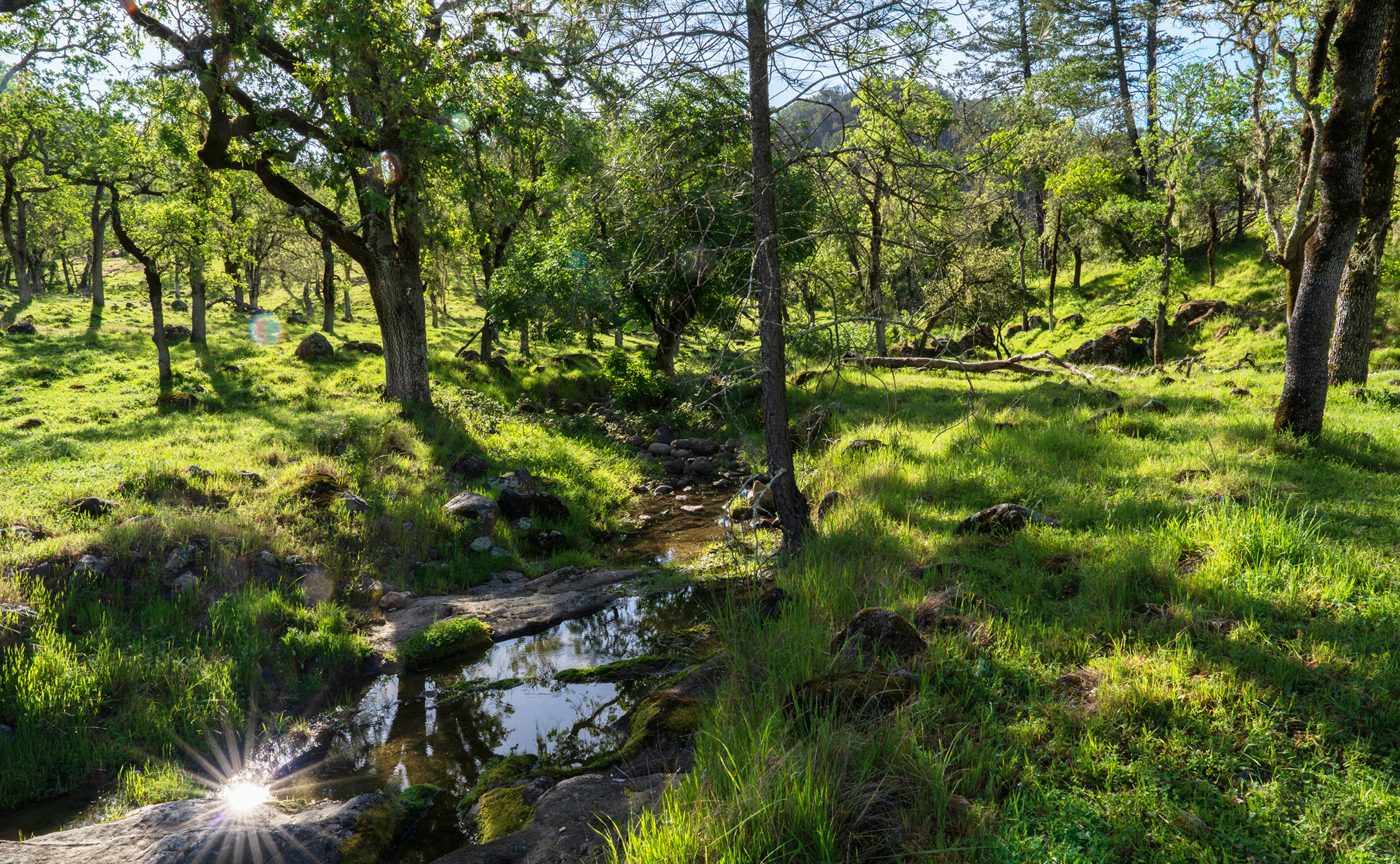
We may be called a “land” trust, but our mission is to protect the lands and the waters of Sonoma County to secure healthy and thriving futures for all. Every acre of land we protect sits somewhere in a watershed. That means this work requires understanding how a watershed functions within a landscape. Sonoma County alone contains over a dozen distinct watersheds, covering more than 1,500 square miles!
What is a watershed?
A watershed is all the land that water travels over before eventually draining into a single body of water, such as a stream, river, lake, or the ocean. The journey starts as rain falls on a hillside, runs downhill, seeps into the soil, and feeds the creeks. Everything flows somewhere.
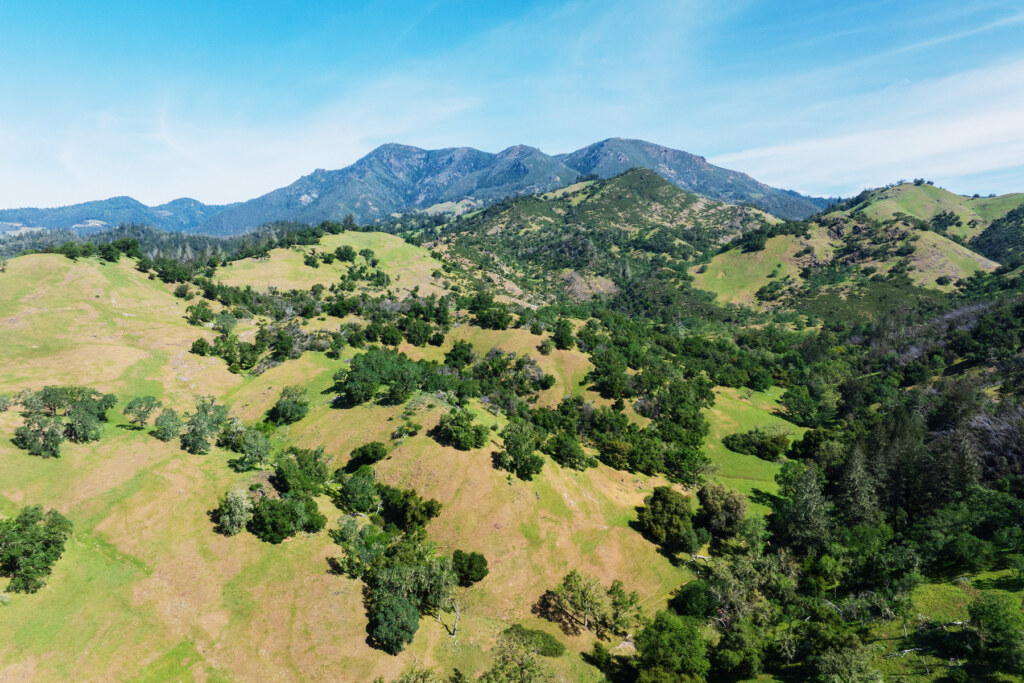
And a watershed isn’t only the rivers, creeks, and wetlands you can see above ground. It also includes groundwater—all the water moving below the surface, filtering through soil and rock into underground aquifers that absorb that water like a sponge. Precipitation, plant uptake, evaporation, human and wildlife use, all shape how much water a watershed holds and where it goes.
Watersheds are divided from one another by ridgelines and peaks, which direct water in different directions. For example, in the Russian River watershed, rain falling on the western slope of the Mayacamas Mountains flows down into the Russian River and eventually out to the Pacific Ocean at Jenner, while rain falling on the eastern slope of the ridge drains eastward into Sonoma Creek and on to San Pablo Bay.
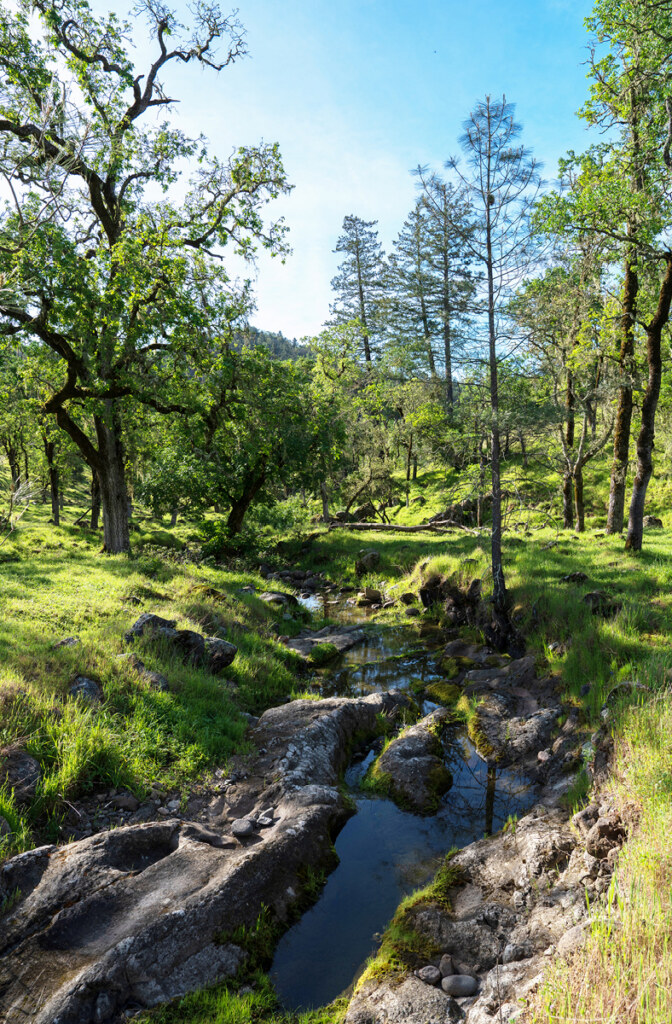
A watershed can also contain many smaller watersheds nested inside it, called subwatersheds. In the Russian River Watershed, for example, each tributary has its own subwatershed, that moves water down the hillsides and fields around it before emptying into the main river. Inside the Russian River, the primary subwatersheds that Sonoma Land Trust is focused on include Green Valley Creek, Dutch Bill Creek, Mill Creek, Mark West, and Maacama Creek.
What is the largest watershed in Sonoma County?
The Russian River Watershed covers nearly 1,500 square miles of forests, grasslands, farms, and towns across Sonoma and Mendocino Counties. The river runs about an impressive 110 miles from its headwaters near Redwood Valley to the Pacific Ocean at Jenner, gathering water from 238 named streams and creeks along the way. It supplies drinking water to over 600,000 human residents and is home to 63 species of fish, three of which—coho salmon, Chinook salmon, and steelhead trout—are listed as threatened or endangered.

This watershed has sustained Native peoples for millennia and remains vital to all who live here today. In more recent times, human activity has altered its function in significant ways, and each action has made an impact on the overall health of the ecosystem. Repairing the health of the watershed is vital, and it starts with an understanding that even the smallest manipulation on land has large impacts on the flow and function of the water. What happens in one part of the system impacts the entire 110 miles of connected habitat.
A few examples:
- When hillside forests are cleared, rainwater rushes into streams instead of soaking into the ground, making them more prone to flooding while also depositing sediment into the water.
- When wetlands are drained, groundwater stops recharging and they become disconnected from the larger water system acting as dead spots along the journey to river, bay, or ocean.
- When pesticides wash off lawns or farms in the rain, they enter the creek system, harming aquatic insects and salmon who depend on clean water while polluting drinking water downstream.
- And when water is diverted before it can flow freely during the summer months, the returning salmon can’t swim up to spawn to create the next generation. At their lowest point, fewer than 10 adult coho were returning to the Russian River to spawn each year.
Where there’s water, there’s a way
The good news is that the reverse is also true. If we protect the land around a stream, the water runs cleaner and cooler in a way that benefits the entire ecosystem, including wildlife and humans. When we restore a wetland, the aquifer refills. When we return freshwater back to a drying creek, salmon can complete their migratory journey.
Wherever you are standing right now, remember that you are standing in a watershed. The choices we make about land—how we care for it, or not—affect water that supports an entire system. That’s why, for Sonoma Land Trust, protecting land and water are intrinsically linked. When we care for one, we care for both.