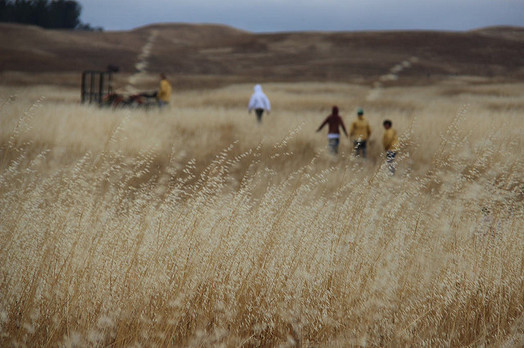
I’ve always been fascinated by the idea of time capsules. The concept is so simple — collect some junk, stuff it in a box, bury it in the ground and wait — but it’s the aftermath that interests me the most. After weeks, months or even years, the capsule is dug back up and its contents, worthless when they were buried, suddenly gain value bestowed upon them by time and memories. This is the type of thing I thought about as I stood at the edge of a series of dry, dusty pits being dug by young volunteers out at Cougar Mountain early last July.
It was the end of my second week here when I was invited by Julian Meisler, our Baylands program manager, to come out to Sears Point and observe the replacement of six artificial burrows for burrowing owls, a species of special concern in California. The old burrows, sadly, had failed due to design and installation flaws, and we were determined to make it right this time around. Steve Pye, one of our stewardship assistants, would be leading the workday and directing a cadre of volunteers from the Youth Conservation Corps. My job (lucky me!) was simply to observe.
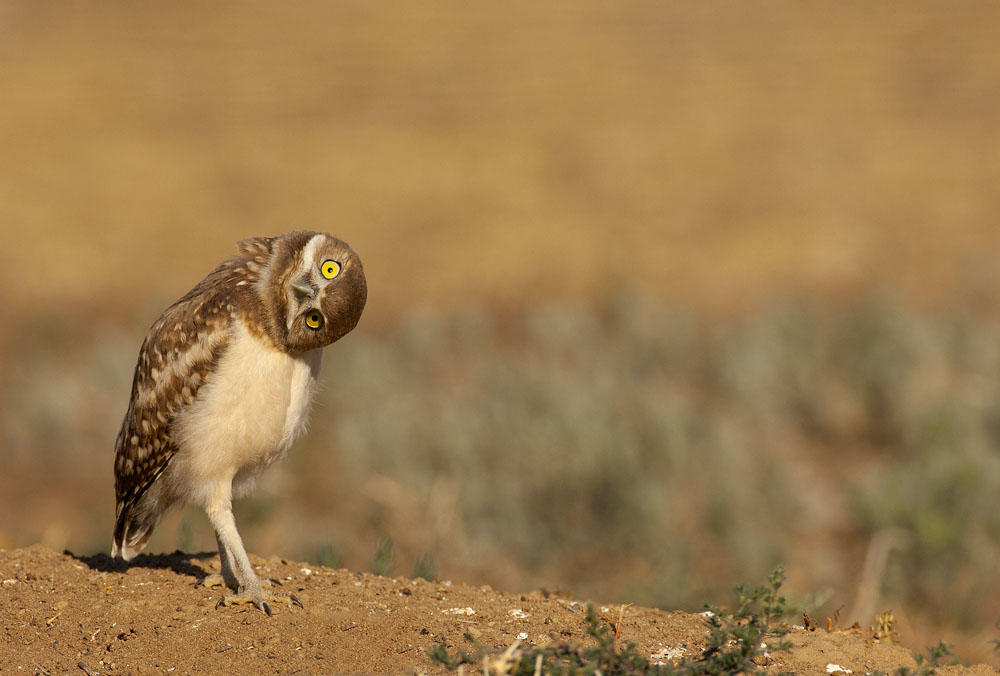
The burrowing owl (Athene cunicularia) is, in my humble opinion, the cutest bird on the planet. To convince me otherwise, please provide photographic proof of the existence of cuter birds in the comments of this post. The inherent cuteness of the burrowing owl stems from its large, disdainful eyes, its short stature, its long spindly legs (which it often uses to scuttle after prey) and, most of all, its propensity for making its home underground, often in abandoned prairie dog burrows or the tunnels built by various other mammals. It’s this last characteristic that makes them vulnerable to habitat loss as their homes are leveled and filled in for urban development projects.
Tell me that’s not the cutest bird ever. Photo by Andy Long (Audubon California).
The uplands at Sears Point are perfect for burrowing owls, as they consist of grassland habitat and large open areas with low ground cover. Another valuable resource that Sears Point has plenty of is, surprisingly, cattle dung, which owls will line their burrows with to control the microclimate within their homes and attract tasty insects. One thing Sears Point doesn’t have, however, is prairie dogs. There are other animals that build burrows at Sears Point — gophers, ground squirrels and badgers to name a few — but most actively occupy their homes and, thus, there are no abandoned burrows for owls to make their homes in. That’s where we humans come in.
Human volunteers, lacking the paws, claws or appropriate stature to build owl-sized tunnels, resort to other mechanisms to create burrows. At the dig site, Steve unloaded six plastic barrels, each sawed in half and attached to two long half-pieces of flexible corrugated plastic tubing.
Steve explained that the owls, if they chose to inhabit our makeshift burrows, would use the barrel as their nesting place and the tubes as routes to get there. The important bit to remember was to keep the tube openings raised slightly above ground level — the burrows that failed previously had entrances sunken below the ground and flooded before any owls could colonize them. With this in mind, the eight Youth Conservation Corps volunteers got to work!
It was hard, dusty work, and the volunteers, mostly high schoolers, were troopers about it, scooping shovelful after shovelful of soil aside. Their chaperone, a chipper guy from Fish and Wildlife Services, jumped right in to help. Tom Rusert of Sonoma Birding also paid us a visit, offering advice, joining in the digging and carrying heavy rocks back and forth.
Once the pits had been dug to a sufficient depth and the plastic burrows were put in place, Steve put heavy equipment to work, using a front loader to scoop excavated earth back over the burrows and saving a lot of manual labor.
Rocks were then stacked across the burrow entrances, ensuring that resident cattle wouldn’t accidentally bury or crush the burrows.
And so I watched these hardworking folks bury large pieces of plastic in the ground. The beginning materials weren’t much to look at. Neither was the finished product, for that matter — it looked like a few bricks piled on the ground — but we knew that, as time went on, the dirt and plastic would take on value as these little birds made it their new home.
And so they did. If you’re wondering why I’m sharing this story with you in March of 2016, Don Brubaker of the San Pablo Bay National Wildlife Refuge sent this image to Julian late last month. It took some time, but it looks like our little time capsule has finally taken on some value.