Blog
the battle with broom
by Trevor George
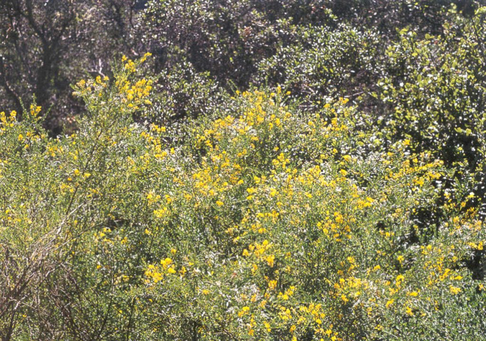
If you’ve driven through Sonoma County in the spring, you’ve seen the bright yellow flowers lining our roads and highways. These plants are Scotch broom (Cytisus scoparius), French broom (Genista monspessulana) and Spanish broom (Spartium junceum), and they’re everywhere. Sonoma Land Trust and many other organizations, landowners and volunteers are waging war on these extremely invasive species.
Photo by California Invasive Plant Council
Where did they come from? Well, the common names give that information away! These tough, weedy shrubs were brought to North America from Scotland, France and Spain as ornamentals in the mid-1800s and were later used for erosion control. Interestingly, these can still be purchased in the garden section of home improvement stores, but we wouldn’t recommend it as these broom species have a lengthy rap sheet. They outcompete and displace native vegetation, degrade wildlife habitat by pushing out important forage species, can be toxic to animals and livestock, and they’re highly flammable and can carry fire into the forest canopy.
Part of the problem is that broom grows fast and produces an enormous number of seeds. The seed pods actually explode, sending the seeds up to four meters away from the plant, after which animals, insects, water and vehicles carry them to new habitats. Mature broom plants can produce more than 12,000 seeds per year. Broom seeds can remain viable underground for at least five years (often much longer), compared to around two years for the native coyote brush (Baccharis pilularis).
Manual removal is the best way to control broom. Ideally, removal is done in the late winter or early spring when the ground is still soft and the plants haven’t yet produced seeds. Once flowers have formed, plants must be bagged and disposed of because seeds might still develop even after the plants are uprooted.
Part of the problem is that broom grows fast and produces an enormous number of seeds. The seed pods actually explode, sending the seeds up to four meters away from the plant, after which animals, insects, water and vehicles carry them to new habitats. Mature broom plants can produce more than 12,000 seeds per year. Broom seeds can remain viable underground for at least five years (often much longer), compared to around two years for the native coyote brush (Baccharis pilularis).
Manual removal is the best way to control broom. Ideally, removal is done in the late winter or early spring when the ground is still soft and the plants haven’t yet produced seeds. Once flowers have formed, plants must be bagged and disposed of because seeds might still develop even after the plants are uprooted.

Proud volunteers with armfuls of French broom at Laufenburg Ranch.
Stewardship staff and volunteers race against time each year in the spring to remove these infestations before they create a new generation. We often pull the plants in the same locations year after year in an attempt to deplete the supply of seeds left in the soil. It’s a long-term effort, but we’ve seen positive results on our preserves from years of our volunteers’ hard work and dedication.
So if you see this noxious plant, give it a tug — or consider joining us next year to renew our annual efforts to combat broom. It’s a great, tangible way to directly improve habitat for wildlife — and reduce the risk of catastrophic wildfire.
So if you see this noxious plant, give it a tug — or consider joining us next year to renew our annual efforts to combat broom. It’s a great, tangible way to directly improve habitat for wildlife — and reduce the risk of catastrophic wildfire.
Trevor George is a stewardship project manager at Sonoma Land Trust.