Blog
restoration at Bidwell Creek
by Trevor George
One of the most notable natural resources on the property is Bidwell Creek. This stream is particularly sensitive because it is home to steelhead trout, freshwater shrimp and possibly even coho salmon — all animals protected under the Endangered Species Act. Live Oaks Ranch encompasses the headwaters to this important creek, which means that our management has an effect for miles downstream toward the Russian River.
What can we do to preserve and/or enhance Bidwell Creek? For the most part, just let it be. As it flows through Live Oaks Ranch, the majority of the creek is relatively unobstructed by human activity; the best thing we can do is give it the space to stay that way. However, downstream of the farmstead, human impacts are evident and there is significant opportunity for us to create a positive influence on this riparian ecosystem.
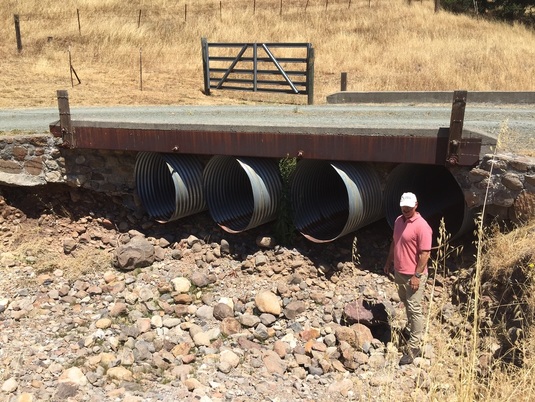
With that opportunity in mind, we’ve developed a three-phase plan to restore the marginalized riparian habitat along the several-hundred-foot stretch of Bidwell Creek before it leaves the property. In Phase One, we’ll remove an old failing bridge and replace it with a fish- and creek-friendly design. In Phase Two, we’ll work with the Sonoma Resource Conservation District to plant a variety of native trees and shrubs along the largely denuded stream banks. In Phase Three — perhaps the most ambitious phase — we’ll restore part of the creek channel and floodplain meadow to reestablish a complex network of healthy riparian and wetland habitat. This summer, we will begin Phase One.
With the drop created by the culverts, it’s also very difficult for fish to swim their way up into the headwaters of Bidwell Creek. Given the threatened status of species such as steelhead, it’s more important than ever to open up suitable habitat for them. The steelhead runs in Bidwell Creek are highly diminished and fish haven’t been documented on the property in years, but as we work collectively to improve our waterways throughout the county, we want Live Oaks Ranch to be ready for the return of the fish.

Since the start of this year, our dedicated team of engineers has been designing the new bridge. With permits nearly in hand, we plan to start construction next month. So, take one last look at this piece of aging infrastructure — it’s time for it to go.
Stay tuned to Mountains + Molehills for a follow-up article on this project and the next phases of restoration on Bidwell Creek!
Trevor George is SLT’s project associate.