Blog
Nature’s Heroes: Tiny Diggers
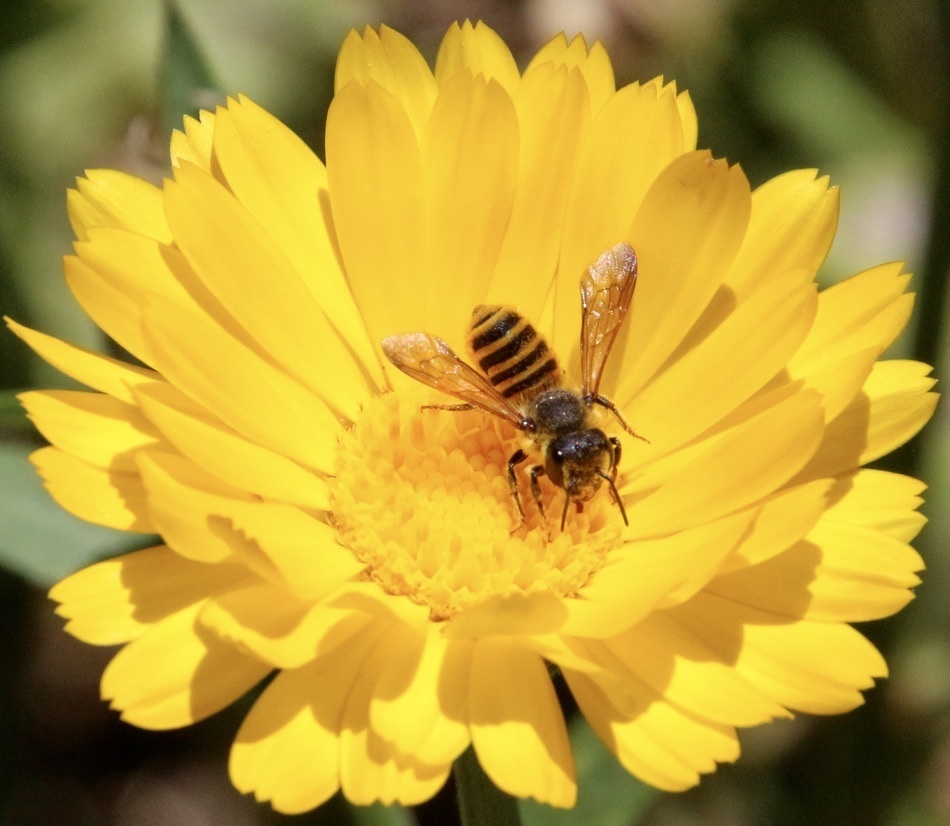
Pollinators by day, soil engineers by night
Most of California’s native bees don’t nest in hives and make honey—they nest underground and dig dirt. These tiny workers are not only helping flowers bloom, they’re engineering the world beneath our feet. About 70% of native bee species nest in the ground, digging tiny tunnels for hibernation and to raise their young. This activity underground plays a vital role in creating healthy soil conditions that support thriving ecosystems from the ground up.
Sonoma County makes up less than one percent of California’s land area, yet it supports more than 12 percent of the state’s 1,600 native bee species, thanks to our rich mosaic of habitats, diverse native flora, and abundance of undeveloped open spaces. These solitary bees—sweat bees, bumblebees, digger bees, mining bees, and more—pollinate native plants and crops alike. They’re often more efficient pollinators than honeybees due to specialized behaviors like buzz pollination (vibrating flowers to release more pollen) and floral fidelity (specializing in a specific flower), which are behaviors that evolved over millions of years of coevolution with native plants.
While their crucial role as pollinators is well recognized, the importance of wild bees as soil ecosystem engineers is starting to gain more recognition. As bees dig in the dirt, they create channels that improve soil aeration, water flow, and root penetration. They also leave behind bits of pollen, nectar, and waxy secretions that enrich the soil, supporting microbial communities, essential components for building soil structure and water retention. In this way, bees shape the physical, chemical, and biological properties of soil, enriching plant life above and below ground.
Unfortunately, due to habitat loss, competition with non-native species, and widespread pesticide use, our native bees are at risk. Sonoma Land Trust is helping build bee habitat back by removing invasive species, reestablishing native plants, and restoring natural processes like prescribed fire. These actions help protect the land and diverse floral resources that ground-nesting bees need to thrive.
You can also support our bees by avoiding pesticides, planting native plants that these bees love—Calscape is a great resource—and supporting organic farms. Every patch of pollinator habitat helps. Even the smallest garden could be a critical source of pollen or shelter for a hungry, busy bee. Learn more about our native bees and how you can help with the Xerces Society’s resources on pollinator conservation, and check out Conservation Works’ network of pollinator patches, including here in Sonoma County.