Blog
musings on the meaning of life
by Corby Hines
What is the meaning of life? It was during a Sonoma Land Trust stewardship work day that I realized the simple answer — we are here to care for the earth.
What is the meaning of life? It was during a Sonoma Land Trust stewardship work day that I realized the simple answer — we are here to care for the earth.
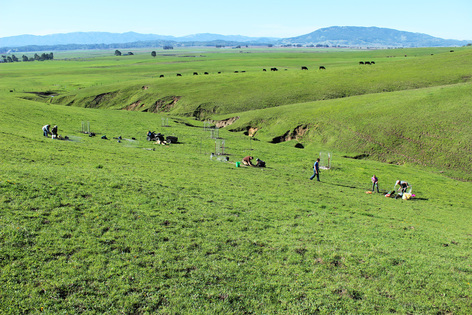
After planting trees with a wonderful group of people in the uplands of Sears Point, that answer was pretty obvious. Everyone who volunteered had satisfied smiles on their faces from a day well spent. By our own hands, oak trees were given a chance to grow, where a century earlier they had been all cut down. Soon, they will make acorns year after year to feed the deer. Their branches will shelter the nests of birds. Their canopies will make shade on a hot summer day for the coyote to rest in and to help the soil retain its life-giving water. Through their respiration, they will sequester carbon and put oxygen in the air. Their roots will form a symbiotic relationship with fungi, with mushrooms sprouting along the lateral root lines. In one day, these volunteers both encouraged and advanced life on earth.
If you think about it, each and every species has perfectly evolved to fulfill its ecological niche. Maggots are great decomposers. Wolves are experts at managing ungulate populations. Salmon do a wonderful job of redistributing ocean nutrients to redwood forests. Beavers build dams, which slow the flow of water, recharging the aquifers. What do people do? What is our ecological niche? After all, we are animals — mammals, in fact — and we evolved within a natural habitat. It seems like a fundamental question that I don’t recall being discussed in school. If you have been watching our species at work for the last few millennia, you might say our goal has been to consume the earth’s resources and degrade the natural diversity of life.
But what about the hundreds of millennia that came before? Did we even bother with the question of the meaning of life? I suspect it was self-evident. Perhaps we realized that we were perfectly suited to “tending the wild,” as Kat Anderson put it in her book of the same name documenting Native American management of California’s natural resources:
“Through coppicing, pruning, harrowing, sowing, weeding, burning, digging, thinning and selective harvesting, they encouraged desired characteristics of individual plants, increased populations of useful plants and altered the structures and compositions of plant communities. Regular burning of many types of vegetation across the state created better habitat for game, eliminated brush, minimized potential for catastrophic fires and encouraged diversity of food crops. These harvest and management practices, on the whole, allowed for sustainable harvest of plants over centuries and possibly thousands of years.“
Our alterations of the environment need not be detrimental to life. We can use our gifts to positive effect. After all, what could be a better use for our incredible minds than to develop strategies that promote natural diversity and resilience? As social creatures, we can work together to amplify our positive effects. We are incredibly adaptable, able to thrive in any habitat on earth — and able to give aid to nature wherever we are needed.
How would we feel about our lives if our daily practice was to promote the health and diversity of life on earth? Come find out at our next volunteer stewardship workday and maybe you’ll discover the meaning of your life along the way.
But what about the hundreds of millennia that came before? Did we even bother with the question of the meaning of life? I suspect it was self-evident. Perhaps we realized that we were perfectly suited to “tending the wild,” as Kat Anderson put it in her book of the same name documenting Native American management of California’s natural resources:
“Through coppicing, pruning, harrowing, sowing, weeding, burning, digging, thinning and selective harvesting, they encouraged desired characteristics of individual plants, increased populations of useful plants and altered the structures and compositions of plant communities. Regular burning of many types of vegetation across the state created better habitat for game, eliminated brush, minimized potential for catastrophic fires and encouraged diversity of food crops. These harvest and management practices, on the whole, allowed for sustainable harvest of plants over centuries and possibly thousands of years.“
Our alterations of the environment need not be detrimental to life. We can use our gifts to positive effect. After all, what could be a better use for our incredible minds than to develop strategies that promote natural diversity and resilience? As social creatures, we can work together to amplify our positive effects. We are incredibly adaptable, able to thrive in any habitat on earth — and able to give aid to nature wherever we are needed.
How would we feel about our lives if our daily practice was to promote the health and diversity of life on earth? Come find out at our next volunteer stewardship workday and maybe you’ll discover the meaning of your life along the way.
Interested? We’ll update you on upcoming workdays at https://sonomalandtrust.org/join_in/volunteer_workdays.html. You can also sign up as a volunteer by emailing [email protected].