Blog
Growing up together: Reflections on Sonoma Land Trust’s founding family
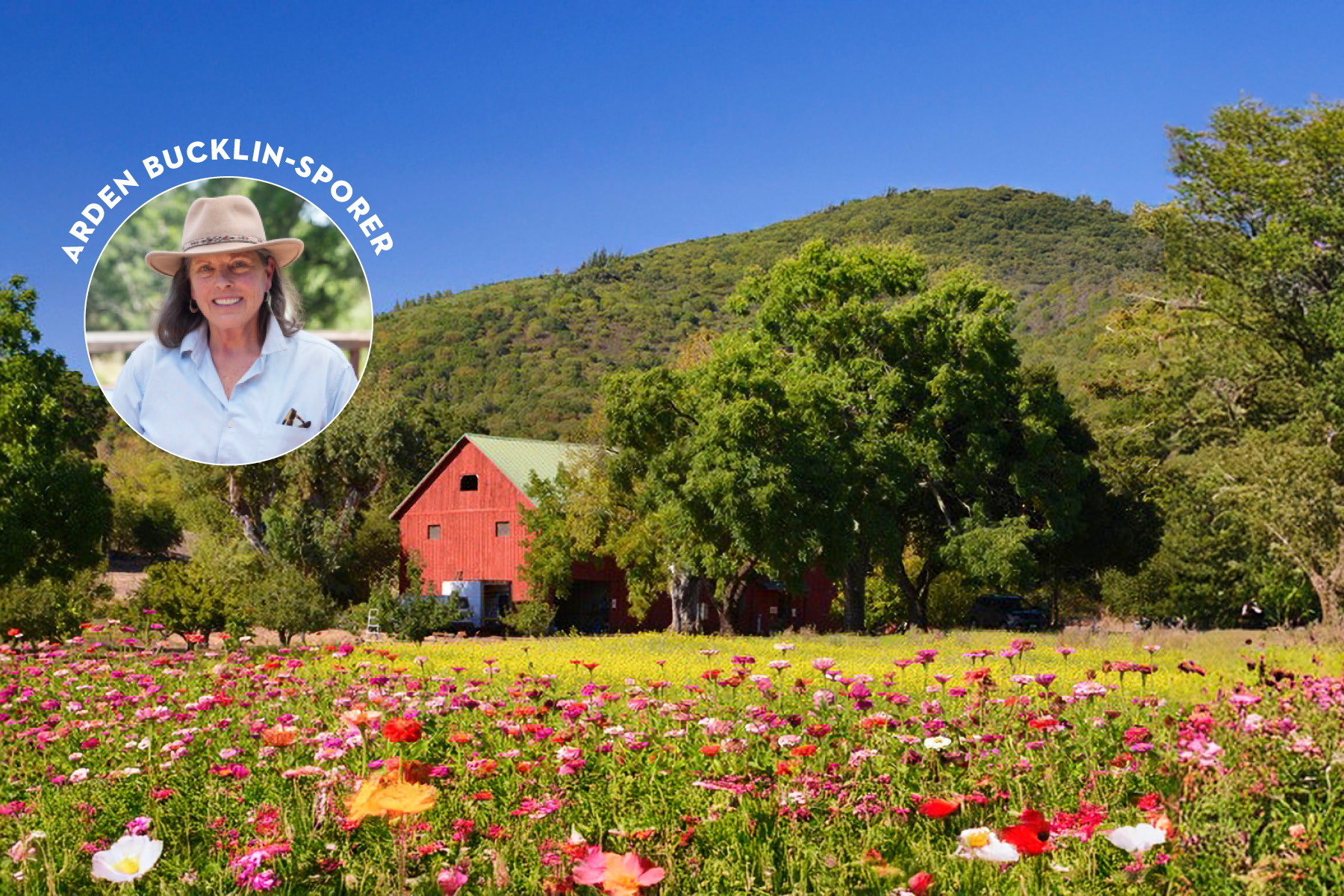
Otto and Anne Teller, Oak Hill Farm, and the history of Sonoma Land Trust will forever be connected
It’s no surprise that Arden Bucklin-Sporer is an ardent conservationist. Much of her “free range childhood,” she says, was spent as a country kid gallivanting on horseback with her sister exploring her grandmother’s rural Sonoma Valley property, a “little acreage up in the mountains that was very, very rugged.” That’s where her deep attachment to the land took root—but not a small factor was also the influence of her mother and stepfather, Anne and Otto Teller, who were among the founding members of Sonoma Land Trust.
In the mid-1970s, the idea of a land trust was still new in Sonoma County, and the work of building one involved long meetings with like-minded people who shared in their determination to protect their rural way of life and the valley’s landscapes, before development pressures changed them forever.
Today, Arden carries that responsibility forward as co-owner of Oak Hill Farm, the family property that became one of the first properties placed under a conservation easement in 1985 with Sonoma Land Trust. The small-scale family farm remains a working landscape, producing responsibly-grown flowers and vegetables while maintaining the conservation values her family helped establish decades ago. “It’s my duty,” she says. “It is the sacred duty that my mother passed to us—to continue to make the land productive and to protect it.”
At Oak Hill Farm, conservation also means active stewardship. Arden is a strong advocate for prescribed fire, having experienced the scourge of devastating wildfires in 2017 and 2020, but also witnessed what came after. Although many structures burned, “there was such a renaissance afterwards that it became so clear that it burned because it was supposed to burn,” Arden recalls. “Watching the land recover was just a remarkable, remarkable experience.” Since then, prescribed burns conducted with the consent of neighboring landowners have given rise to the return of native grasses and abundant regrowth.
Living under a conservation easement has also shaped the farm’s future. The document governing Oak Hill Farm is unusually brief—just a few pages long—reflecting the early days of the Land Trust when agreements were built largely on trust rooted in shared purpose. While the easement can be restrictive at times, Arden ultimately sees it as a valuable tool for accountability.
“Honestly, it is not always the easiest thing in the world,” she says. “But on the other hand, I think the Land Trust really holds us accountable, and so I appreciate that.”
The easement also simplifies difficult decisions about the land’s future. Development is no longer an option, removing potential conflicts for future generations and ensuring that the farm remains protected.
That protection matters deeply to Arden, especially as Sonoma Valley continues to feel what she describes as “the hot breath of development on the back of our necks.” Large development proposals, including projects like the redevelopment of the Sonoma Development Center, reinforce her sense that the valley’s rural character remains far from certain.
In response, Arden continues to advocate for conservation that is both practical and community-centered, like supporting local farms, protecting wildlife corridors, and maintaining the landscapes that define Sonoma County.
Her conservation ethic also extends beyond the farm. Arden founded Education Outside, an AmeriCorps program in San Francisco that built outdoor science classrooms in school gardens. The program brought hands-on environmental education to urban students, many from schools where more than half the students qualified for free or reduced lunch. By teaching science outdoors through soil, plants, and living ecosystems, Arden hoped to cultivate the same connection to nature that shaped her own childhood.
The work, for her, is inseparable from family history. The land her parents helped protect now carries the next chapter of that legacy. Being able to look up at the hills surrounding the farm and knowing they’re all protected is both a privilege and responsibility, Arden believes, a commitment to care for the land because the valley’s landscapes are worth protecting long into the future.
“It’s land that is set aside for all of the wonderful critters that share our valley, and that’s really, really important,” she says. “I’m really grateful that the Land Trust is there to be our partner in it.”