We are nearing completion of the repair or replacement of more than seven miles of fire-damaged fence at Sears Point. Fencing is what enables us to run a cattle operation there and that’s something we do for a variety of reasons, including weed control, fuel reduction and continuing our relationship with the agricultural community. Believe it or not, fencing is actually pretty thoughtful work when working in wildlands. Every time a fence is replaced or constructed, we challenge ourselves as to whether it’s really needed and, if so, how do we make it wildlife friendly. The answer to the second question depends on multiple factors, including the location, the purpose, the type of wildlife in the area and others. Of course, we also need to ensure that the fence serves its purpose of containing cattle or whatever domesticated animal is on the land.
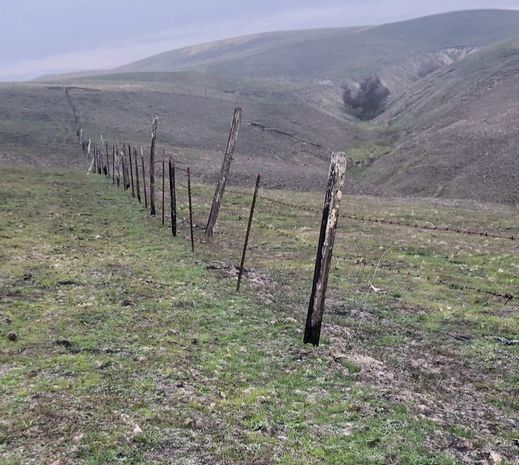
Damaged fence at Sears Point, January 2018
At Sears Point, fire is not uncommon. In the eight fire seasons that I’ve managed the site, fires have started in about half of those years. It is just what happens along major roads where tossed cigarettes, sparks and accidents provide the ignition. Except for last year, these were small fires, ranging from 1–30 acres.
This year, when faced with replacing miles of perimeter fence that will likely burn again at some point, I opted to replace the wood fence posts with metal posts to prevent the fence from failing when fire returns. When a perimeter fence burns, cattle have access to the roadway and the outcome is not good.
Metal poles are generally hollow and, as we wrote the specifications for the fence, I was reminded of a flyer from Audubon California explaining how open vertical pipes can be deathtraps for wildlife. Birds looking for nesting cavities and small mammals and lizards can fall in and become trapped, so capping the tops is essential. Back in 2012, when I first saw the flyer, I hired two interns to cap all of the existing hollow poles at Sears Point. They walked more than 15 miles in their hunt and capped 30 large diameter poles. This year, we asked the fence contractor to do the same with all new poles.
Capping is not hard and doesn’t take long. You can buy caps for many fence diameters. However, it can be less expensive to simply cover the top. In 2012, we used a mesh hardware cloth and grout to cover the top. This year, our contractor simply stuffed a wadded newspaper into the top of the pole, leaving about two inches of space from the top of the pole, and then filled that with concrete. It’s a small extra step, but one well worth doing to prevent senseless suffering.
In the center, a new metal pole with a concrete cap.
Julian Meisler is Sonoma Land Trust’s Baylands program manager.