Blog
collaring cougars for conservation
by Nicole Na
Mountain lions aren’t just cool to look at — they play an indispensable role in maintaining the biodiversity and stability of the Sonoma Valley ecosystem. The health of a mountain lion population can also give us insights on how wildlife in general can move between habitat areas as they need large ranges (anywhere from 10 to 370 square miles!) to survive — and if a mountain lion can survive in fragmented habitats, perhaps other species can too.
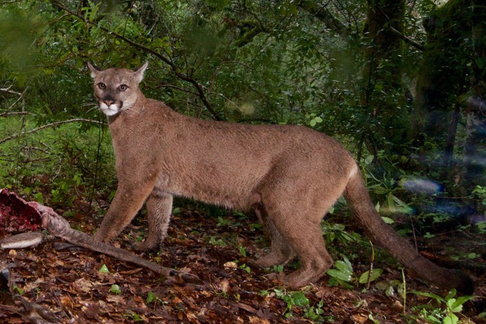
The first subject of the project, a female mountain lion dubbed P1 (for Puma 1), was captured the night of October 5 in a trap filled with roadkill on the grounds of our Glen Oaks Ranch. The humanely designed traps equipped with transmitters allow researchers to reach the lion as soon as possible to minimize stress. The research team reached the lion within 10 minutes, sedated her and fitted her with the GPS collar, and collected some biological samples (later analyzed at UC Davis). An hour later, the lion was moved to another location and walked away elsewhere on the property.

Both lions were in great health. P1 is between 8 and 10 years old, weighs about 96 pounds and is 6 feet from head to tail. P2, a juvenile, weighs 70 pounds.
The importance of this work will have far-reaching impacts. ”This project is going to yield invaluable data for conservation efforts, not just locally, but throughout California,” said ACR executive director John Petersen to the Press Democrat — and we’re proud of the role Sonoma Land Trust in playing in saving the habitat that these lions call home.
Press Democrat
To find out more about how you can help protect the Sonoma Valley Wildlife Corridor, visit sonomalandtrust.org or read about it here.