Blog
Celebrated National Parks Leader Brings His Experience to Sonoma
Board Member spotlight
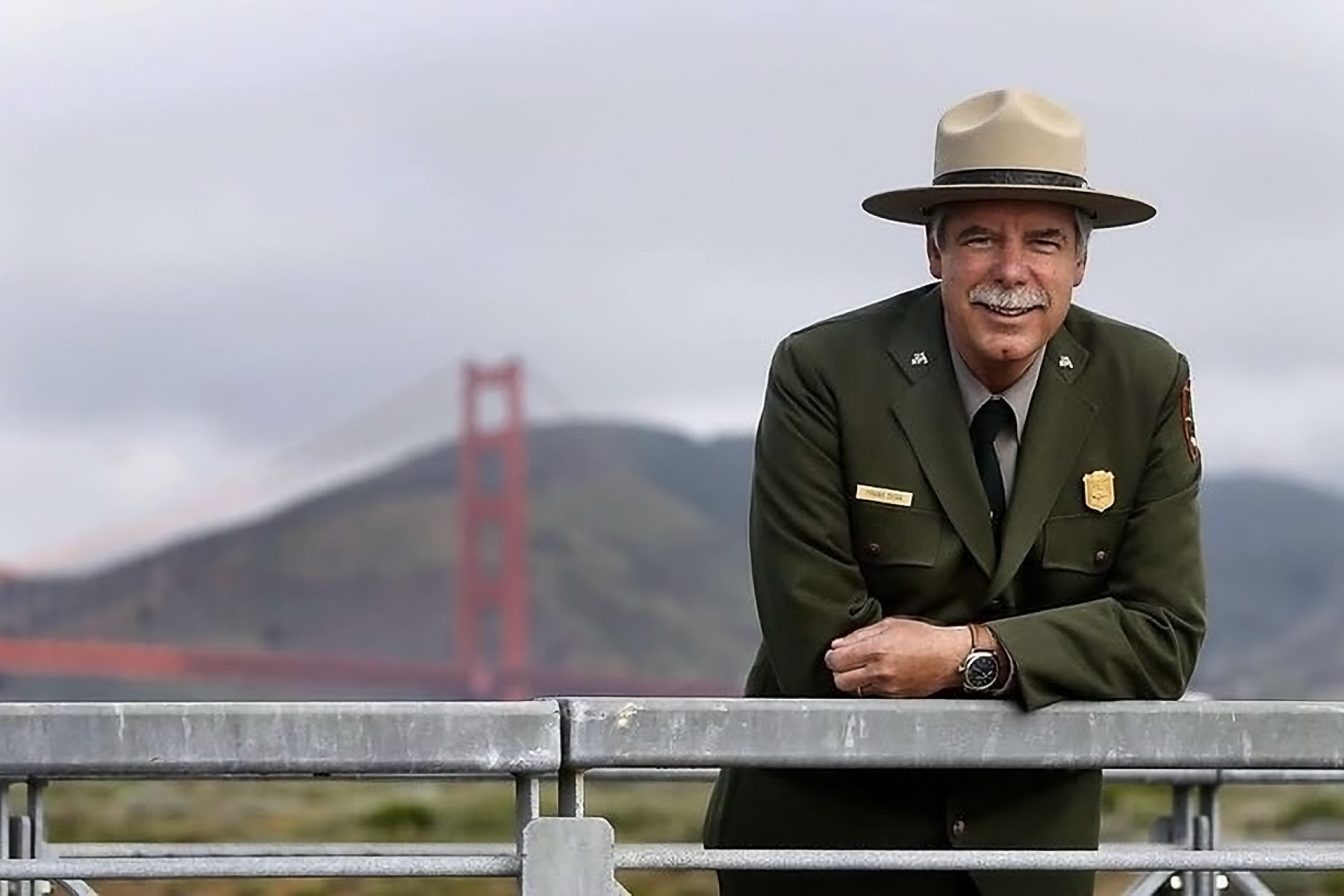
For decades, the Bay Area has nurtured some of the nation’s most influential conservation leaders. Among them is Frank Dean, whose journey began as a geography student inspired by activists fighting to save San Francisco Bay. From ranger to park superintendent to nonprofit leader, Frank has dedicated his life to protecting land and helping people connect with it. Today, he brings that passion and experience to Sonoma Land Trust.
Though Frank had an inclination toward environmental work, he didn’t always know where he fit into the conservation picture. Born in Philadelphia and raised in a military family, he moved often as a child before landing in San Diego for high school. When he came north to attend San Francisco State University, he chose to study geography, a field that investigates how people and the environment shape one another, and the Bay Area was the perfect place to do that. As Frank got to know the shimmering bay and its history, he learned that a lot more of the bay might’ve been filled in and developed had it not been for the efforts of early environmentalists who organized and fought to protect it. “This was where people wanted to do the right thing for the land, not just make a buck,” he recalls. “These were my people.”
A summer job in college as a park ranger solidified his path. Stationed on Alcatraz Island, Frank gave in-person tours, sharing stories of the park’s human history against the backdrop of the Bay. He went on to serve in Sequoia, Grand Canyon, and Yosemite National Parks before returning to Golden Gate National Recreation Area (GGNRA) and Point Reyes National Seashore. His National Park Service career culminated in serving as the superintendent of GGNRA—the same park where he began. “It was really cool to start and end in the same place,” he says, “because I knew the park well enough to know what I wanted to fix and have the authority to make a difference.”
Over the years, Frank saw former military lands transform into beloved public spaces. One of the most dramatic examples was Crissy Field. When Frank started in the park service, Crissy Field was a decommissioned airstrip on the Presidio waterfront. By the time he returned to GGNRA, the former airstrip had been transformed into a tidal marsh, a beach, and one of the most popular gathering places in the city. He participated with Tunnel Tops Park, a visionary project he helped get off the ground that turned a former inner-city freeway into the nationally award-winning parkland of nature play areas, overlooks, and panoramic views of the Bay.
From the park service, Frank went on to lead the Yosemite Conservancy for a decade, raising millions of dollars for trail restoration, habitat recovery, and landmark acquisitions, including a 400-acre meadow system that is now officially protected as part of Yosemite National Park. Under his leadership, the degraded meadow was restored back to a thriving habitat for a variety of rare plant and animal species, including the rare Yosemite population of great gray owls, and transferred over to the park. He saw firsthand how philanthropy could move quickly where government could not, and it convinced him of the power of nonprofits to drive conservation.
When the pandemic kept him closer to home in Petaluma, Frank began exploring Sonoma County more deeply. “I realized how beautiful it is, and I felt like I wanted to give back, to use what I’d learned in my career to help on local issues,” he says. He started looking at the organizations doing conservation work in the county and quickly found himself drawn to Sonoma Land Trust. It stood out, he recalls, for being both effective and financially stable—big enough to make a difference, yet nimble enough to act quickly. After connecting with longtime colleagues and friends already involved with the Land Trust, he knew it was the place where he could contribute his experience most meaningfully.
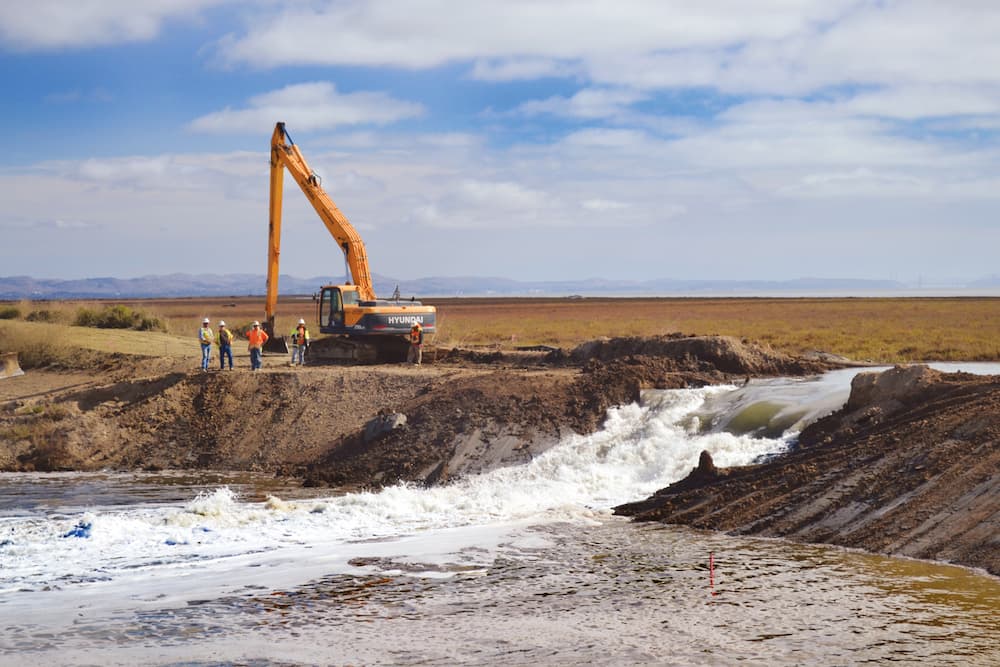
Today, Frank serves on our board of directors and is the newly minted chair of the philanthropy committee where he’s helping strengthen our capacity to act when the time is right. “It’s about building our reserves so we can be nimble,” he says. “If a strategically critical property comes up for sale, we want to be ready to move.” He points to projects like the Baylands acquisition and restoration—once a single landscape-scale initiative, now a visionary program reconnecting tidal wetlands and preparing the region for sea level rise. He also points to a new project on the coast that will provide more public access and habitat protection as an example of how the Land Trust brings science, strategy, and partnerships together at the right time to deliver on our bold vision for conservation.
For Frank, the work is also about visibility and inspiration. He hopes more people will recognize Sonoma Land Trust’s role in preserving the landscapes they love and see themselves as part of that effort. “This county is so diverse—ocean, bay, wine country, mountains,” he says. “People all over the country know the name Sonoma. We have a responsibility to keep it special.”
From ranger to superintendent to nonprofit leader, Frank’s career has been focused on protecting land and connecting people to it. Now, with Sonoma Land Trust, he’s helping shape the next chapter; one where conservation is proactive, strategic, and rooted in community. “We’re big enough to make things happen,” he says, “and small enough to stay focused on what matters most.”