Blog
A Force for Nature Spotlight: A conversation with supporter Maria Cardamone
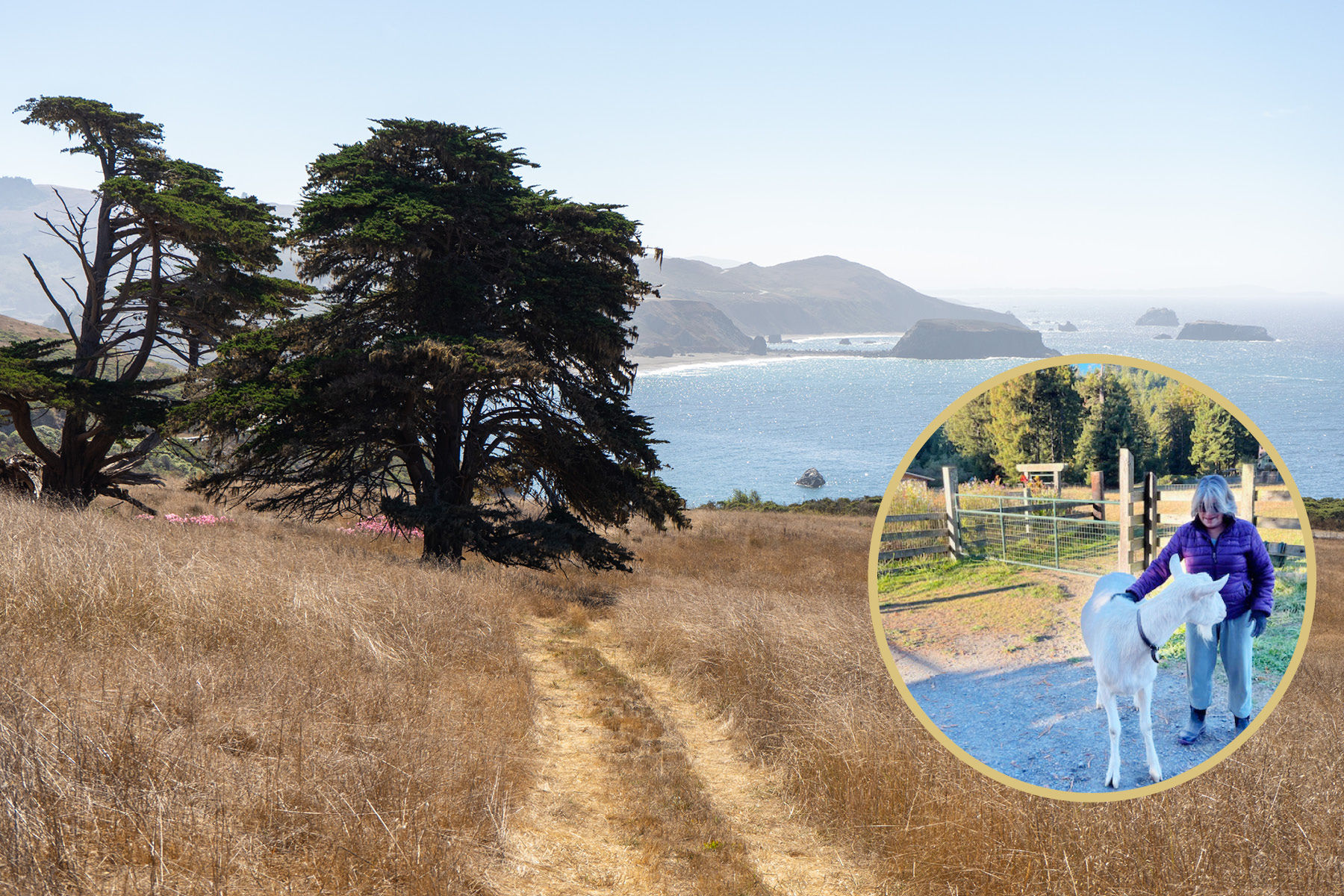
When Maria was a teenager in Washington D.C., she spent her weekends backpacking in the Appalachians, and she vowed that one day she would live in the wilderness. “It took a while to realize that dream,” she says from the porch of her house between Bodega Bay and Jenner. Maria and her husband, Paul Matthews, live several miles inland, on 250 acres surrounded by state park lands adjacent to the Willow Creek watershed area.
It was here one evening in 2019 that Maria penned her goats in the barn for the night and left her two llamas out to graze like so many other nights before. When she saw their dead bodies the next day, Maria called Quinton Martins, asking if it was a big game kill.
A native of South Africa, Quinton grew up with large animals and has studied them his whole life. Now in Sonoma Valley, his company True Wild partners with All Hands Ecology, tracking the behavior and health of mountain lions through the Living with Lions program.
“After getting my call, he came out to the coast from the eastern part of the county to observe. He told us to dig up Rocky, one of the llamas we had just buried. It was one of the few times I ever heard my husband swear.” Quinton used the llama to create a live trap and left the property. At 3am the following morning he called with news from the webcam: “We’ve got a kitty,” he told her.
Quinton knew that mountain lions are loners. They feed primarily on deer and unsecured livestock and usually come back to the site to eat the rest of their prey. Maria watched as the research team returned to the property and sedated the cat whom they named P14 “Paul” in honor of her husband (although it actually stands for Puma). They took DNA samples, checked his teeth, and fitted him with a collar so they could track his behavior. Through P14, Quinton was now about to extend his research and education into the coastal area of the county.
“I just couldn’t kill the lion,” said Maria. “It was on me that the llamas died. I should have enclosed them.” In Maria’s mind, another life should not be sacrificed because of her lapse in judgment.
“The mountain lions live here too. Even though they are large and frightening and at the top of the food chain, they are also fragile and vulnerable. They die easily, from being shot or poisoned from eating chemicals sprayed on the plants. It is the owner’s responsibility to enclose and protect their livestock from predators. The mountain lions are merely getting food to survive.”
Deer are one of their main food sources, and the lions’ survival helps keep the deer population in check. Mountain lions’ lives are tough and they’re shy. They avoid humans.
“I got to touch him while he was sedated,” Maria tells me. “His fur was thick and stiff. His tail was the size of my arm and felt like one long piece of muscle. Very formidable. He lived for a few years before he was tragically shot by a rancher near Sea Ranch. It isn’t right.” Maria and Paul have made their property more wildlife-friendly by removing old fences.
Like the Sonoma Land Trust, Maria, and Paul partner with local organizations to further their ecological goals. “We work with the Russian River SHaRP program (Salmon Habitat Restoration Priorities) to repopulate salmon in the creek and with Sonoma County Regional Parks to provide access for hiking and camping.” As part of their plan to educate people and remediate the land, they have invited groups of women to do vision quests in the summer, making the land a safe and accessible environment. They’ve also brought other diverse groups out to experience the wilderness.
Maria and Paul’s connections with people, agencies, and the flora and fauna around them mirror the mission of Sonoma Land Trust, an intent to “protect the open, natural, and working lands and waters of Sonoma County to secure healthy and thriving futures for all.”
“We love the work of Sonoma Land Trust, especially their Greenway Project in Southeast Santa Rosa,” says Maria. “And we love it here, even though the 4-mile dirt road can be a real pain, especially when it floods. People protect what they love! We love the land. Allow people to have access to these areas, don’t beat them up with laws. Once they are out in nature, they will also work to protect it.”
Maria’s perspective shows a vast connectivity to our earth and all beings who live on it. It grows our connection to each other. It benefits us all.
Interview and article compliments of Sharon Bard