Blog
Would conservation easements hold?
The Sonoma Valley Story: Chapter 2
By the 1990s and early 2000s, conservation easements were in use across Sonoma Valley, attached to a wide range of properties, from farms to wetlands to forests. They limited subdivision and kept large properties intact, protecting a wide variety of conservation values across landscapes—while providing tax incentives to the landowners for doing so. But soon enough, the conservation easement’s power to protect land would be challenged in court.
Conservation easements became a legal tool for conservation in California in the 1970s as a way for landowners to protect their land while still being able to live on, work, and manage their land. These voluntary agreements—made with a land trust like Sonoma Land Trust, public agency, or tribe—permanently limit certain uses of a property while keeping it in private ownership. Each easement is tailored to the land, restricting activities like subdivision, logging, mining, or intensive development, while allowing compatible uses such as farming or ranching to continue. By separating out certain property rights, easements help preserve open space, habitat, and working lands, with the terms recorded on the deed and upheld over time so those protections carry forward to future landowners.
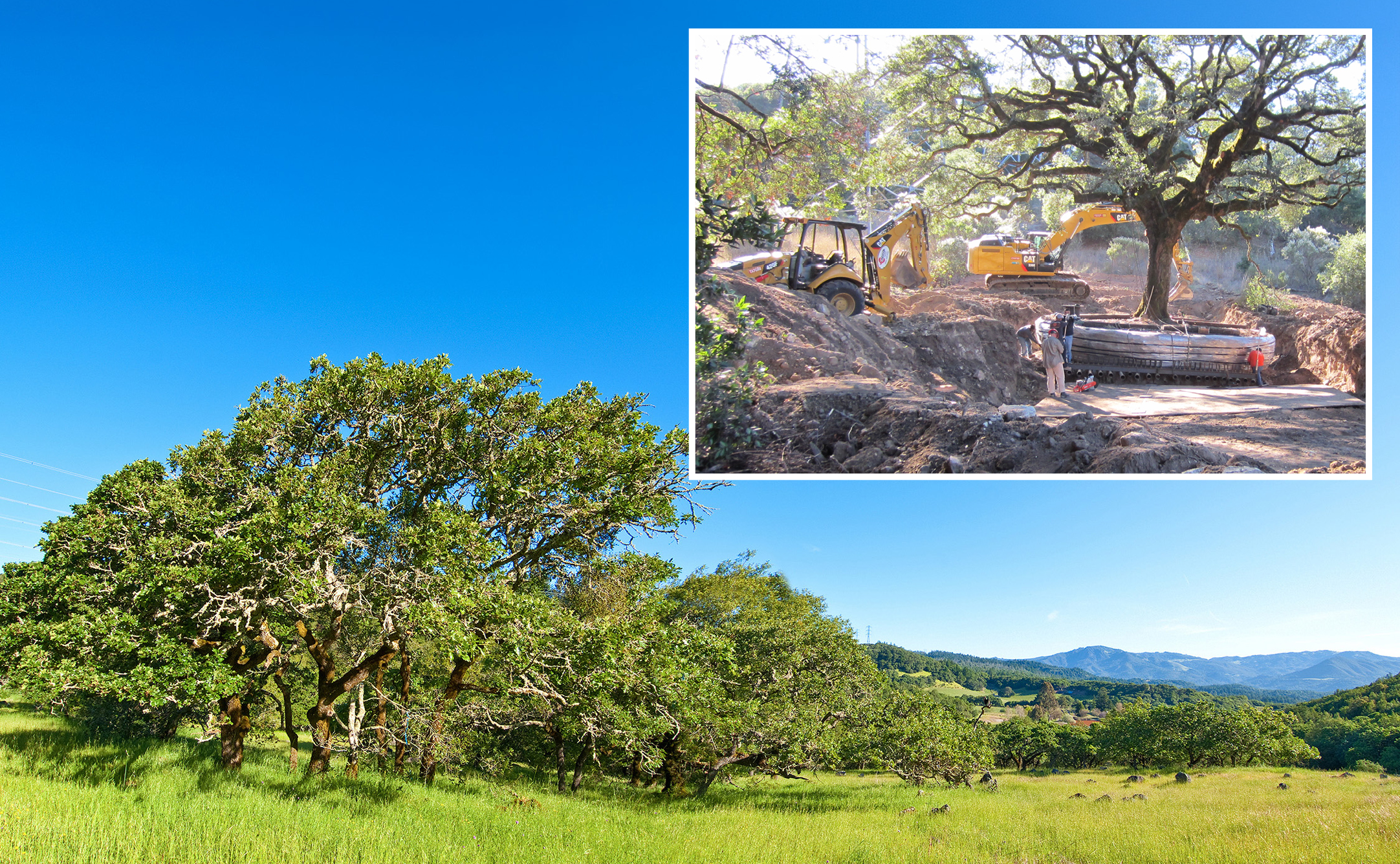
For those who remember, this story made headlines and was known as the Sonoma Land Trust v. Thompson, or the Drake Easement Trial. In 2009, a conservation easement was donated to protect a 34-acre parcel of undeveloped oak woodland in Bennett Valley by landowners Katherine and Peter Drake. “When we purchased this lovely 34-acre parcel, it appeared to have been untouched for many decades. The easement was intended to protect this special land forever, regardless of who owned the property,” said Katherine Drake.
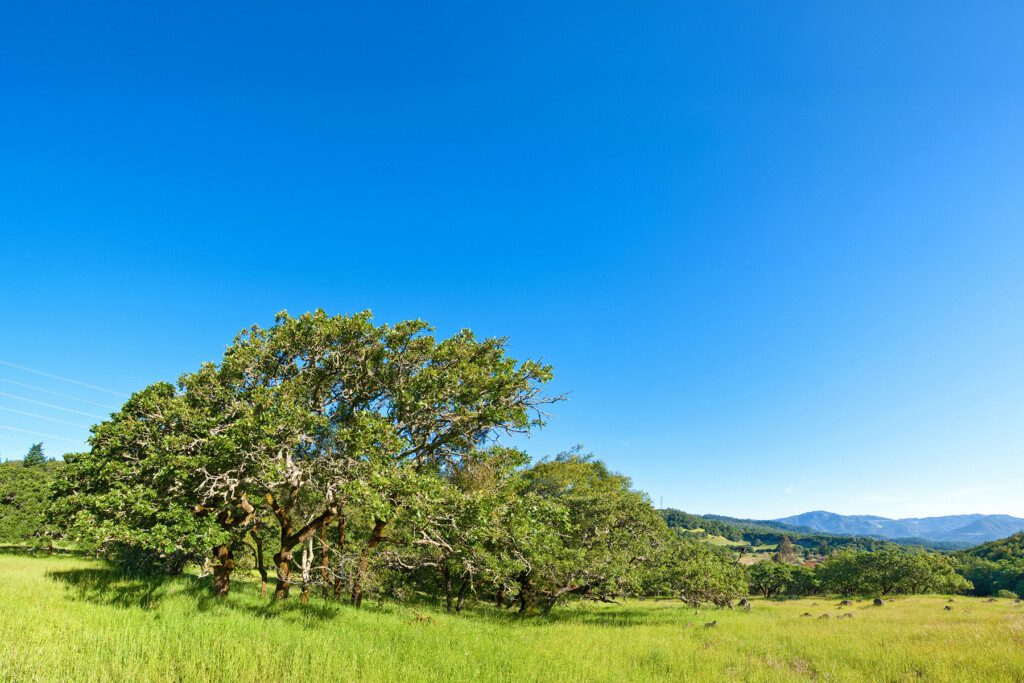
“When we purchased this lovely 34-acre parcel, it appeared to have been untouched for many decades. The easement was intended to protect this special land forever, regardless of who owned the property,” —Katherine Drake.
In 2013, the property was sold. The terms and restrictions of conservation easements remain intact even with new ownership. Nevertheless, the new landowners violated the easement in no uncertain terms, uprooting a centuries-old oak tree and dragging it through the length of the property, damaging sensitive habitat along the entire route. The heritage oak tree later died as a result along with two other heritage oak trees that they began to dig up but were stopped before they could be fully uprooted and moved.
Sonoma Land Trust took the case to court. After a lengthy trial, the judge upheld the terms of the conservation easement and found the violations intentional. The ruling required the landowners to pay for full ecological restoration and affirmed that conservation easements are legally binding, enforceable agreements that apply regardless of who owns the land. The case, Sonoma Land Trust v. Thompson, set an important precedent for any entity holding a conservation easement across the entire state.
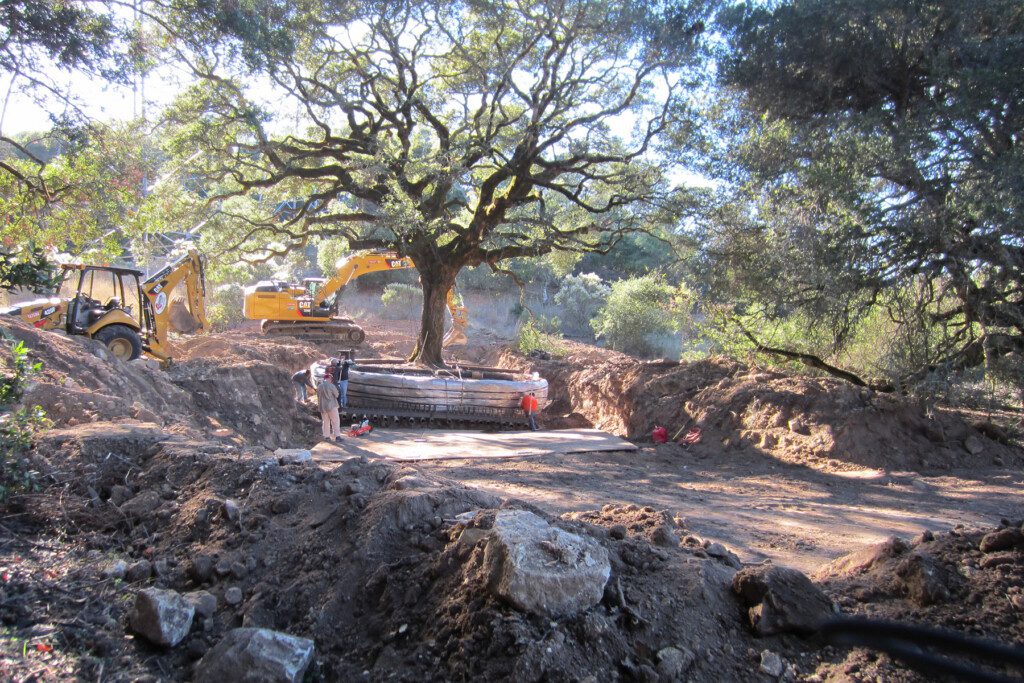
“The significance of the outcome in this case cannot be overstated,” said Sarah Sigman of Shute, Mihaly & Weinberger LLP. “Conservation easements are legally binding and people who purchase land under easement must understand that protecting these properties is not optional.” The court’s decision reinforced the strength of conservation easements and the responsibility to uphold them across generations, with Sonoma Land Trust overseeing the restoration of the damaged land.
When people enter into a conservation easement with Sonoma Land Trust, they’re putting their trust in us, and we defend and uphold that trust to the fullest extent possible. It took over five years in court and more than five years of restoration to heal the land that had been harmed.
This lawsuit underscored the importance not just of legal transactions, but of active monitoring, stewardship, and restoration. A conservation easement alone doesn’t protect land. Rather, it requires regular site visits, careful documentation, and the capacity to act when violations occur. Every easement needs long-term relationships with landowners, partners, and the land itself, and Sonoma Land Trust continues to use new and innovative ways to enhance our monitoring efforts and strengthen our relationships with partners and conservation easement landowners.
Thanks in large part to the success of conservation easements, large swaths of Sonoma Valley remain open lands that are critical connections for wildlife to move across their territories. Today, we hold nearly 50 conservation easements across Sonoma County, protecting thousands of acres, helping maintain working lands, open space, and habitat connection.
But even as Sonoma Land Trust’s model in Sonoma Valley proved effective, a new challenge was rearing its head. Would these tools of conservation be enough to address the increasingly severe impacts of climate change?
Stay tuned for the next chapter! Get articles delivered to your inbox by signing up for our monthly eNews.