Blog
restoration at Sears Point
by Julian Meisler
Every once in a while there are moments in our jobs, in our careers, when the significance of our work surfaces. I can attest as a field biologist turned project manager that these moments sometimes seem a little too infrequent. Certainly our goals are lofty and pure but there are times when the day to day blurs to weeks and even years of permit negotiations, grant applications, reports, and presentations. Alas, there are restorative moments that punctuate individual days of the year – a frog survey here, a rare plant survey there – and serve as reminders of why we do what we do.
But I’m talking about bigger moments.
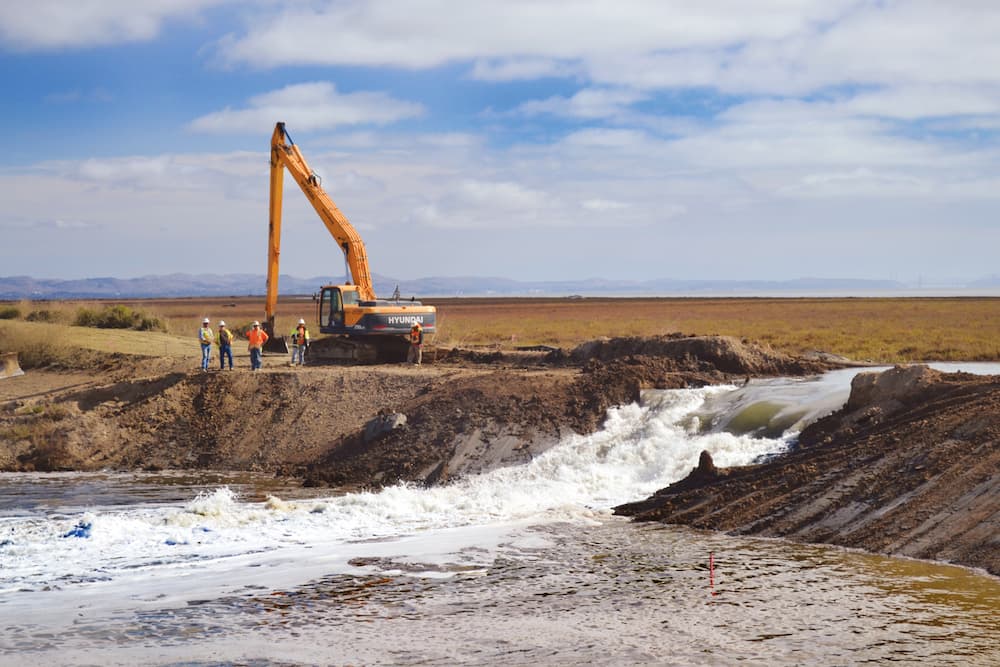
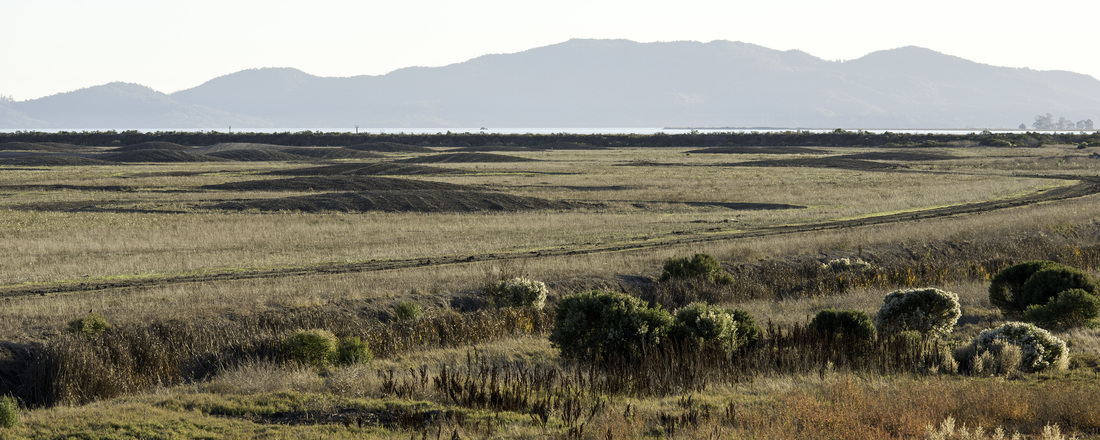
Yet we finalized the plans, we secured the permits, and we raised the money, and we began, in earnest, in 2014. Beginning last summer, construction proceeded from dawn to dusk, six days a week for six months straight (without a single safety violation!). The land was transformed and buzz began to sound in the community. By mid-December I was ready for a break and headed to cold and gray Pittsburgh, PA for a visit to the land where I was raised. It happened to be the week that the elusive El Nino briefly reared its head unleashing an atmospheric river that would rapidly and unexpectedly flood our future 1,000-acre tidal basin under three feet of fresh water. Sunken from view were the six miles of channels that we’d excavated to build a 2.5-mile flood control/habitat levee. Protruding from the water’s surface were the heads of 500 marsh mounds we’d built for the primary purpose of suppressing wind waves and thereby encouraging sediment deposition when the tides ultimately return next fall. Ironically, rows and rows of oat hay sprouted along the crest and sides of the new levee overlooking the drowned fields that had grown that very crop for decades. In fact, we had asked the farmer to seed our levee in order to buy us time to plan our ecotone and prevent the seemingly inevitable influx of non-native species. All of this was rather remarkable for me to return to, having missed the storm entirely.
But the punctuation occurred on New Year’s Eve Day. I visited the site to reoccupy the various photo points that I’d set up the previous year to track change over time. This made for a long trek down the 2.5 miles of the new levee and the five miles of the old levee. In the late afternoon, having covered a good number of these miles, I looked out over the water where farm houses and barns once stood. Over a mile away, the engines of the interminably busy Highway 37 were quieted by a typical afternoon backup. Their sound was replaced by the flutter, the splash, and the whistles of what must have been thousands of ducks, geese, and shorebirds. It was remarkable how quickly it had happened. The site had been flooded for such a short period but these birds, some resident, some migrants, had found it. It was habitat that hadn’t been seen on that site in generations. I was struck and I was silenced. Five years of work blended into a single meaningful moment. A moment of true punctuation.

Photos by Lance Kuehne.