Blog
planting day at Tolay Creek
guest post by Elizabeth Newton
The drive along Lakeville Highway was green and lush from recent rains. The rolling pastures were fresh with new grass on which goats, horses and newborn lambs grazed. Red-winged blackbirds showed off along a fence line, and a dramatic play of sun and clouds created a mosaic of light and shadow on the landscape. I thought about what a beautiful and special place Sonoma County is, with its farmlands and wild lands, its oceans and mountains woven together to create a unique and timeless fabric.
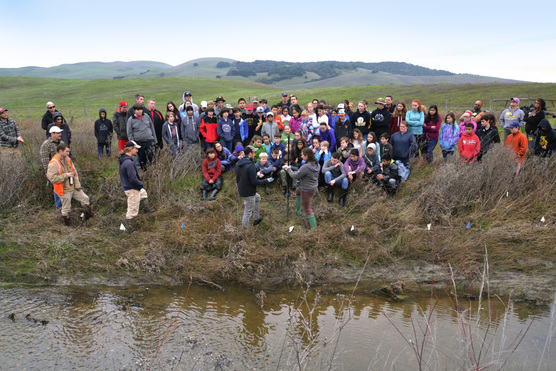
I parked at the site and hiked up the hill, the tall, wet grass soaking my pant legs. At the top was a circle of students, parents, AmeriCorps volunteers and Point Blue staff. Isaiah Thalmayer from Point Blue asked the students some review questions about the preparatory lessons they’d learned in advance and eager hands shot up around the circle. These young people really knew their stuff! They were able to explain willow-planting techniques, the special nature of riparian habitats, reasons for the restoration and names of the many species that would benefit from it.
Soon, it was time to get started on the work. The kids were told how to handle the digging bars safely and to work in teams, counting to three together before plunging the bar into the rain-softened earth. They were taught to differentiate between the two species of willow cuttings, and how to match them to the colored flags that dotted the stream banks.


Soon, the air was filled with choruses of “PLANT INSPECTION!” as the newly planted willows stood awaiting the “tug test,” which would prove that they were firmly planted. Once their work was approved, the student teams moved onto the next flag and started again. Soon, the banks of Tolay Creek were covered with young saplings ready to put down roots to prevent soil erosion and to begin the process of creating habitat for birds, reptiles, fish and mammals.
After a day of good work, the students went home with the knowledge that the willows they’d planted would one day grow into an ecosystem that they would be able to visit — and one day, perhaps, bring along children of their own.
Elizabeth Newton is SLT’s (awesome) office manager.
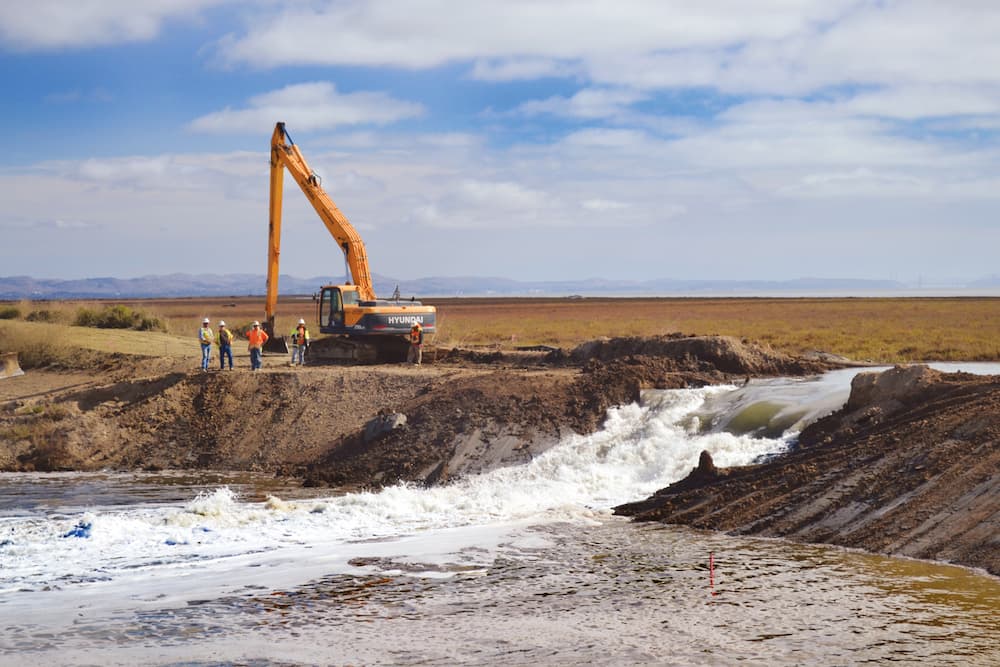
First two photos by Scott Hess: last photo by Elizabeth.