Blog
nature nurture
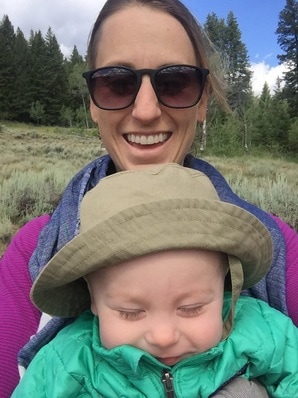
by Crystal Simons
When a property is protected for conservation, we celebrate. We celebrate the intention and conservation ethic of the landowner. We celebrate the beauty of the natural resources and the realization of their longevity. We honor the individuals, partners and supporters who make the projects happen. This, the moment of acquisition, is the birth of a landscape’s life as a conservation property.
Following the acquisition, the property’s project file is carefully cleaned up, dressed in a new manila envelope, wrapped in a blanket of press coverage, and gently handed over from the acquisition project team to the receiver: the land trust stewardship staffer who will care for it, monitor it and patiently but sternly tend to it and the people connected to it … forever.
Remind you of something?
Despite being so small and so young, my daughter is independent and very active. I am literally her caregiver, but our relationship is not one-directional. While I watch her climb onto a wooden chair and navigate how to turn herself around to sit, I’m monitoring for safety, learning to trust her abilities and instincts, and allowing her to learn her own lessons. In each activity she conquers, I’m left in awe (even when it is as simple as pointing at her shoe when I say “shoe”). In this early phase of parenthood, I am learning to care from a distance — to give direction and guidance and keep her safe while watching in wonder as she grows, changes and adapts to her environment.
Similarly, stewarding private conservation lands is a mutually beneficial relationship that requires distant monitoring with occasional hands-on direction. At least once each year, SLT staff or volunteer monitors visit every conservation easement property. We partner with the property’s landowner to understand how the property has changed — or how it will. We anticipate change because we know change is inevitable.
Change can be good. We look forward to the blooming wildflowers or forest regrowth after a fire. Landowners often restore streams or repair rural roads. But change can also be bad. We reluctantly document changes that violate the conservation easement agreement. Whether due to a natural change, like a culvert failing after one too many atmospheric rivers, or an anthropogenic (human-caused) impact like construction of a prohibited garage, an unwelcome change is a learning opportunity for each of the land’s stewards: the landowner and the Land Trust. Professionally, we know those changes are part of the greater life cycle of the property, and we strive to communicate and mitigate issues with patience, understanding and care. We assess the damage, define solutions, assist the landowner to remedy the problem, learn from our mistakes and eventually move on.
Just like each growing child, each conservation easement property evolves in its own beauty, complexity and dramatic moments of change. Nature (naturally) evolves — with the seasons, with climate change, and with human intervention and activities. We can observe the resiliency of a landscape just as we can observe the resiliency of a growing child. And just as children evolve, so do land stewards. While discipline isn’t really a thing for a 14 month old, I know I’ll discipline her someday. I hope when the time comes, I’ll apply the same patience and empathy to her breaking a toy or breaking curfew as I do when a conservation easement agreement is violated. I know there is another person on the other end with their own point of view — even if it breaks the rules. Regardless of the situation, when an easement is violated and enforced, hard lessons are learned by both sides. As a parent, as a land steward, I must remember that a lesson learned is a strength gained. It’s evolution.