Blog
June 2025 eNews
State of the Birds 2025: Alarming Declines
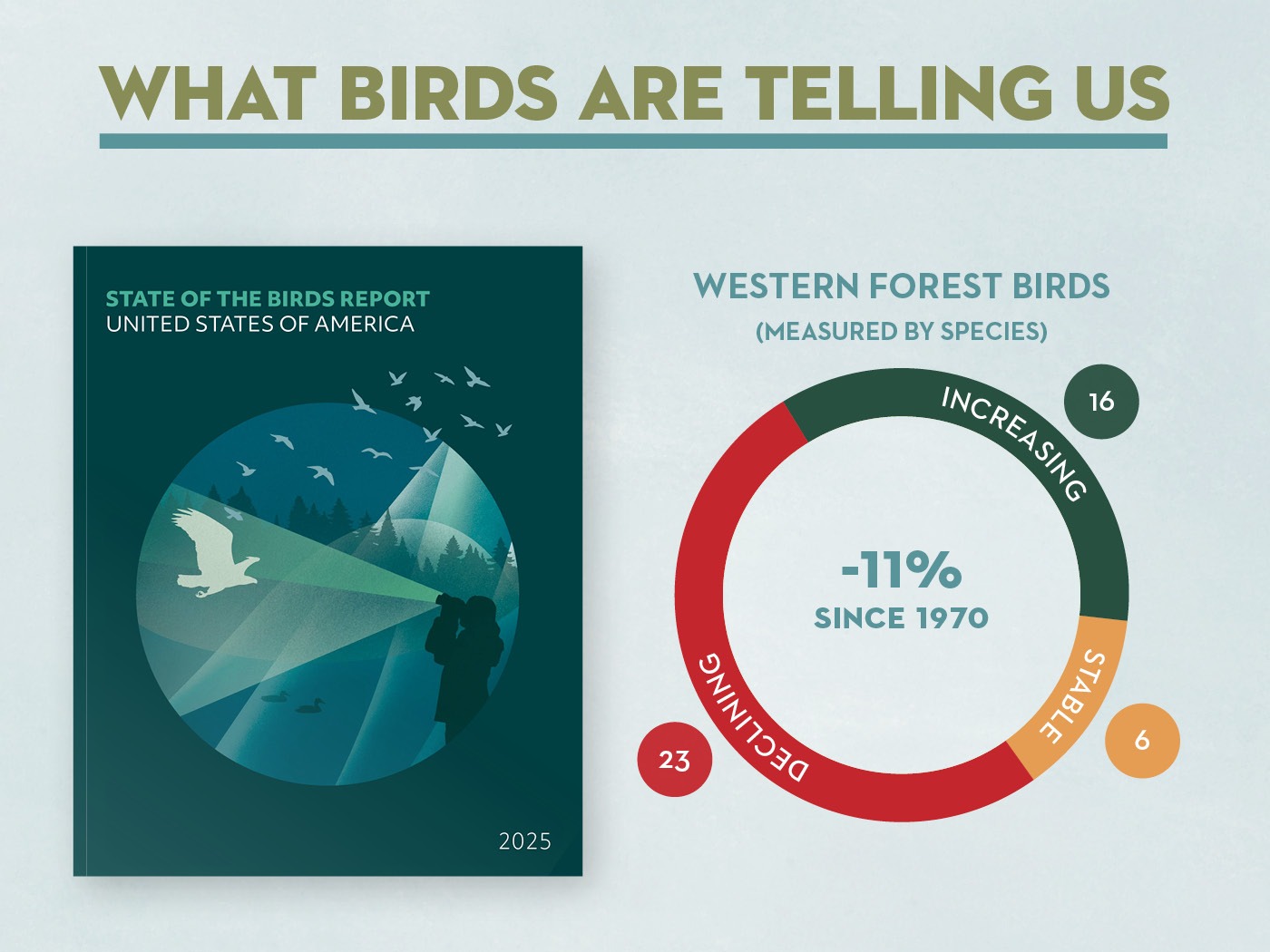
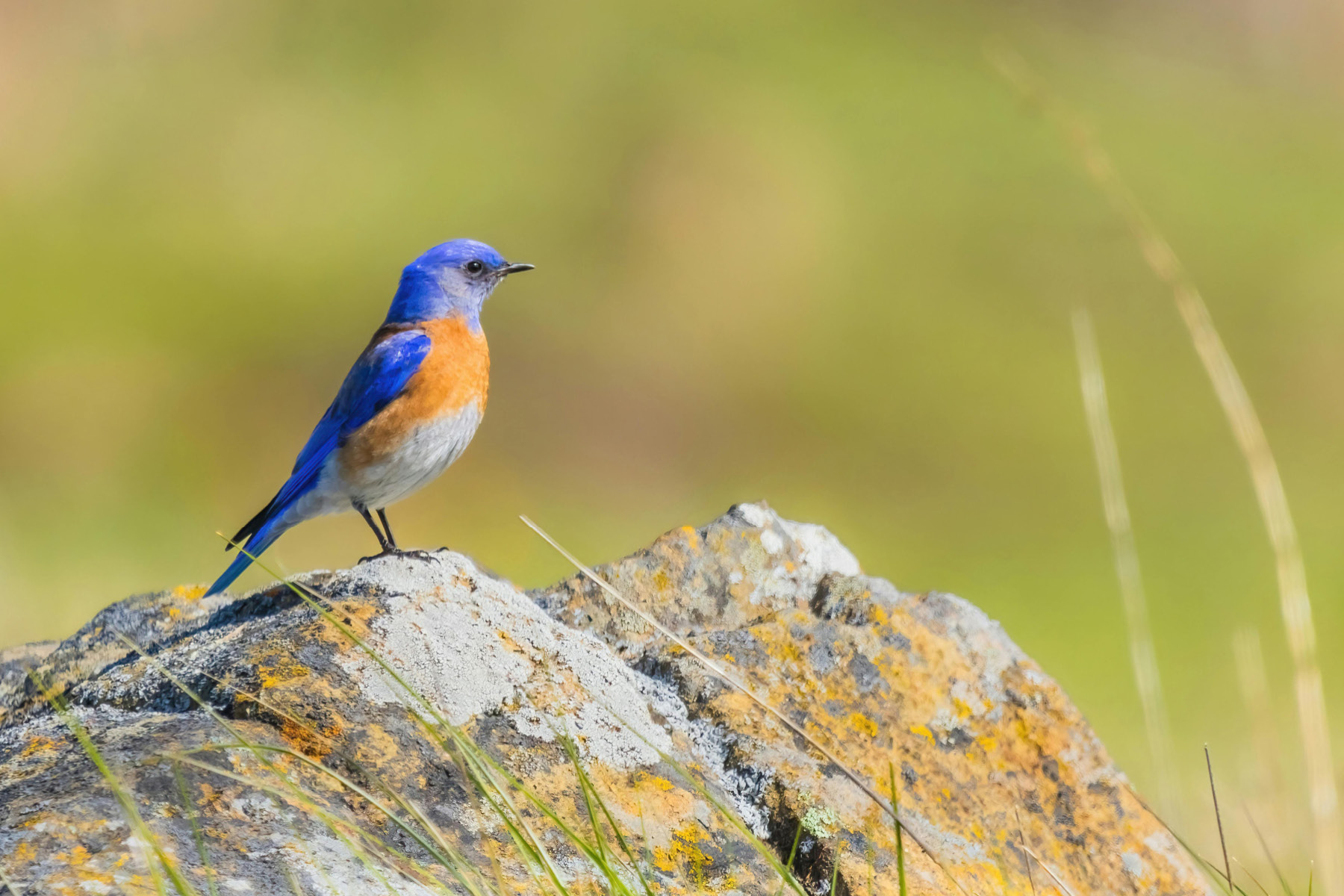
Every year, the State of the Birds report provides a crucial snapshot of America’s bird populations, serving as both a barometer of environmental health and a compass for conservation. This year’s message is loud and urgent: about one-third of all U.S. bird species require immediate conservation action. Birds are sounding the alarm, and we need to listen.
Bird populations are declining across every habitat type, from grasslands to coasts, and from deserts to forests. The 2025 report builds on the devastating 2019 finding that North America has already lost 3 billion birds since 1970. Now, researchers say we’re in a “full-on emergency across all habitats,” according to Marshall Johnson of the National Audubon Society (source).
At the heart of this year’s warning are 112 Tipping Point species, birds that have lost over half their populations in the past 50 years and are projected to lose another 50% in the next 50 without intervention. Among these, 42 species fall into the Red Alert category, with perilously low populations and steep declines. These birds are not just vanishing they are waving red flags about the health of the planet we all share.
What birds are telling us
Like humans, birds suffer from habitat loss, climate change, and environmental degradation. However, unlike us, they serve as immediate indicators of ecosystem distress. The old saying about “a canary in the coal mine” rings truer than ever: when birds disappear, they signal that something is deeply wrong.
In Northern California, particularly in places like Sonoma County, several Tipping Point species are raising concerns. Allen’s Hummingbird (Selasphorus sasin), once common along the coast, has declined sharply due to habitat degradation and shifting climates. Ridgway’s Rail (Rallus obsoletus), another Sonoma-area resident, faces threats from wetland loss and sea-level rise. Both species urgently need conservation action.
Other species native to Northern California that appear on the watch list include:
- Rufous Hummingbird — a long-distance migrant threatened by disappearing food sources and warmer springs.
- Yellow-billed Magpie — endemic to California and vulnerable to habitat fragmentation and disease.
- Tricolored Blackbird — once abundant in California’s Central Valley, now suffering from wetland loss and agricultural changes.
- Marbled Murrelet — reliant on coastal old-growth forests, which are shrinking due to development and logging.
The good news: conservation works
While the trends are grim, there’s also a powerful takeaway from this year’s report: conservation works. Targeted actions have already helped particular waterfowl and waterbird populations rebound. Locally, efforts like those at the Sonoma Creek Baylands show what’s possible. By protecting and restoring critical habitats, organizations like Sonoma Land Trust are offering real help to birds like the Ridgway’s Rail and restoring the broader ecosystems they depend on.
Private land trusts, government agencies, and community groups must continue to invest in bird-friendly policies, habitat restoration, and climate resilience strategies. Science-informed conservation isn’t just a hopeful idea it’s a proven solution!
What we can do together
Birds are telling us something, and it’s time we listen. Supporting local conservation organizations like Sonoma Land Trust is a direct way to take action. By helping to preserve and restore habitats, you can contribute to reversing bird declines and protecting the natural legacy of Northern California.
The 2025 State of the Birds report is more than a data set: it’s a call to action. For the birds, for the ecosystems they anchor, and for ourselves — the time to act is now. Please join us!
Not-so-silent messengers: how birds convey forest health and resilience
Birds have long been recognized as early warning systems for environmental change. Their presence or absence provides critical insight into ecosystem health, biodiversity, and the effectiveness of land management. A recent multi-year bird monitoring initiative across four of our preserves reveals a promising story: thoughtful forest management can reduce wildfire risk while supporting vibrant bird populations.
A decade of bird monitoring sets the stage
In 2013, the Sonoma Land Trust (SLT), Point Blue Conservation Science (Point Blue), and The Wildlands Conservancy (TWC) initiated a monitoring program to understand the impact of forest management on avian diversity across several SLT properties. These early efforts established an unexpected asset—baseline data that would become a goldmine nearly a decade later.
Fast forward to 2022: the team revisited the sites with a more focused question: how are birds responding to shaded fuel breaks and other forest treatments designed to reduce wildfire risk.
Between 2022 and 2024, Point Blue’s Ryan DiGaudio, in coordination with TWC’s Ryan Berger, and SLT’s Shanti Edwards and Melina Hammar, conducted spring bird surveys across four key preserves, including TWC’s Jenner Headlands Preserve, and three SLT properties: Pole Mountain, Little Black Mountain, and Bear Canyon Wildlands. The four sites have been carefully managed using shaded fuel breaks and prescribed fire, offering varied landscapes that support a broader diversity of habitats in Sonoma County. However, all sit within fire-prone zones, where forest health and fire resilience must go hand in hand.
The researchers concentrated on focal species, which are birds that have specific habitat needs (such as old-growth forests or dense shrub understory) and can help measure the success of conservation efforts.
Here’s what they found:
- Jenner Headlands: 65 species detected, including 22 focal species
- Pole Mountain: 27 species, 8 focal species
- Little Black Mountain: 29 species, 13 focal species
- Bear Canyon Wildlands: 39 species, 12 focal species
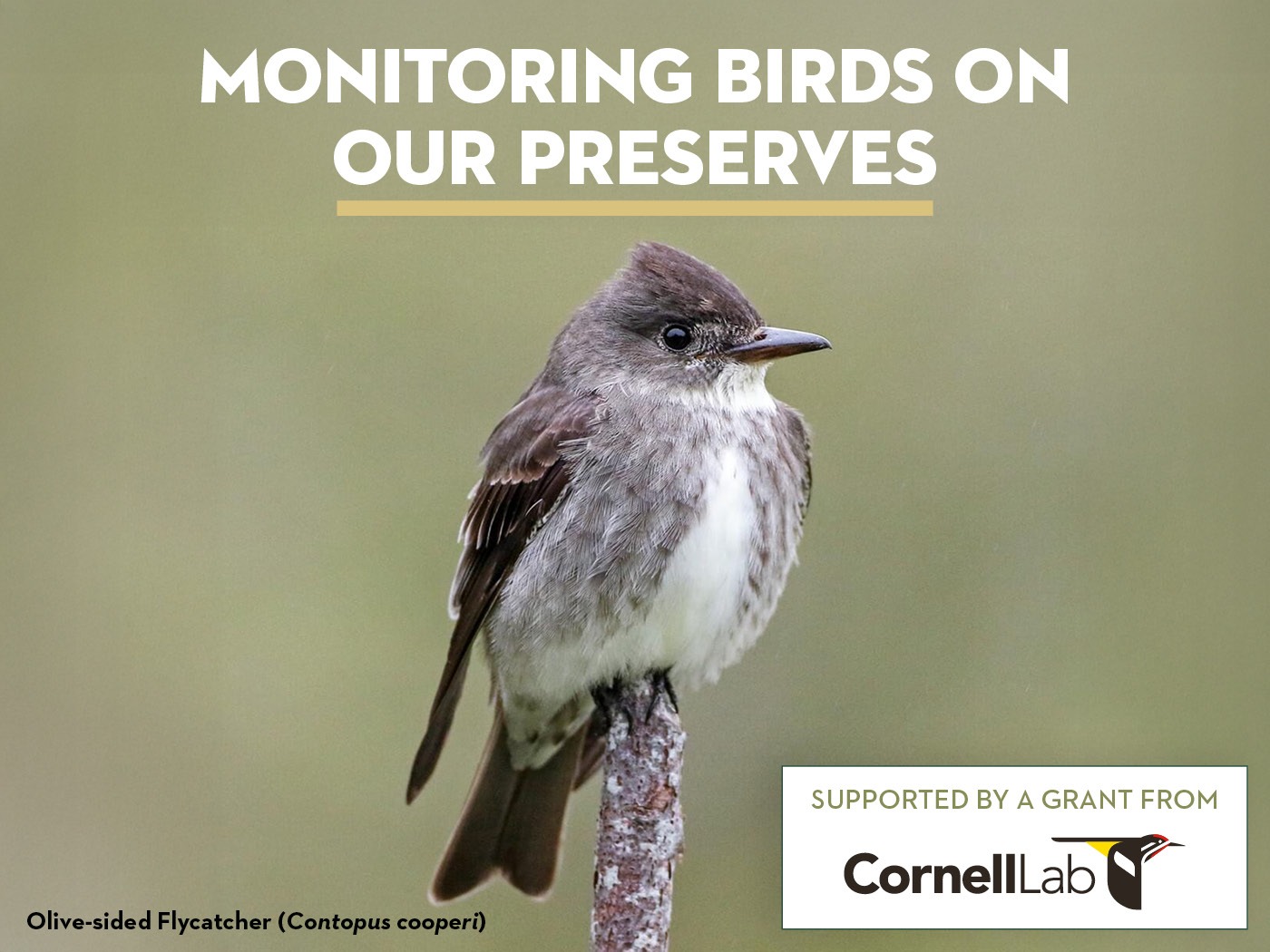
They also recorded species of special concern, such as the Olive-sided Flycatcher, Vaux’s Swift, and Purple Martin, underscoring the habitat value of these conserved lands. These three species are sensitive to ecosystem changes, making them effective barometers that help researchers assess the impact of various forest management treatments.
Early results are promising
Across all preserves, wildfire resilience treatments had either a neutral or positive effect on the number of bird species and the overall abundance of birds. In some cases, species richness increased compared to baseline surveys from a decade prior.
Even better, the treatments created “edge habitats,” the transitional zones between different forest types that tend to boost species diversity. This suggests that forest thinning and fuel reduction, when done thoughtfully, don’t degrade wildlife value. On the contrary, they can enhance it. For example, for species that nest in the understories of forests, early indications show that certain forest treatments do not decrease their population size. This furthers the question – and possibility – of how we can manage forests in a way that directly supports our long-term conservation goals, reduces wildfire risk, and restores habitat for the benefit of all.
Why this work matters
With the increasing impact of climate change and the risk of future wildfires, we remain committed to active forest management. Studies like these are vital to understanding how conserved lands can serve as wild sanctuaries for birds and as outdoor labs that advance science-based stewardship across the country. The research requires funding and time, and we’re grateful to the Cornell Lab of Ornithology for making this recent study possible.
Land trusts can do a lot for birds, and forest management should be considered as part of that action. Looking ahead, the next phase of this work will include continued monitoring, adaptive stewardship, and sharing findings across a broader network. In Sonoma County and beyond, the main takeaway remains clear: listen to the birds. How many bird species are in a given habitat? What, if any, indicator species live there? Are their populations growing or shrinking?
If we listen, the birds are telling us how conservation works wonders when it is guided by science and grounded in stewardship. We are grateful to our partners at The Wildlands Conservancy and Point Blue Conservation Science for sharing their time and expertise in this critical research.
Explore eBird: discover birds and contribute to science
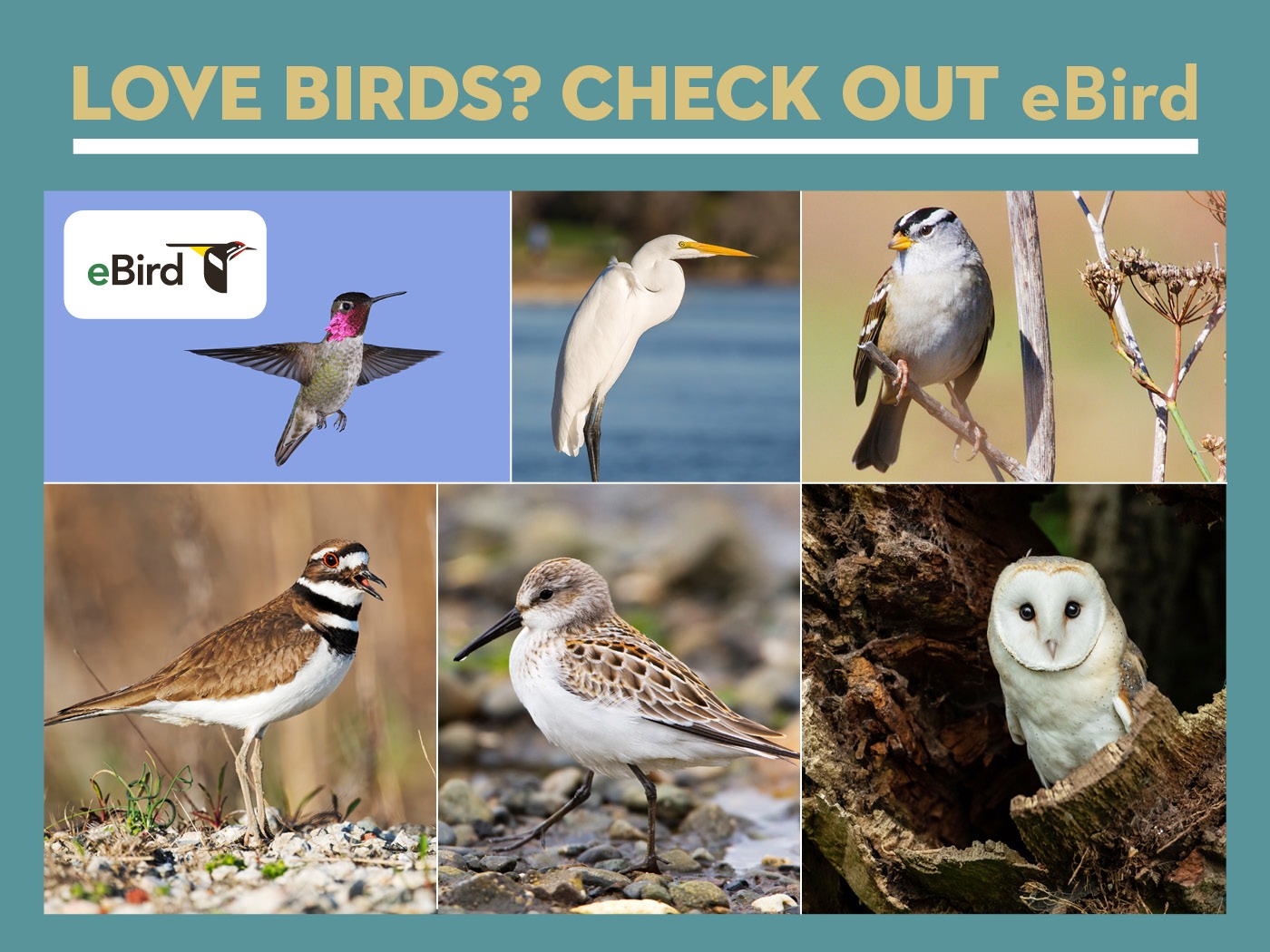
Whether you’re a seasoned birder or just starting to notice feathered visitors in your backyard, there’s never been a better time to deepen your bird knowledge and support local conservation while you’re at it. Thanks to cutting-edge tools and sophisticated science platforms, you can identify birds, track your sightings, and even contribute to scientific research right from your phone.
Free resources like Merlin, the intuitive bird ID app, and eBird, the global platform for bird sightings, are empowering nature lovers of all ages. eBird lets you track your sightings, explore hotspots near you, and discover seasonal trends in bird activity. Over 1.9 billion observations have already been submitted by birders worldwide, creating one of the most valuable wildlife databases in existence. This data powers conservation decisions, helps land trusts secure grants, and supports participatory science that protects birds and their habitats. Want to learn even more? The Bird Academy from the Cornell Lab of Ornithology offers self-paced courses for every skill level—from the basics of birdwatching to interpreting complex migration patterns.
These tools don’t just boost your enjoyment of birding—they also make a real impact. In Sonoma County, conservation groups use bird data from these tools to monitor forest health, guide land management decisions, and enhance wildfire resilience. Your sightings could help inform the next major conservation effort!
Get involved today
Start by visiting birdtrust.org to access free birding tools, educational resources, and local conservation opportunities. Then, head out to a Sonoma County hotspot like Jenner Headlands or Little Black Mountain, with Merlin and eBird in hand, and discover what birds can teach you about the land we call home.
More birding projects and resources from Cornell Lab of Ornithology:
- All About Birds – Online guide to birds and birdwatching
- Bird Academy – Birding courses and tutorials
- Birds of the World – Life histories for all bird species
- Celebrate Urban Birds – Bilingual, equity-based community science
- Great Backyard Bird Count – Four days of bird counting, each February
- Macaulay Library – Scientific archive of birds and more
- Merlin Bird ID – An app that helps with bird ID
- NestWatch – Database for nest monitoring
- Project FeederWatch – Survey of birds visiting backyards, nature centers, etc.
Not sure where to start? Explore the eBird website or download the app to begin. For beginning birdwatchers, consider trying the self-paced Joy of Birdwatching Course.
Free Language of the Land Webinars
Bay Area Wildlife with Jeff Miller

June 25, 7pm
Join Sonoma Land Trust for a presentation by conservationist Jeff Miller, author of Bay Area Wildlife: An Irreverent Guide. Miller’s talk will cast a spotlight on some of the region’s most charismatic fauna, amazing animal congregations, and mass migrations.
Register today / Regístrese hoy
Bringing the Salmon Home with Toz Soto

Learn from Toz Soto, Fisheries Biologist for the Karuk Tribe, about the undamming of the Klamath and its effect on the salmon and water quality. He also covers the fight to remove the dam, as well as the mechanics of the dam removal.
News
Take Action

Join us and the Power in Nature coalition as we stand together to protect our shared natural resources and public lands.
Free outings
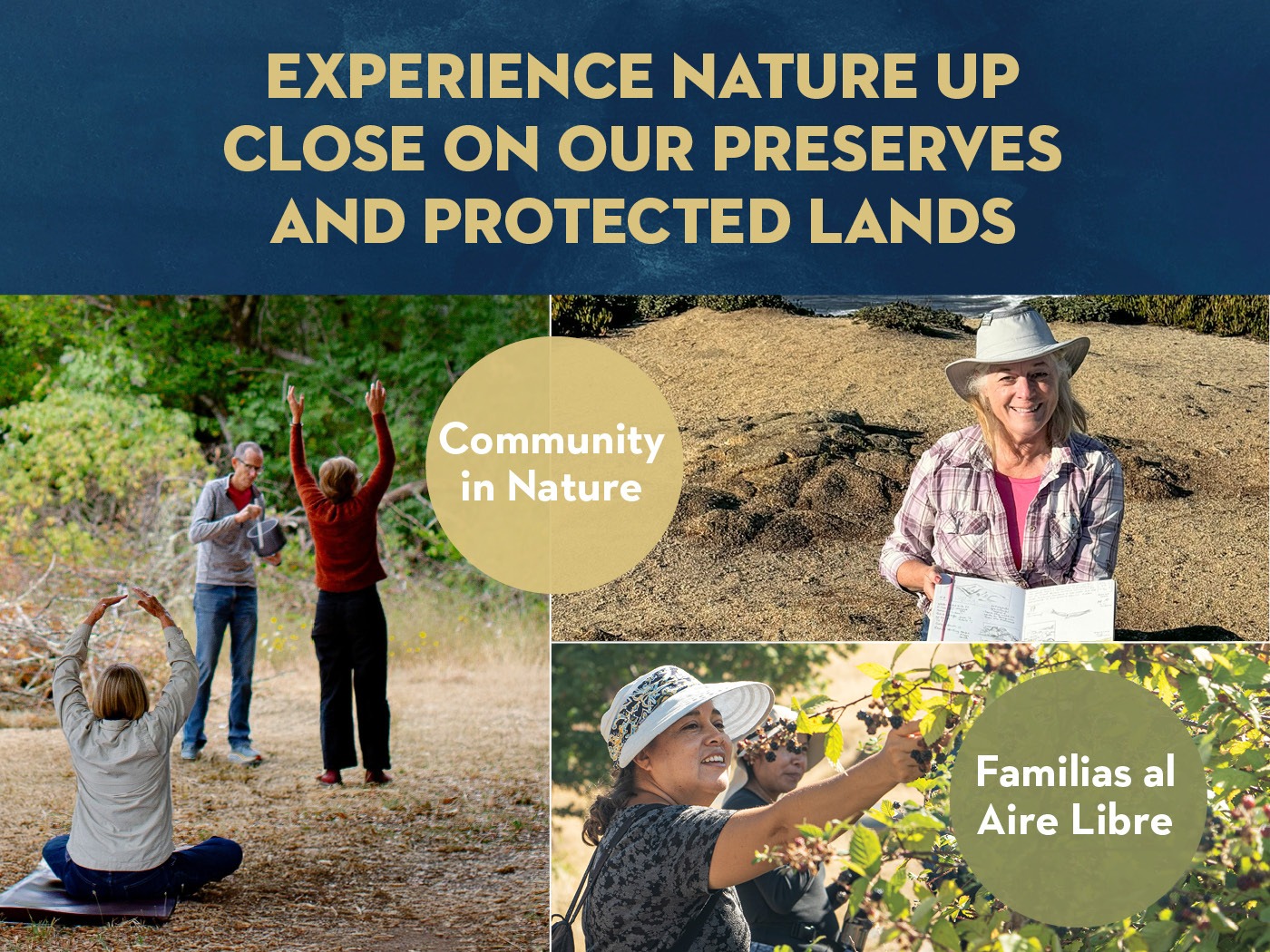
This month, experience sound healing and yoga, or join us for The Nature Around Us: Journaling the Santa Rosa Creek Watershed series of summer outings beginning June 18 with an intro to nature journaling workshop by Sarah Reid.
Many of these hikes are in partnership with Sonoma County Ag + Open Space.
Staff recommendation

Sonoma County Feminist Bird Club (Sonoma County FBC) is a friendly group of bird nerds, committed to creating a safe and welcoming space for everyone, regardless of their identities, to learn about birds and their environments. Our mission is to build community around a shared interest in birds, nature, and environmental and social justice.
Birding for a Better World blends the joy of birdwatching with a focus on inclusivity and justice, challenging traditional norms and showing how birding can drive both conservation and social change.