Blog
in a landscape shaped by fire
by Shanti Edwards
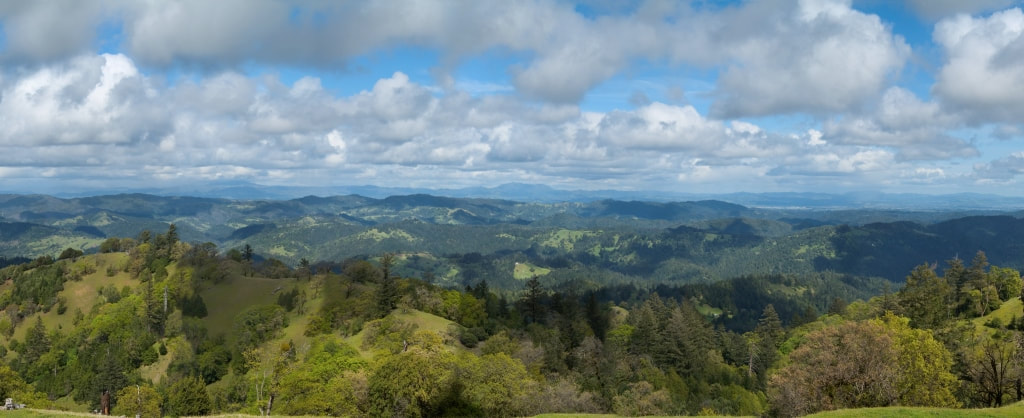
In a landscape and community shaped by fire, Sonoma Land Trust’s stewardship efforts at Little Black Mountain and Pole Mountain have been focused on fire preparedness and fuel reduction. The Little Black Mountain Preserve was donated to SLT in 1979 by the Thieriot Family after the fire leveled their quaint back-to-the land homestead, and the Lookout Tower was moved to Pole Mountain in 1981 to protect the community from more catastrophic fire events.


Is our fire plan adequate for a one in a 100-year fire event?
I asked this question of CAL FIRE Battalion Chief Marshall Turbeville, who is also the board president of the Pole Mountain Fire Lookout Committee. First and foremost, Marshall advises us that community level, neighbor-to-neighbor planning will be essential in the years to come.
“We have to go back to what works: loud sirens and neighbors contacting neighbors,” he recommends.
Marshall noted that extreme fire weather seems to be the future in California.
“We are good at putting out average fires, but we are trending toward catastrophic events driven by weather conditions. History did repeat itself and will again,” he warns. “The large fires of 1964 and 1978 are just one generation away and people forget — but we can’t forget.”
According to Marshall, important takeaways from the 2017 Sonoma County fires are that we need to do more fuel management to moderate fire behavior because we can’t control the weather. Homes need be retrofitted to be more fire resistant and vegetation needs to be better managed for defensible space.
“But we can’t just manage for fire — we have to take into account erosion and other hazards,” he cautions.
The night the fires started, Marshall was coming back from a fire at Timber Cove along the coast and noticed the winds picking up around 9:30pm. He was dispatched to Chalk Hill and then to Shiloh Estates — where he witnessed homes burning due to windborne embers from a fire still miles away — and then finally ended up at Coffey Park where it was too late to save homes. In the days following, Marshall directed fire response efforts to the Pocket Fire in Geyserville, where crews battled in steep terrain with heavy fuel loads. Marshall’s Facebook interviews with Supervisor James Gore gained 50,000 views each.
“The large fires of 1964 and 1978 are just one generation away and people forget — but we can’t forget.”