Blog
Historic climate bond passed—Prop. 4
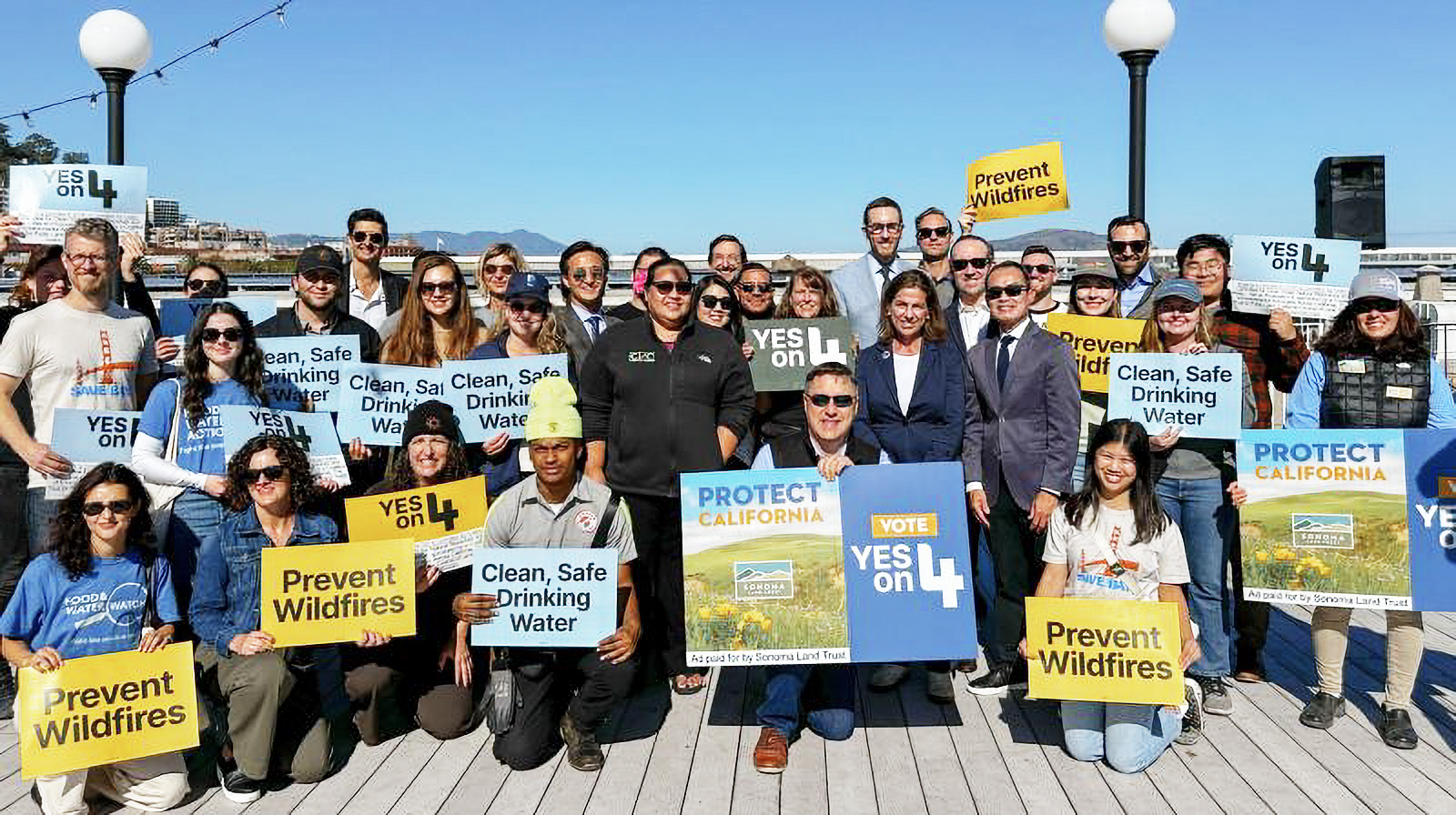
Proposition 4, the Safe Drinking Water, Wildfire Prevention, and Protecting Communities and Natural Lands From Climate Risks Act, was approved by California voters on November 5, 2025. The measure authorizes the state to issue bonds to fund critical investments in clean drinking water, wildfire prevention, and protections against sea level rise, flooding, extreme heat, and drought. It also provides significant funding to safeguard farms, natural lands, inland and coastal waters, and parks for the benefit of all Californians.
With its passage, Proposition 4 represents the single largest investment in environmental protection and climate resilience in California’s history. The bond will provide funding over the next several years to help communities and conservation partners accelerate efforts to restore ecosystems, strengthen wildfire resilience, protect water resources, and prepare for the growing impacts of climate change.
At a time when California faces ongoing budget pressures and projected deficits, Proposition 4 establishes a stable source of funding to help meet the state’s 30×30 conservation goals and restoration targets by 2030. These investments are critical as California confronts the escalating costs of climate change. According to the California Natural Resources Agency’s Fourth Climate Change Assessment, climate impacts could cost the state an estimated $113 billion annually by 2050 if action is delayed.
By passing Proposition 4, Californians affirmed a commitment to protecting communities, strengthening natural systems, and investing in solutions that support a more resilient future.
For Sonoma Land Trust, Prop. 4 will provide funding to some of our key state partners and funders, such as the State Coastal Conservancy and the Wildlife Conservation Board
What is a Bond?
Bonds allow the state to borrow money to finance projects and programs. The state sells bonds to investors to receive funding for projects and then repays
investors, with interest, over a period of time. According to the Legislative Analyst’s Office (LAO), one main reason for using bonds is that infrastructure
typically provides services over many years and the large costs of these projects can be difficult to pay for all at once.
How do Bonds Work?
Similar to how a home mortgage works, the state makes annual payments after selling bonds over the following few decades until the bonds are paid off. The
state pays more for a project funded by bonds than if the state does not borrow money for the project because of the interest costs.
Funding expected to be released in March 2026.
Here are some examples of funding for the following projects and programs:
$700 million for Parks, which includes $500 million in parks for neighborhoods with less access to parks, park improvements, and public access, and $175 million for deferred maintenance for state parks. Parks funding was critical to advancing the Santa Rosa Southeast Greenway project and the acquisition of Cooper Creek.
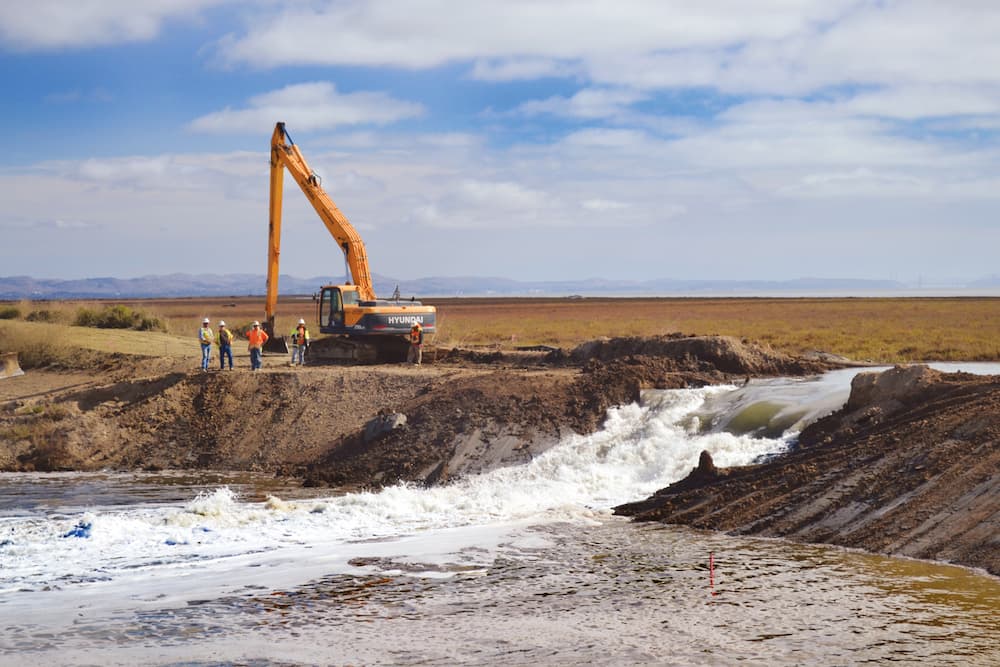
$1.2 billion for Coastal Resilience, including $765 million for the State Coastal Conservancy for climate resilience, sea level rise, and coastal protection. The Bay Area gets a specific allocation of $85 million for SF Bay Restoration Authority/Bay Conservation Projects. The SF Bay Restoration Authority has funded many of our Baylands acquisition and restoration projects, such as the acquisitions of Camp 4 and Kiser Ranch.
In a historic first, the climate bond sets aside $450 million for Extreme Heat; this is the first time a bond has included investments to address the massive Extreme Heat threat facing our state.
$1.2 billion for biodiversity – all of which will go towards meeting our 30×30, public access, and climate resilience goals – there is $870 million for wildlife conservation, habitat connectivity, and ecosystem restoration for the benefit of the entire state. Funding from the Wildlife Conservation Board supported the acquisition of McCormick Ranch and the Sonoma Mountain Vernal Pools properties.
Prop. 4 prioritizes funding for underserved communities, requiring 40% of the funding to go to vulnerable and disadvantaged communities.