Blog
fritillaries in the anthropocene

by Julian Meisler
Silverspot butterfly on a bull thistle. Photo by David Rawlinson.
About two weeks ago, a group of scientists made a recommendation to the International Geological Congress to rename the current epoch to the Anthropocene, ending the Holocene epoch that began roughly 12,000 years ago.
To declare a new geological epoch, there must first be a globally occurring signal that will be found in the deposits of the future geological record. In this case, it might be radioactive elements from nuclear bomb tests, which exploded into the stratosphere before gradually settling down to Earth. The proposal suggests that the Anthopocene — anthropo– meaning “human” and cene– meaning “new” — began in 1950. The term was first proposed in 2000 by Nobel prize-winning scientist Paul Crutzen, who in 2011 said, “This name change stresses the enormity of humanity’s responsibility as stewards of the Earth.”
Whether the name is ultimately adopted remains to be seen — but our responsibility for the earth is indisputable.
To declare a new geological epoch, there must first be a globally occurring signal that will be found in the deposits of the future geological record. In this case, it might be radioactive elements from nuclear bomb tests, which exploded into the stratosphere before gradually settling down to Earth. The proposal suggests that the Anthopocene — anthropo– meaning “human” and cene– meaning “new” — began in 1950. The term was first proposed in 2000 by Nobel prize-winning scientist Paul Crutzen, who in 2011 said, “This name change stresses the enormity of humanity’s responsibility as stewards of the Earth.”
Whether the name is ultimately adopted remains to be seen — but our responsibility for the earth is indisputable.
Radioactive elements are not the only signals of the new epoch. Other notable suggestions include plastic trash, chicken bones, elevated levels of phosphorous and nitrogen from fertilizers, and the absence of 75 percent of existing species that may go extinct over the next several hundred years if current trends continue.
But not all species are declining. Non-natives and invasive species are multiplying rapidly. Yellow star thistle, purple star thistle, perennial pepperweed and stinkwort are just a few of our local challenges.
Whether these invasions are a signal of the new epoch is debatable. As a steward of wild lands, however, they are something I’ve spent years fretting over. Yet there are hundreds of widespread non-native species to which we give less attention. We distinguish them as being less aggressive, less apt to spread and, gradually, we are beginning to see that some of these species offer some functional value in the wake of those we’ve lost.
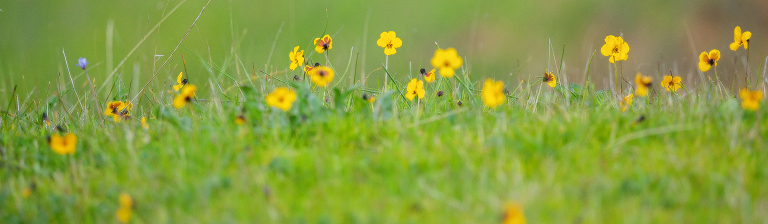
Here’s an example. In the hills around Sears Point and a few other spots around the bay, we believe we have a beautiful and endangered butterfly, the Callippe silverspot (Speyeria callippe callippe). It relies on healthy populations of its host plant, a wildflower named Johnny jump-up (Viola pedunculata), of which there are hundreds of thousands covering the Sears Point hills in springtime. When the Callippe metamorphoses from a pupa to a butterfly, it seeks mates and nectar. But with the passage of spring, native nectar plants can be difficult to find.
For more than five years, I’ve received an email in early June from a man captivated by the Callippe silverspot. Each year, he requests permission to visit Sears Point to search for it. And each year following his visits, he sends me photos that look very much like the Callippe silverspot, though I’m told that, by the naked eye, it is indistinguishable from closely related and non-endangered silverspots. Regardless, what I notice in his photos are the plants on which the butterfly is perched: yellow mustard, vetch, hairy cat’s ear, Himalayan blackberry, bull thistle and purple star thistle. All are non-native and some are highly invasive. All seemingly provide nectar for the butterfly. Without its host plants, this species will vanish. But what of the weeds? Perhaps they offer some value after all.
But not all species are declining. Non-natives and invasive species are multiplying rapidly. Yellow star thistle, purple star thistle, perennial pepperweed and stinkwort are just a few of our local challenges.
Whether these invasions are a signal of the new epoch is debatable. As a steward of wild lands, however, they are something I’ve spent years fretting over. Yet there are hundreds of widespread non-native species to which we give less attention. We distinguish them as being less aggressive, less apt to spread and, gradually, we are beginning to see that some of these species offer some functional value in the wake of those we’ve lost.
Here’s an example. In the hills around Sears Point and a few other spots around the bay, we believe we have a beautiful and endangered butterfly, the Callippe silverspot (Speyeria callippe callippe). It relies on healthy populations of its host plant, a wildflower named Johnny jump-up (Viola pedunculata), of which there are hundreds of thousands covering the Sears Point hills in springtime. When the Callippe metamorphoses from a pupa to a butterfly, it seeks mates and nectar. But with the passage of spring, native nectar plants can be difficult to find.
For more than five years, I’ve received an email in early June from a man captivated by the Callippe silverspot. Each year, he requests permission to visit Sears Point to search for it. And each year following his visits, he sends me photos that look very much like the Callippe silverspot, though I’m told that, by the naked eye, it is indistinguishable from closely related and non-endangered silverspots. Regardless, what I notice in his photos are the plants on which the butterfly is perched: yellow mustard, vetch, hairy cat’s ear, Himalayan blackberry, bull thistle and purple star thistle. All are non-native and some are highly invasive. All seemingly provide nectar for the butterfly. Without its host plants, this species will vanish. But what of the weeds? Perhaps they offer some value after all.

Silverspot butterfly on blackberry flowers. Photo by David Rawlinson.
I do not discourage the control of invasive plants — in fact, I actively engage in it. But at this time of year, when our native late-blooming flowers are few and far between, I do give thought to what is flowering. While the adult fritillary butterflies laid their eggs and died weeks or months ago, many other insects are searching for nectar where there is not much to be had.
Stewardship is as much about choices as it is about anything else. And it’s about values. In the Anthropocene, our choices are as difficult as ever.
Stewardship is as much about choices as it is about anything else. And it’s about values. In the Anthropocene, our choices are as difficult as ever.