Blog
exploring underpasses in southern Sonoma County
by Jen Stanfield
In the fall of 2013, Sonoma Land Trust began to use infrared cameras to monitor underpasses along Highway 12 and Arnold Drive in Sonoma Valley. The cameras were left in place for about two years, gathering information about the types and number of species crossing under busy roads in Sonoma Valley. Additionally, staff completed periodic roadkill surveys in the same area, hoping to diagnose trouble spots on the road where animals are routinely killed in vehicle collisions — spots that present a hazard to both animals and motorists.
SLT partnered with Pathways for Wildlife (http://pathwaysforwildlife.com/) to analyze the 2013-–2014 underpass data. The findings supported the importance of the corridor and highlighted the number of animals using the underpasses, as well as species diversity. To learn more, check out the Sonoma Valley Wildlife Corridor Road Underpass Use Report.
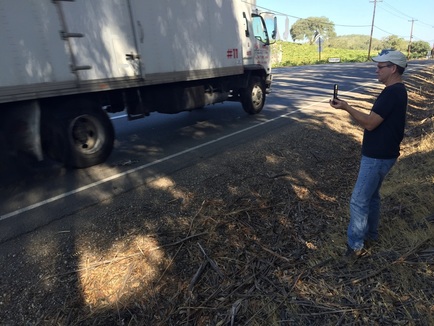
The monitoring and associated report for Sonoma Valley provides useful information about corridor permeability, but what about other areas of Sonoma County? As we look to the future of the wildlife corridor program, we have questions about animals’ ability to cross roads in southern Sonoma County, especially Highway 101 and Adobe Road within the designated wildlife corridor. To begin answering these questions, program manager Tony Nelson and I spent a day in early March exploring underpasses and culverts in the southern part of the county. Our colleagues Tanya Diamond and Ahiga Snyder from Pathways for Wildlife joined us.

We piled into the SLT truck and drove the roads within the corridor, stopping to evaluate underpasses and culverts for use by wildlife. Our methods included measuring the underpass, evaluating water depth, line of sight and last, but far from least, fencing. We were forced to rule out several underpasses as potential study sites based solely on the fact that they were fenced off on both sides of the road. In practice, this meant a lot of parking and walking along road shoulders, hunching over to walk through low underpasses, looking for animal tracks around the underpass and observing roadkill in the general area.

Underpasses can be vital in allowing animals to move across landscapes that are bisected by roads. Ideally, an underpass will be large enough to accommodate the largest species that may be present in the area (in our case, that means deer, bear and mountain lion), have a clear line of sight to the other side and have vegetation on both sides. The use of underpasses and culverts varies by species. For instance, raccoons often adopt the use of an underpass as part of their routine, while there are relatively few documented cases of mountain lions using underpasses.

Though we’re still in the planning stages, we’re excited to increase our understanding of corridor permeability and underpass use within the Sonoma County section of the Marin Coast to the Blue Ridge-Berryessa habitat linkage!