Blog
connected waterways
by Julian Meisler
Over the past few winters, I watched with interest as the tides deposited all manner of things on the levee at Sears Point. Trash, unfortunately, has been a constant, with truck-size blocks of Styrofoam, liquor bottles, plastic this-and-that, rubber balls, and even appliances — an indication of the bay’s trash problem. But less distressing and far more interesting are the signs of life and the connection of Sonoma County to the ocean, the greater Bay, the Delta and, ultimately, the rest of inland California.
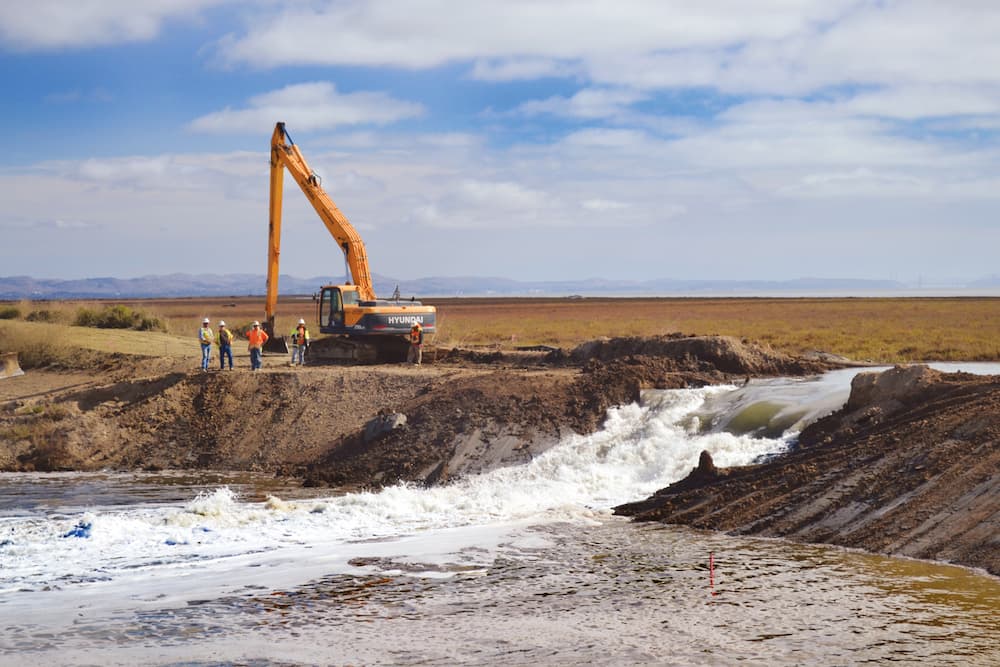
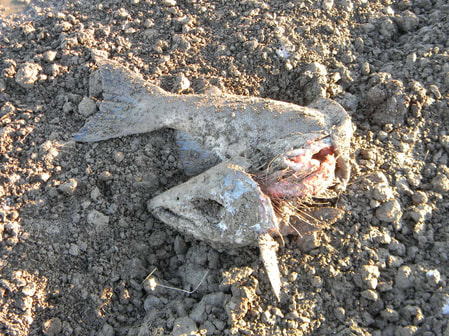
One winter morning after the levee breach, I stumbled upon the decaying remains of a spawning salmon or steelhead. It shouldn’t have been surprising, but it was. After all, it had been a hay field just a couple of months ago and this fish had lived so recently in the Pacific Ocean.
One winter morning after the levee breach, I stumbled upon the decaying remains of a spawning salmon or steelhead. It shouldn’t have been surprising, but it was. After all, it had been a hay field just a couple of months ago and this fish had lived so recently in the Pacific Ocean.
Many of you will remember the stunning photo of a seal holding a freshly caught striped bass in its jaws in our eNews, a testament to the open water bay habitat that Sears Point provides.
This past winter, I worked on the levee edge with some regularity as we toiled to establish native plants there. While our efforts are necessary, the tides complement, augment and sometimes eclipse our work by bringing in root fragments and the seeds of native marsh vegetation. We’ve seen the emergence of alkali bulrush this year, a brackish species that is more likely to thrive in a rainy year; cordgrass, one of the first plants to colonize as mudflats rise in elevation; and the abundant pickleweed, which occupies the mid- and upper marsh.
This past winter, I worked on the levee edge with some regularity as we toiled to establish native plants there. While our efforts are necessary, the tides complement, augment and sometimes eclipse our work by bringing in root fragments and the seeds of native marsh vegetation. We’ve seen the emergence of alkali bulrush this year, a brackish species that is more likely to thrive in a rainy year; cordgrass, one of the first plants to colonize as mudflats rise in elevation; and the abundant pickleweed, which occupies the mid- and upper marsh.

All of these plants speak to the site’s connection to much larger bodies of water.
One morning in late winter, after a period of heavy rain and high tides, I arrived to find masses of tules washed up on the shore and, with them, one of the most invasive freshwater aquatic plants in the world, water hyacinth — rafts of it.
One morning in late winter, after a period of heavy rain and high tides, I arrived to find masses of tules washed up on the shore and, with them, one of the most invasive freshwater aquatic plants in the world, water hyacinth — rafts of it.

Clearly, these had washed in from the Delta, perhaps from river reaches as far away as Sacramento. It struck me that the Delta, which drains some 40 percent of California, flows past and sometimes through our restoration project, bringing with it all of the life and death that it collects along the way.
It’s this connection to the ocean, the bay, the Delta and inland California that makes Sears Point the vital habitat that it is. Come and take a look — who knows what you may find?
The wetlands at Sears Point Ranch are now part of the San Pablo Bay National Wildlife Refuge. The 10 miles of trails there along the evolving tidal marsh are open to the public daily for hiking, trail running and bicycling. There is also a kayak put-in. Docents are available on Saturday mornings for guidance and interpretation. Click here for more info.
Julian Meisler is Sonoma Land Trust’s Baylands program manager.