Blog
bee gate
by Jen Stanfield
I could expound here on the process of septic repair. I could describe the waiting room fittings of the Sonoma County Permit and Resource Management department, the surprising amount and variation of paper sizes involved in septic design and permitting, or the minimum length requirements for leach lines serving a 2 bedroom, 1 bath bungalow, but I sincerely doubt that information is what brought you to our blog. So I’ll restrain myself.
But why do I bring it up here, only to follow with “nah, not interesting”? Well, my friend, the answer is … BEES!
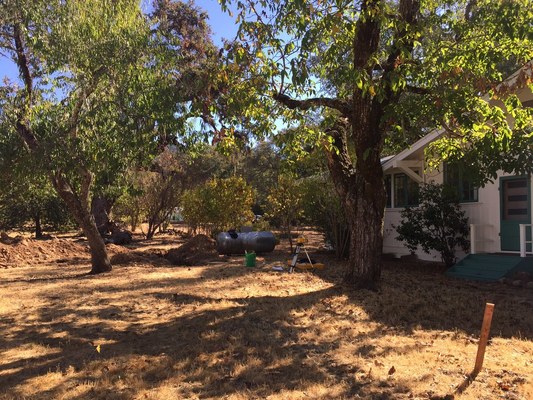
My fascination was not, however, shared by the septic contractor. After signing a contract and beginning work, the contractor notices the hive and refused to continue the project until the bees were out of the area. This left us with open trenches, a very large pile of gravel and abandoned excavating equipment, not to mention the yet-to-be repaired leach lines that serve the building’s full-time occupant. It seemed we had to decide between preserving the precious bees or taking care of human’s needs. But the thought of damaging the hive or removing the bees was impossible to accept. Within our work truck, existential debates about the relationship between humans and nature ensued; we nicknamed the standoff, “Bee Gate.”
Luckily, our stewardship team was able to think and act fast. After a series of rapid phone calls, we engaged the services of an experienced beekeeper. The solution proved relatively simple: Wait until the evening when most of the bees had returned to the hive after a day of foraging and then cover the hive entrance with a metal screen. The screen allowed air to circulate to the bees and could be left in place for several days — coincidentally, just long enough to finish the leach line installation.

My sincere thanks to Nick Johnson and Frank Dono for providing pro bono layout and design services for the repair, Fraser Ross for sticking it out at PRMD to secure the permit and Michael Turner of Marin Coastal Bee Company for his quick response and expertise.