Blog
A change of scene at Sears Point
by Julian Meisler

Changing scenery and new visitors at Sears Point
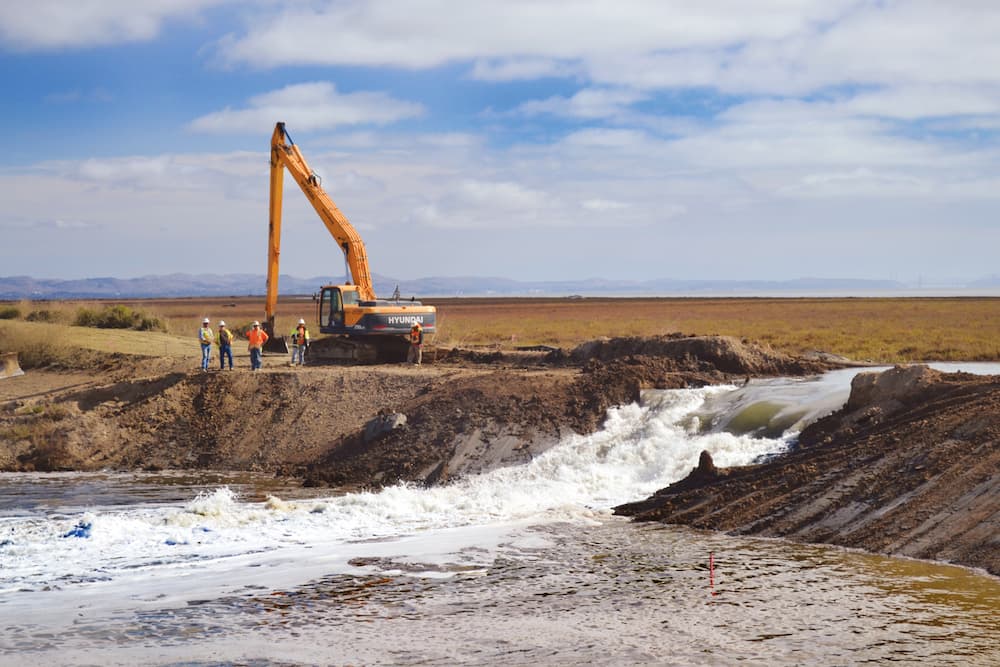
Some 1,000 people visited Sears Point on October 25 to watch the tides return to the baylands, diked off and separated from the bay more than a century ago. It was a wonderful day of celebration that we called “Sea Change.”
Indeed, change will be the theme at Sears Point in the years and decades to come. Today, it is a 960-acre saltwater lake overlying land that dropped six feet during its twelve decades of isolation. As time passes, we will watch and measure ongoing change as the tides deposit sediment year after year with every cycle of the tides until, one day, the elevation of the site will be high enough to grow a marsh throughout. We expect that to take 15–30 years depending on the amount of sediment available and the pace of sea level rise.
Wildlife treats and surprises
While a fully developed marsh will benefit a wide diversity of fish and wildlife as well as people, its benefits as habitat have already begun. With at least eight miles of new and muddy shoreline, plus hundreds of marsh mounds emerging from the depths, the shorebirds are making a showing. Stilts, avocets and curlews are among the species taking advantage of the new habitat. Wintering ducks will be in for a surprise when they arrive but, until then, mallards, pintails and shovelers are already taking advantage. These are just a few of the more obvious species.

Last week, while I was inspecting the new levee, I encountered a new visitor. I noticed a group of turkey vultures congregating at the water line and wondered what they were eating. I walked down and found what appeared to be the carcass of a spawning salmon!

The coming years will be full of surprises and the new trail opening next year will be a terrific place from which to watch for them. Look for a trail opening in 2016 and begin your own exploration.