
Sonoma Valley Wildlands Collaborative
A public-private partnership
Sonoma Land Trust is honored to work with regional conservation leaders to care for over 20,000 acres of wildlands space.
About the collaborative
The Sonoma Valley Wildlands Collaborative is a group of six conservation organizations and land management agencies that coordinate the management of 20,000 acres of natural lands in the Sonoma Valley region in Northern California. Together we aim to maintain and improve ecosystem health, increase resilience to wildfires and climate change, and reduce future impacts of wildfire to communities in the Sonoma Valley.
The collaborative came together in the wake of the 2017 Nuns Fire that had devastating consequences for the communities of the Sonoma Valley and surrounding hills. Now we are working closely with CAL FIRE to develop a long term strategy on a landscape scale. By managing our own lands for ecological health and resilience, the Collaborative is doing our part to help protect the communities of the Sonoma Valley in the event of future wildfires.
Our lands
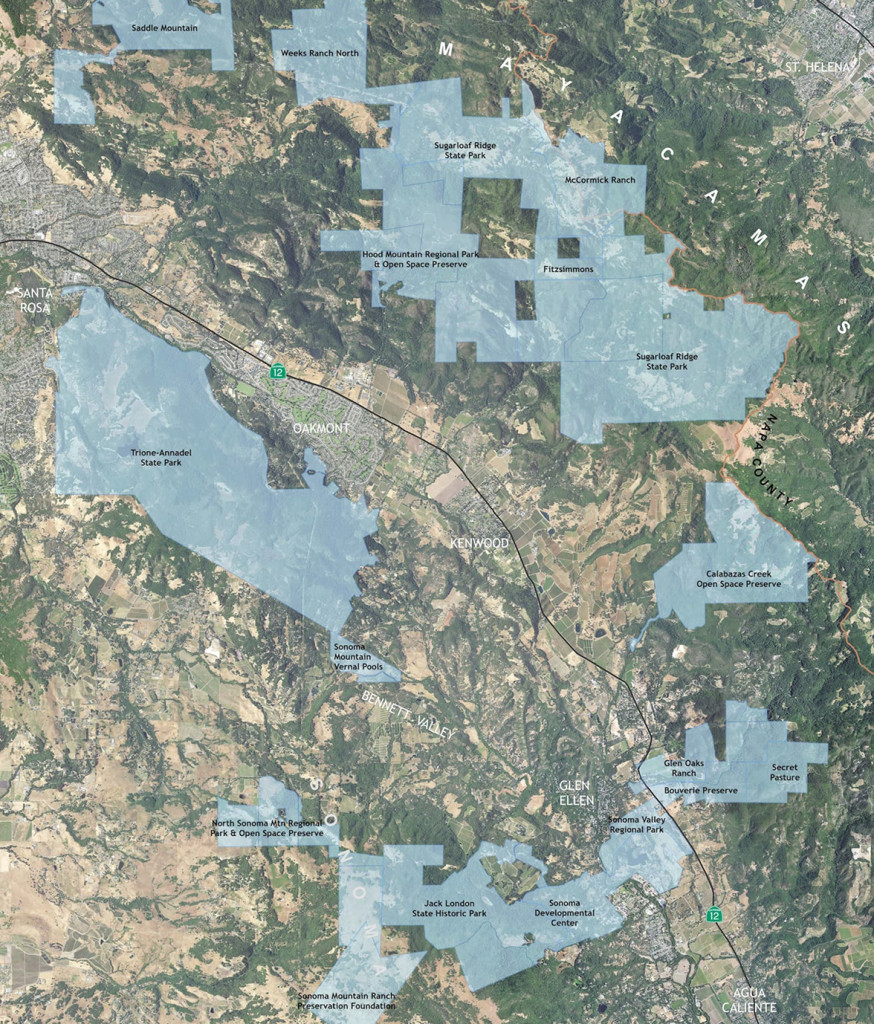
The lands of the Sonoma Valley Wildlands Collaborative comprise over 20,000 acres in 16 individual parks and preserves. Together these properties make up a significant portion of the wildlands that burned in the 2017 Nuns Fire and previous high-intensity wildfires in the region. Managed by our partners for ecological benefit, open space, outdoor education, and recreation, these properties share Sonoma Valley with the communities of Oakmont, Kenwood, Glen Ellen, Bennett Valley, Eldridge, El Verano, Fetters Hot Springs, Agua Caliente, and Sonoma.
Fire’s Role in California’s Ecosystems
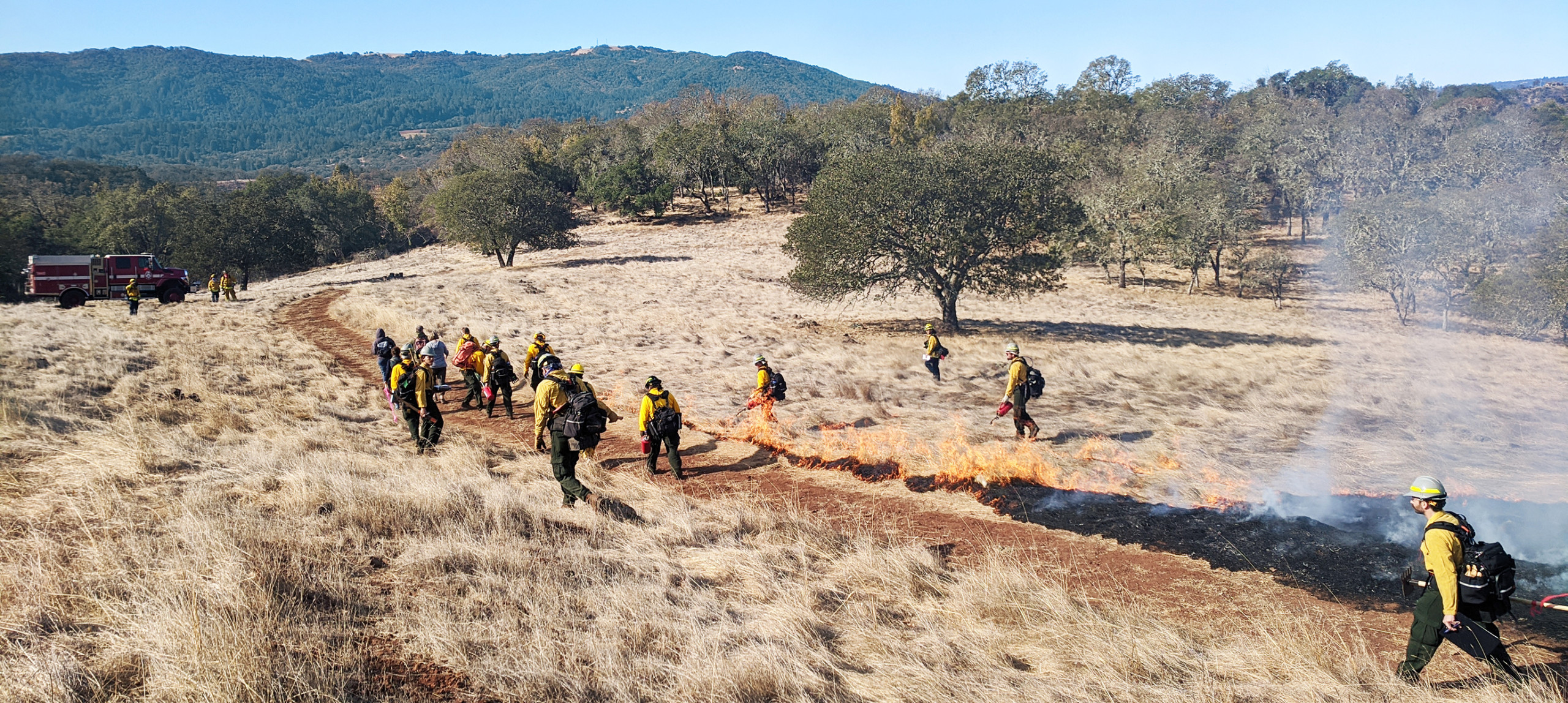
For thousands of years, fire was a regular part of life in the land now known as California. Through lightning ignitions and intentional burning by indigenous residents, plants, animals, and landscapes evolved with and became dependent on regular fire. Over the last 200 years, we have disrupted that historic balance, so when wildfires do occur, they burn at the hottest and driest part of the year. Through the following strategies, we are working to limit the most destructive effects of wind and climate-driven wildfires, building resiliency into the forest and woodlands of Sonoma Valley.


