Blog
September 2025 eNews

How plants move to survive a changing climate
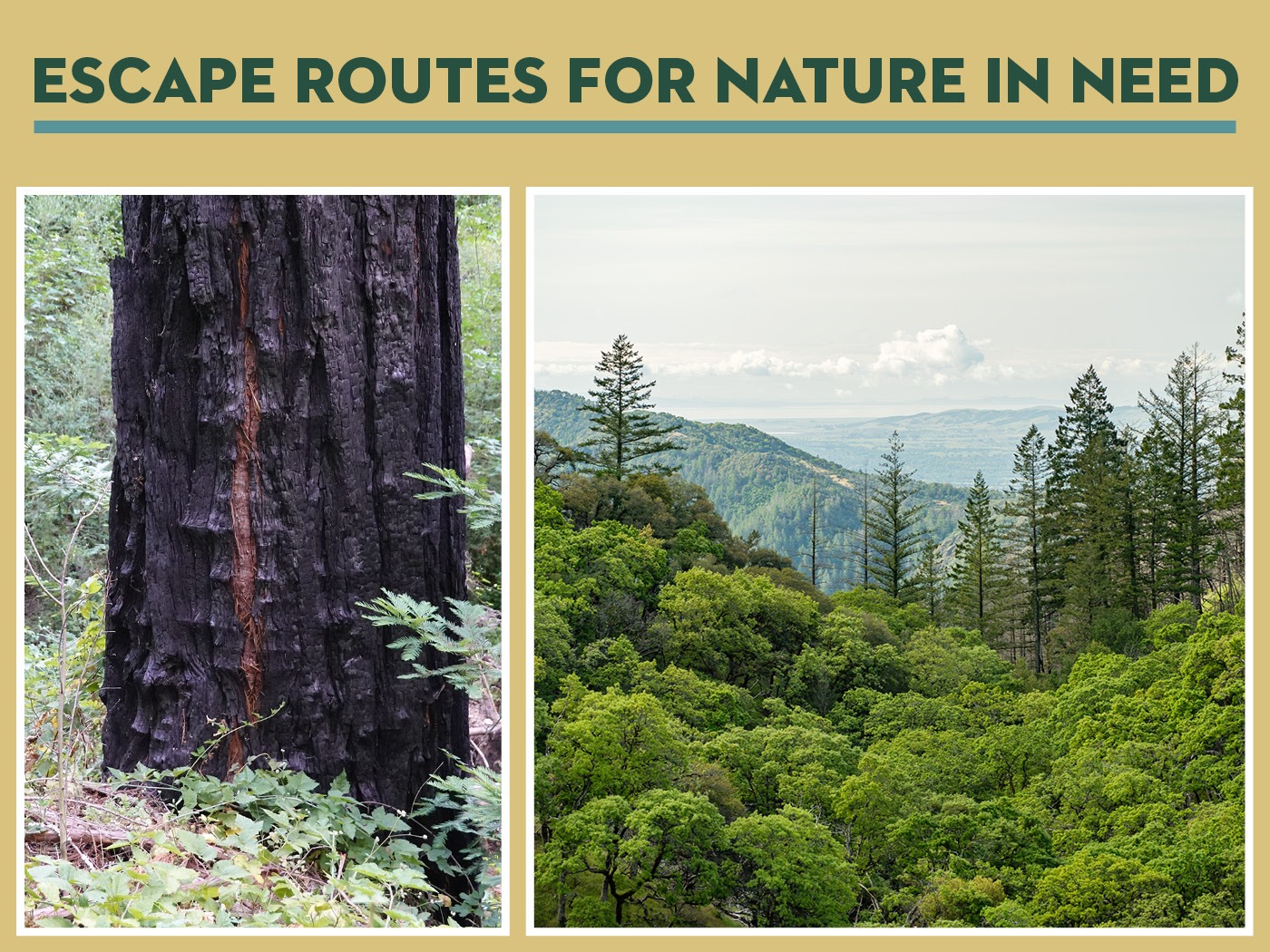
As climate change touches every corner of Earth, plants and trees face a stark choice: move, adapt quickly, or vanish. Redwoods, for instance, may be losing the moist fog they depend on in some parts of their range. If they’re to survive the hotter, drier summers of the future, they’ll need the option to migrate towards cooler slopes, fog-wrapped ridges, and valleys rich with water. Without connected pathways to reach these refuges, even giants may falter. And when plants are stuck in place, the creatures who depend on them may be out of luck, too.
Consider the finely tuned relationship between our state butterfly and its host plant California false indigo (Amorpha californica). The California dogface butterfly (Zerene eurydice) depends almost entirely on California false indigo as its host plant to lay eggs and rear larvae. False indigo, in turn, needs fire to germinate its seeds. In Sonoma County, we have a small population of the northern false indigo, but without connected lands that get periodic fire, the false indigo seeds will have nowhere to go where they can germinate to sustain, or even grow, the population. And if this plant disappears, so too will the dogface butterfly. Returning fire to the land is one crucial way to help our fire-adapted plant species have access to suitable ground. These highly interconnected ecological relationships are what Sonoma Land Trust’s stewardship team considers when prioritizing how to restore and steward plant habitats.
Like animals, plants have always relied on movement to survive. Though they lack legs or wings, their populations spread through ingenious forms of seed dispersal—or, in the case of redwoods, clonal sprouting. Seeds may float downstream, ride a gust of wind, cling to animal fur, or wait for fire to release them from resin-sealed cones. Some plants, like lupines and poppies, catapult their seeds with miniature spring-loaded mechanisms, while others extend roots or stems to inch toward water or nutrient-rich soil.
But in today’s industrially altered world, that natural movement isn’t always enough. As habitats become too hot, dry, or fragmented by roads, fences, and development, plants struggle to keep pace. Unlike hardy generalists such as Scotch broom, most native species are specialists, evolved to thrive with certain soils, fungi, pollinators, and climate patterns. If those conditions vanish and there’s no clear path to new territory, plants—and the creatures that depend on them—risk disappearing altogether.
That’s why Sonoma Land Trust is working to secure connected, resilient landscapes. Protecting large tracts of land and restoring missing links between them, especially across elevation gradients, creates the “escape routes” plants need to survive climate change. Indeed, statewide modeling of more than 6,000 California plant species shows what’s at stake: by 2080, climate-driven shifts in habitat could cause an average loss of 19% of native species from California’s biodiversity hotspots. Endemic plants, which are those found nowhere else, face even greater risk. Up to 80% of their ranges could vanish within the next century.
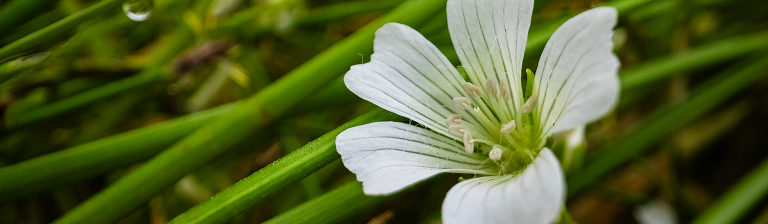
Sometimes, we can take more direct action to help plants move. At Pitkin Marsh, for example, we’re working with partners to propagate and relocate rare plants such as white sedge and vine hill manzanita. When a key patch of vine hill manzanita was infected with a deadly water mold, our partners helped move the trees to safe, uninfected ground. And with the Monte Rio Redwoods expansion, we are giving redwoods more room to grow, and thus a better chance to keep reaching for the fog in a changing world.
Movement has always been nature’s way of survival. By protecting interconnected landscapes, we can ensure that plants—and the intricate web of life they sustain—have room to move, adapt, and endure.
Restoring Life to Sonoma’s Waters
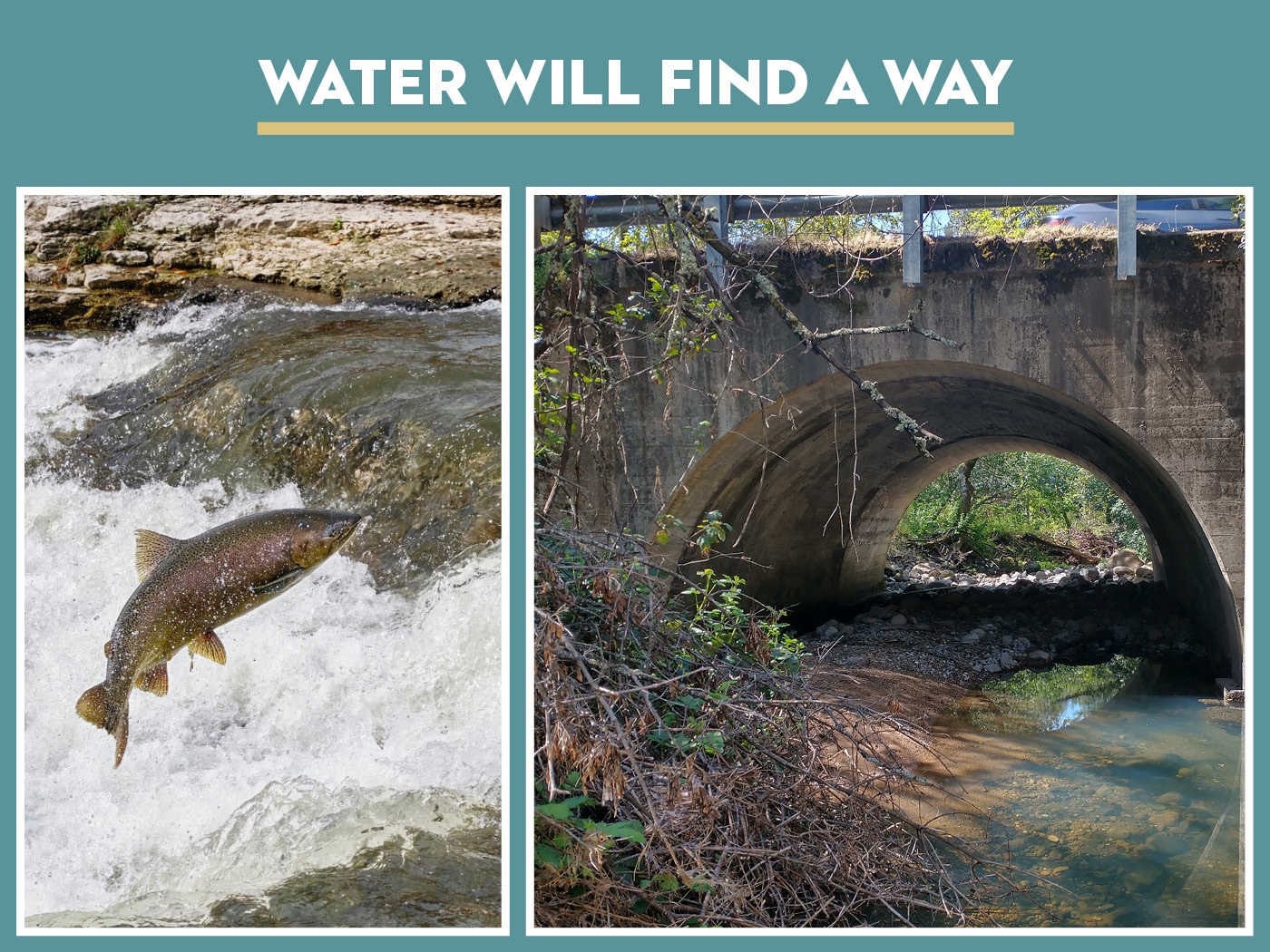
The past month has been HOT, and what better activity is there on a hot day than getting out onto the river? Here in Sonoma County, we’re lucky to have the refreshing water of the Russian River to swim or float in. While it may seem only natural that a river should be cool, clear, flowing, and bustling with life on its shores, it’s something we cannot—and must not—take for granted.
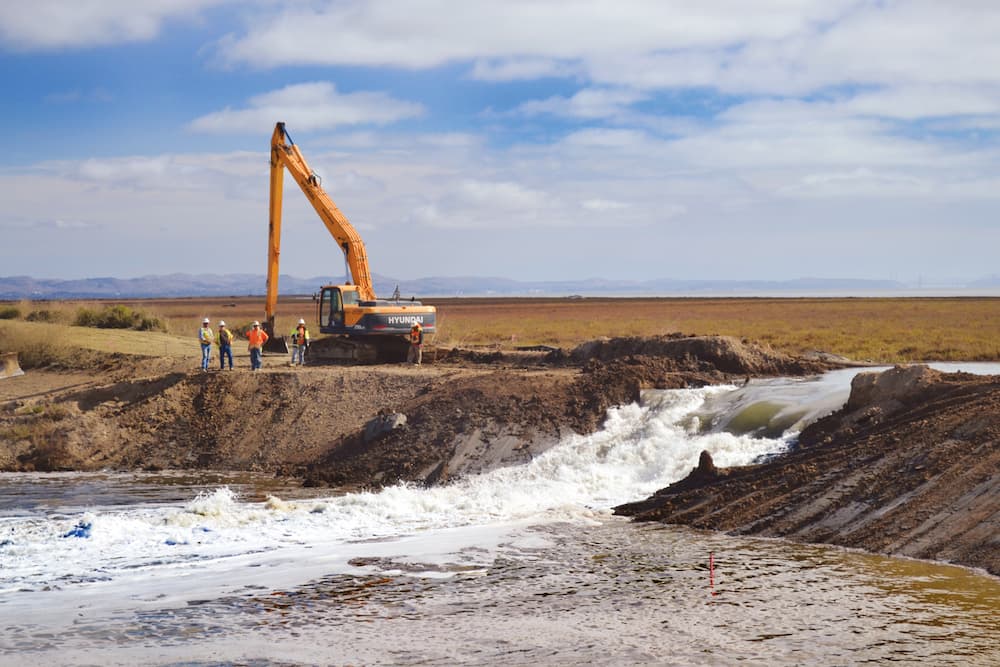
Securing freshwater flows is a cornerstone of Sonoma Land Trust’s strategic plan. Decades of science show that when a creek is channelized or a river diverted, it’s not enough to simply restore a single channel to its former shape; the entire stream valley must be revived so that natural processes can function again, restoring the waterway’s life-giving relationship with the ecosystems it flows through. Across Sonoma County, we’re restoring the natural processes that allow water to move freely again, bringing rivers, creeks, and wetlands back into balance so that water can go where it wants to.
At Lakeville Creek, we’re using a “Stage Zero” approach to revive an entire stream valley. After over a century of heavy grazing and other land uses, Lakeville Creek existed as an eroded ditch-like channel, but we’re transitioning it back to its natural form of a wet meadow with subtle swales of wetland flora. By addressing the deeply eroded ditch-like channel, rain can slowly flow across the floodplain, allowing water to sink into the ground. We’re helping replenish aquifers, support fish and wildlife, and reduce the risk of catastrophic fire. This project is part of our broader Sonoma Creek and Petaluma River Baylands Strategies, which aim to reconnect historic waterways throughout the watershed.
That same philosophy extends north into the Russian River watershed, where we’re working with partners to safeguard streamflow and headwaters that support both wildlife and human communities. Cool tributaries like Dutch Bill and Green Valley creeks act as vital thermal refuges, maintaining the cold, persistent flow coho salmon and steelhead need during dry summers to complete their life cycles. Conserving properties such as Foppiano Ranch—nestled in a horseshoe loop of the river near Healdsburg—ensures over 700 acre-feet of groundwater recharge each year. That’s enough for roughly 3,600 households! It also secures nearly three miles of undeveloped riverfrontage that filters drinking water for more than 600,000 residents in Sonoma and Marin counties, and preserves intact floodplain meadows and woodlands that provide habitat connectivity and reduce erosion. Likewise, the recent Monte Rio Redwoods Expansion protects the headwaters of three key Russian River tributaries—Willow, Dutch Bill, and Freezeout creeks—ensuring clean water for downstream communities while providing the cold, flowing habitat coho salmon and steelhead trout need to thrive.
These projects share a common goal: a Russian River flowing with life, one that continues to deliver clean, reliable water for our aquatic and terrestrial communities alike.
And the results speak for themselves. A decade after we removed obsolete dams at Glen Oaks Ranch and along Stuart Creek Run, reopening more than two miles of spawning habitat for Chinook and steelhead, the salmon returned. After decades of severed connection, they managed to find their way and eventually made their way back up the tributary of Sonoma Creek. All they needed was an open, watery road and sufficient levels to keep them moving.
Even seemingly small interventions make a difference: an upgraded culvert under Arnold Drive now allows both water and wildlife to move more freely through an urbanized landscape.
Water is the most important life-giving force. For fish, plants, wildlife, and people, movement keeps ecosystems alive and in balance. Let’s work together to keep our beloved waters flowing for generations to come.
News
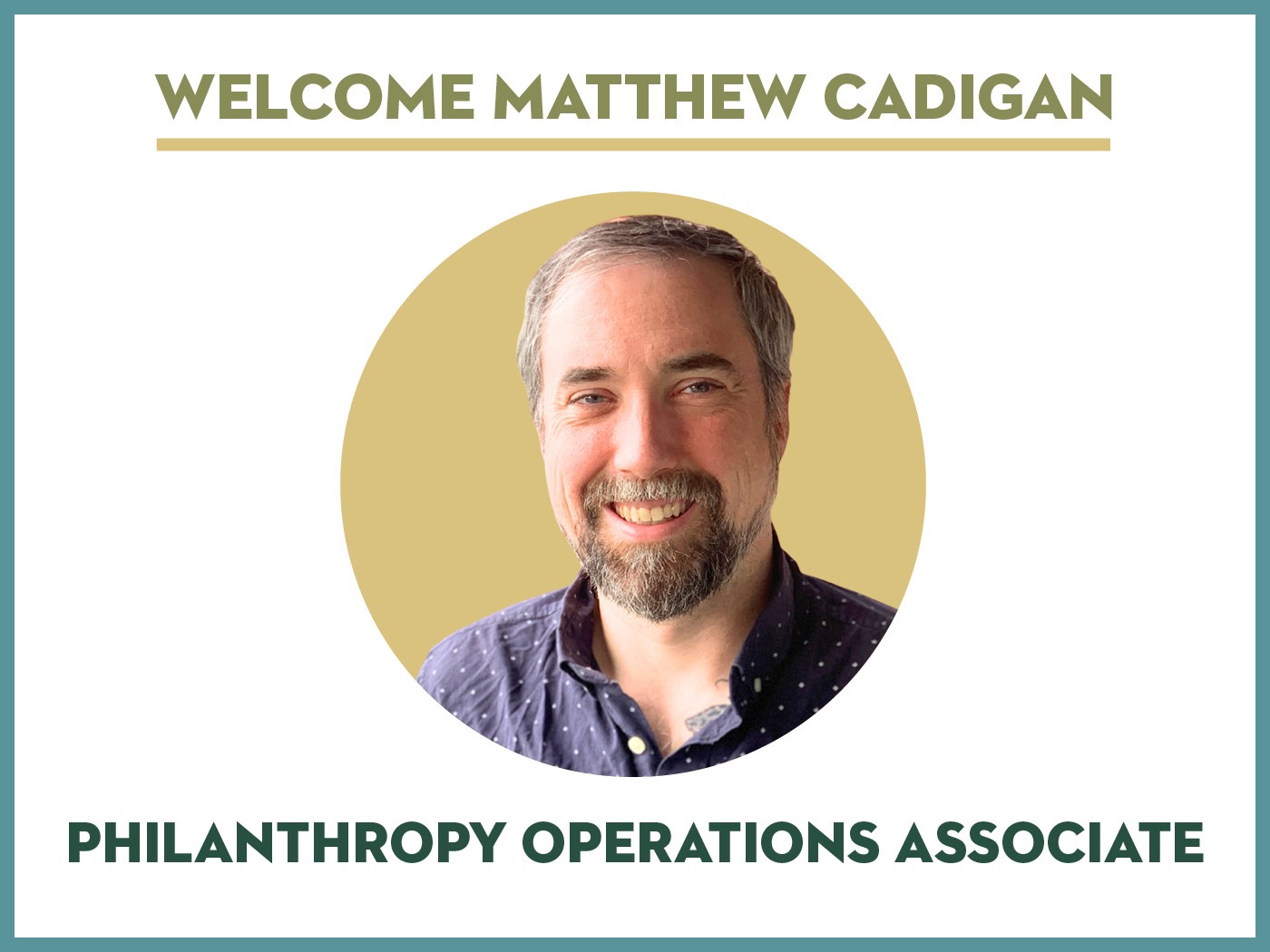
Welcome Matthew Cadigan, Philanthropy Operations Associate
Born and raised in Sonoma County, Matt brings extensive experience working with nonprofits, managing volunteer programs, maintaining complex databases, and even founding a nonprofit in 2017. He combines nonprofit experience with a strong background in database administration and a passion for mission-driven work. Outside of the office, he can be found biking, kayaking, or diving into the vibrant Bay Area theater and film scene—both performing and directing.
Protecting Sonoma, One Month at a Time
When Sonoma Land Trust acquires land, it’s not a one-time transaction. It is a commitment to stewarding the land to be enjoyed for generations to come. To ensure the ongoing conservation of the land and waterways of Sonoma County, please become a monthly donor with your gift of $10, $25, $50, or even $100 each month.
Why consider giving monthly?
It’s easy! Make your gift now via your credit or debit card or bank account, and your gift will automatically be processed each month, so your support will never lapse. Spreading your support of Sonoma Land Trust throughout the year is a convenient way to fit your donations into your personal budget.
It’s effective! Monthly giving is the most cost-efficient way to support the Land Trust, allowing us to better estimate revenue amounts and timing, which helps us respond to land conservation opportunities when they arise and support the ongoing stewardship of the land. Plus, your monthly gift will automatically renew your membership – reducing the amount of mail you receive from us.
And it’s under your control. You can contact us by email at membership@sonomalandtrust.org or by phone at (707) 526-6930 anytime to cancel or change the amount of your monthly gift . . . we’re always happy to help.
Your generosity will help Sonoma Land Trust combat the effects of climate change, promote the biodiversity of our region, and deepen our connection to the natural world.
You’ll also have the satisfaction of knowing that you are doing your part – all year long – to protect the best of Sonoma County. Plus, if you join as a monthly donor by the end of this month, we’ll send you a limited-edition bandana as a small token of our appreciation.
Please show what Sonoma County means to you each and every month and become a monthly donor today.
SB131 Action Alert

On June 30, the Legislature passed, and the Governor signed SB 131—a sweeping CEQA (California Environmental Quality Act) rollback that threatens wildlife, biodiversity, community health, and opens the door for advanced manufacturing projects to bypass environmental review.
Lawmakers promised to fix SB131 before the end of the session—but time is running out. Unless they act, California’s birds, butterflies, salmon, mountain lions, and countless species could face devastating habitat loss.
Call your State Senator and Assemblymember today: Tell them to keep their word and pass a CEQA clean up bill that protects our communities and ecosystems.
Free Language of the Land Webinars
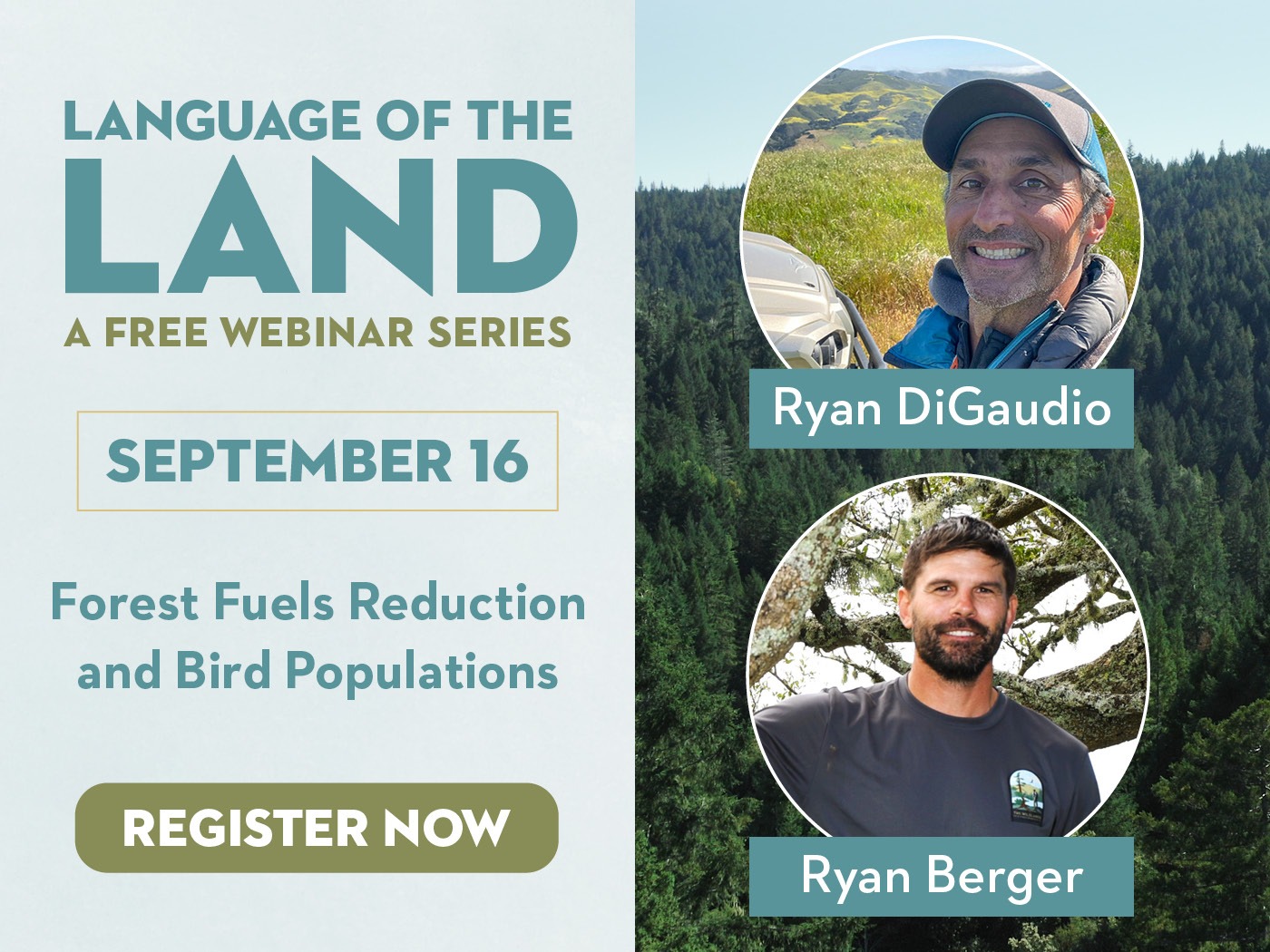
Language of the Land: Forest Fuels Reduction and Bird Populations
Tuesday, September 16, 7–8:30pm
Join ecologist Ryan DiGaudio of Point Blue Conservation Science and Ryan Berger of The Wildlands Conservancy to learn about a multi-year study of woodland bird populations on four Sonoma Land Trust-protected lands. This study focused on forests where fuel reduction methods were implemented for increased wildfire resilience. Through monitoring bird populations, we gained insight into the links between forest fuels management and overall ecosystem health. Join us to find out the results!
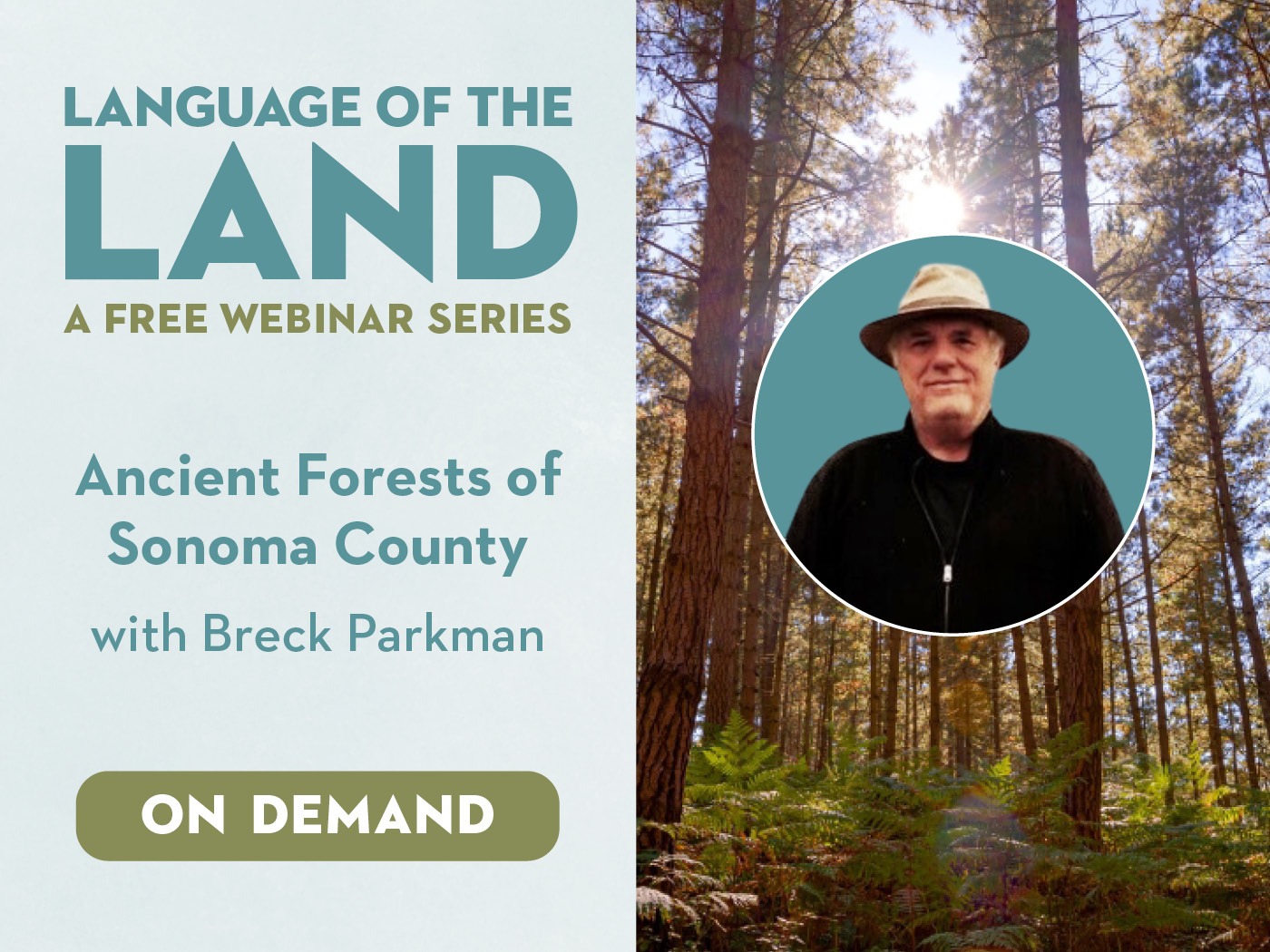
Language of the Land: Ancient Forests of Sonoma County
The remains of ancient trees have been found at several locations in Sonoma County. In this talk, retired State Archaeologist Breck Parkman highlights two of his important discoveries. The first was a Sitka spruce at Bodega Head, remnants of which were exposed during a winter storm. The second was a Monterey pine found eroding from Sonoma Creek. Both trees were many thousands of years old, dating to the last Ice Age. Discover in this talk the nature of the ancient forests of Sonoma County, how they moved, and the significance of finding an ancient Sitka spruce and Monterey pine growing here at the end of the Ice Age. What might that mean in a world facing a changing climate?
Free outings
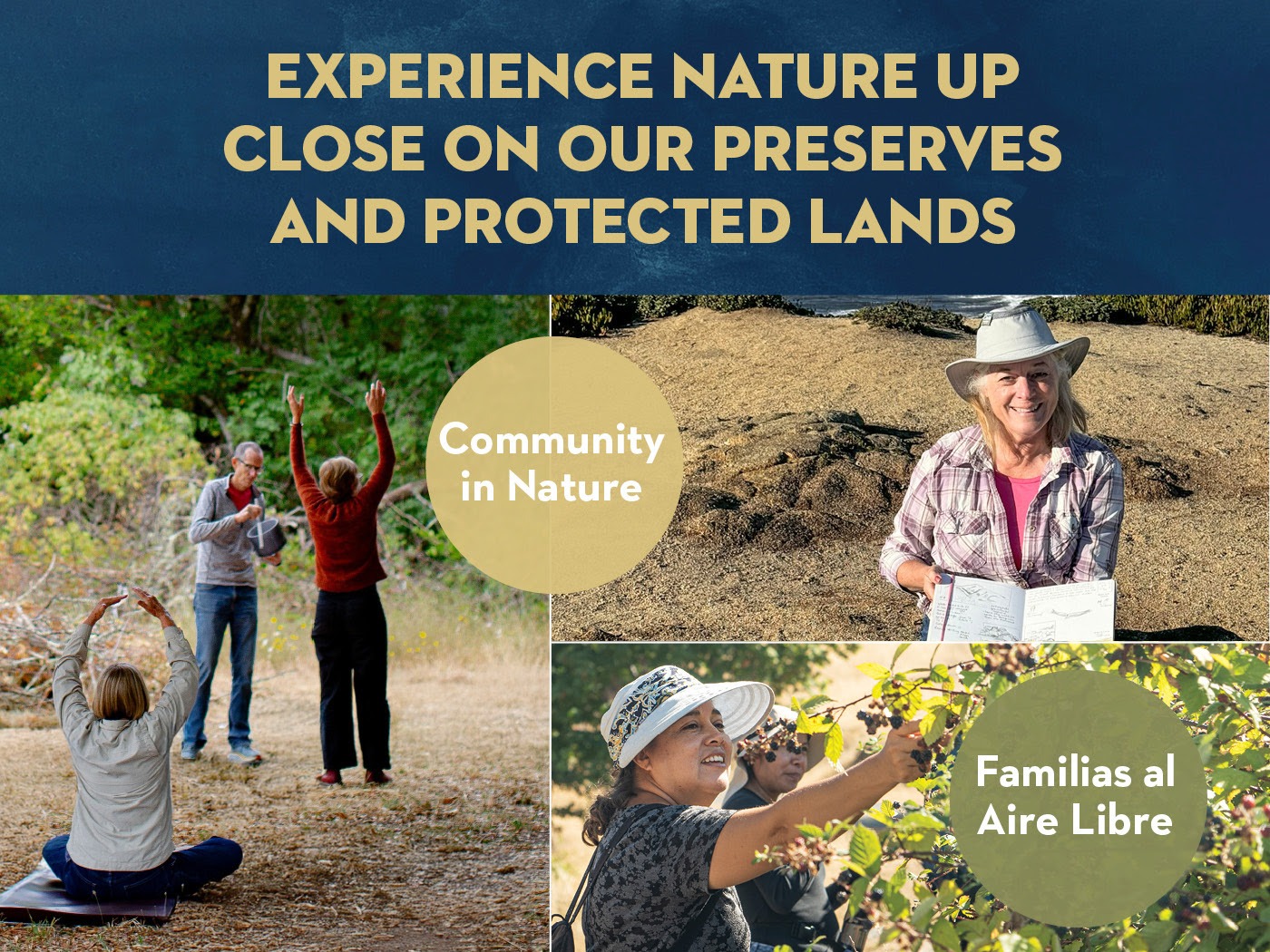
Join us out in nature this month! Celebrate California Biodiversity Day with a BioBlitz on the Southeast Greenway. Celebrate Latino Conservation Week with a hike in the redwoods. Join us at the Santa Rosa Creek Headwaters with our monthly bilingual Familias al Aire Libre/Families Outdoors. Or hike with us to the top of Pole Mountain!
Many of these outings are in partnership with Sonoma County Ag + Open Space.
Staff recommendation

Anote’s Ark, a feature documentary about the Pacific Island nation of Kiribati, resonated with Bianca Vargas, stewardship technician at Sonoma Land Trust. The film follows former president Anote Tong fighting to preserve his country from rising seas, and a mother, Tiemeri, seeking safety for her children. “Kiribati contributes little to climate change, yet suffers the most, with little support from developed nations,” Bianca says. “I also connected with Tiemeri’s immigration story—it mirrors my mom’s and my own journey to the U.S.”
You can watch Anote’s Ark and find other ANHPI documentaries here.