Blog
Why biodiversity matters for our health—at every age
Nature’s living systems interact with our bodies in ways scientists are only beginning to understand. Beyond scenic views or fresh air, biodiverse environments—places rich with many kinds of lifeforms, like plants, animals, and microbes—support immune health, mental resilience, and community well-being. The good news is, we can glean these benefits at every age and stage of life, especially when access to nature is close to home.
It’s all about the microbes
A growing body of research shows that exposure to diverse environmental microbes plays an important role in supporting immune function, especially early in life. These microbes live in soil, on leaves, in water, and in the air itself, joining our own microbiomes—like those on our skin and in our gut—through the things we touch, the air we breathe, and the general act of moving through a living landscape. Studies consistently find that children raised in farm or nature-rich environments tend to have lower rates of asthma and autoimmune disease, along with greater microbial diversity in their gut microbiomes. That diversity helps regulate immune responses and reduce inflammation, leading to more resilient health overall.
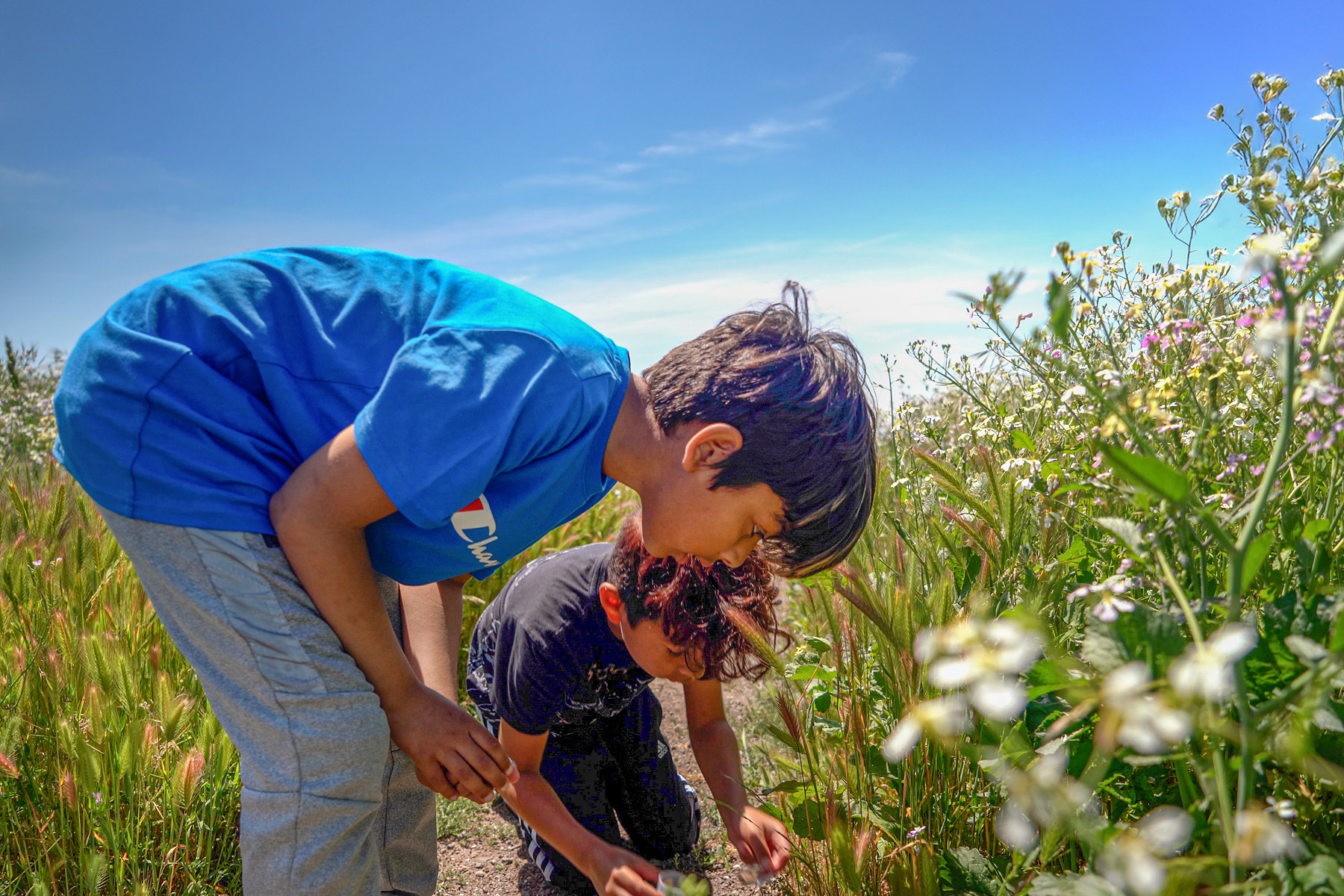
The takeaway is reassuringly simple: the benefits come from exposure. Kids don’t need to eat dirt—just spending time outdoors, touching soil, exploring creeks, and interacting with living landscapes helps their immune systems develop in healthy ways. One way to get kids outside with the microbes is to sign them up for one of Sonoma Land Trust’s Youth Programs that are helping young people get outside to explore protected lands, learn how ecosystems work, and build curiosity and confidence in nature through hands-on experiences. And while early exposure is especially impactful, adults benefit from nature’s microbial jubilee, too. Come put your hands in the dirt with us on a guided outing!
Biodiversity and mental health
Biodiversity also matters for mental well-being. A 2025 paper in Scientific Reports found that environments with a greater number of natural features and higher perceived naturalness—including elements like trees, plants, water, and birds—were significantly associated with improved mental well-being among visitors compared with less diverse and more developed spaces. This suggests that ecologically complex landscapes provide stronger psychological restoration than degraded environments. Layered ecosystems—wetlands, oak woodlands, healthy rivers—engage more of the senses, supporting stress recovery, focus, and emotional balance. Lucky for us, our viewshed in Sonoma County consists not of miles of cornfields or paved roads and shopping malls, but rather a beautiful and diverse mix of forests, grasslands, wetlands, and coastal habitats rich with biodiverse splendor. The fact that it’s protected and not development wasn’t luck, though—it was thanks to decades of environmental action and advocacy to protect these special places, and today we are actively working to help these landscapes flourish!
Climate, green space, and public health
Green spaces, like parks, farms, and preserves not only provide access to nature, but also buffer against climate change impacts that directly affect health. Trees and wetlands reduce urban heat-island effects, improve air quality, and absorb floodwaters, helping moderate extreme heat and heavy rainfall. In Santa Rosa, the Southeast Greenway shows how connected green space can cool neighborhoods, improve walkability, and create healthier outdoor environments—especially in areas that have historically lacked access to nature. These benefits become especially important during heat waves and wildfire smoke events, which are increasingly common as the climate changes. For more on how the Southeast Greenway benefits our communities, check out our recent video.
That being said, we would also like to acknowledge that while nature should be a shared, safe place, we understand that isn’t the reality for everyone at this time. In response to the current moment, we’ve developed a protocol to guide how we respond to potential interactions with immigration or federal agents, with the safety of our staff and program participants as our top priority, whether out on the land or in the office. This approach is informed by best practices from Nonviolent Peaceforce and the community-based network North Bay Rapid Response.
Health, together
Time outdoors supports not only individual health, but society at large. Shared green spaces strengthen community connection and reduce isolation. Programs like Park Rx—where healthcare providers prescribe time outdoors—recognize nature as part of preventive healthcare, and nature prescriptions is a growing movement as more people recognize the value of nature for our well beings. Sugarloaf Ridge State Park participates in Park Rx, offering guided opportunities for people to spend time outside in support of their health, as recommended by their healthcare providers.
We need all biodiversity great and small. Protecting and restoring land—and helping people connect to it—is an investment in both nature and public health, for those who can enjoy these places now and for generations to come.
Learn more about our current initiatives here.