Blog
Bulldozed, but not forgotten
When Jennifer Haas was exploring the purchase of a property in Bennett Valley, she had never heard of a conservation easement. That quickly changed when she learned that half of the property she was hoping to purchase was protected by an easement–a permanent, voluntary legal agreement between a landowner and, in this case, Sonoma Land Trust, that protects identified conservation values on the land by restricting certain uses and activities. A nature lover with deep family roots in the area, Jennifer was thrilled and eager to learn more about the conservation tool and what her role could be in stewarding the land.
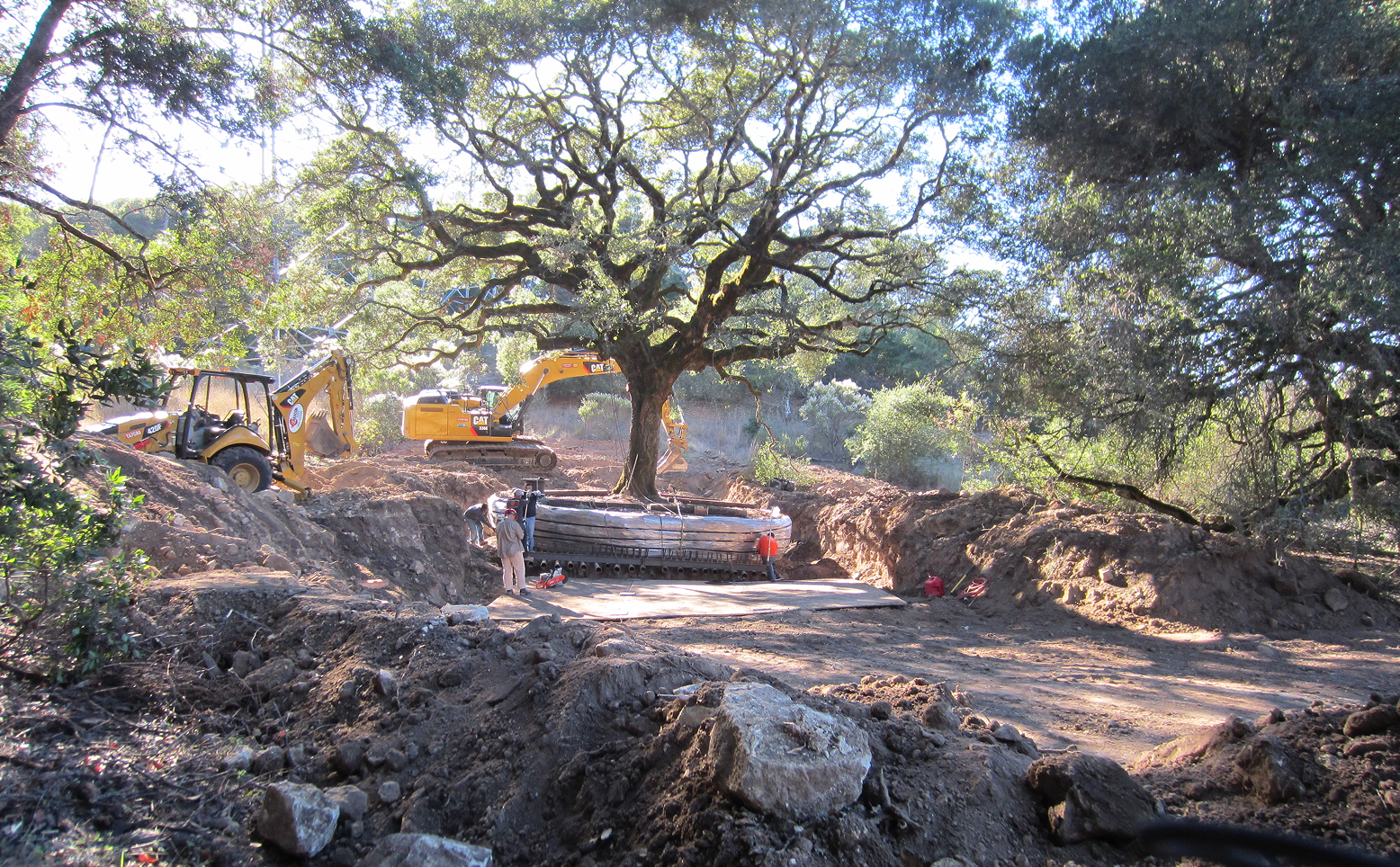
This was welcome news for current Stewardship Director Kyle Pinjuv, who at the time was serving as Conservation Easement Program Manager for SLT and was deeply embroiled in a contentious lawsuit surrounding violations of the terms of the easement by former owners. After purchasing the property in 2013 with full knowledge of the restrictions of the conservation easement, the former owners hired contractors with heavy equipment to excavate three heritage oak trees located on the protected property and drag the trees through shallow and sensitive soils to enhance the landscape of their new home on the adjacent parcel; a severe and egregious violation of the easement. Additional harm resulted from bulldozing a 1/3-mile road cut to haul the trees, killing and removing 12 more trees in the process, and dumping pond sediment laden with invasive weeds onto the protected property.
In 2019, after a lengthy court battle, a superior court judge upheld Sonoma Land Trust’s authority to protect natural resources through conservation easements. Jennifer bought the property shortly after the judgment was passed and from the very onset, along with partner Scott Sporte, they were champions of restoration and stewardship of the land. They even named the property Three Oaks Farm as a tribute to the three heritage oak trees that had been uprooted and killed by the previous owners.
The couple shared, “We were thrilled to see how fierce Sonoma Land Trust wanted to be about reinforcing what it means to take care of the land with an easement in place.” Jennifer and Scott were in full support of the restoration work that would need to happen. During the planning phases of the restoration, they say it was a little heartbreaking to see the land continue to degrade and get further away from what it was meant to be, but the improvements they’ve seen since restoration work began, especially in the last year and a half, have been astounding. Speaking about the road that was illegally carved into the earth along the entire length of the property, Scott says while standing at their home and looking up the hill, “If you didn’t know where it used to be, you wouldn’t know there was a road there. The boulders have been replaced, the grass is coming in, and we’re also noticing changes in drainage–water used to run straight down the hill and pool, but now it’s refilling the seasonal pond, flowing down into smaller ponds below and then into the waterway.”
This staggering transformation is a result of collaboration between the Land Trust and trusted contractors Prunuske Chatham, Inc., who, despite the extreme level of damage, were able to engineer the landscape back into nearly its state prior to the violation. A highlight for Jennifer was the approach to restoring the trees: “They collected acorns and used those to try and re-plant. It has been an interesting science experiment to see what takes and what needs a little more love, hopefully with a light touch so it’s sustainable into the future.”
Jennifer and Scott were also taken by the impact of watching so many people come together to heal the land, which they’re seeing the benefits of season after season. They’ve eagerly taken on the responsibility of conservation easement landowners and are quick to highlight the benefits of easements as a conservation tool, Jennifer sharing, “We’re on this earth for just a short period of time, but while we’re here we’re stewards of the land and we need to make sure it continues to flourish even when we’re gone. A conservation easement ensures that can happen for whole ecosystems.” Jennifer and Scott have enjoyed watching birds as they migrate along the flyway every year and have seen river otters visit their property every November!
Scott highlights the importance of habitat connectivity, noting that the ponds and waterways on their property are connected to other lakes and ponds and waterways, providing the opportunity for wildlife to move freely and thrive across the county. He shares, “It has been interesting to see the effects of restoring this land alongside other conservation efforts, for example, the acquisition of the Sonoma Mountain Vernal Pools property down the street, and knowing that when we drive around the county and see the Sonoma Land Trust signs, we’re part of it, this network of protected lands.”
Jennifer and Scott are invested in long-term land conservation, especially as pressures increase from climate impacts and expanded urban development. That’s why they see conservation easements as an instrumental tool: “As land changes ownership or is passed down, people may not be thinking about keeping it all together to preserve that connectivity so nature can thrive.” Jennifer underscores the importance of not separating ourselves from the environment: “We must fundamentally shift how we’re thinking; my hope is that all people value their connection to nature and their role as part of the ecosystem.”
They feel deeply connected to this land and say now that the restoration of their property is complete, “We can go out on walks and hikes from deep in the vineyard to broad and gorgeous views from the top of the property towards Sonoma Valley. We’re lucky to access all of that from our home where we feel so grounded, and this land will thrive for generations to come.”