Blog
The Right of Passage: Restoring Wildlife Movement in Sonoma Valley
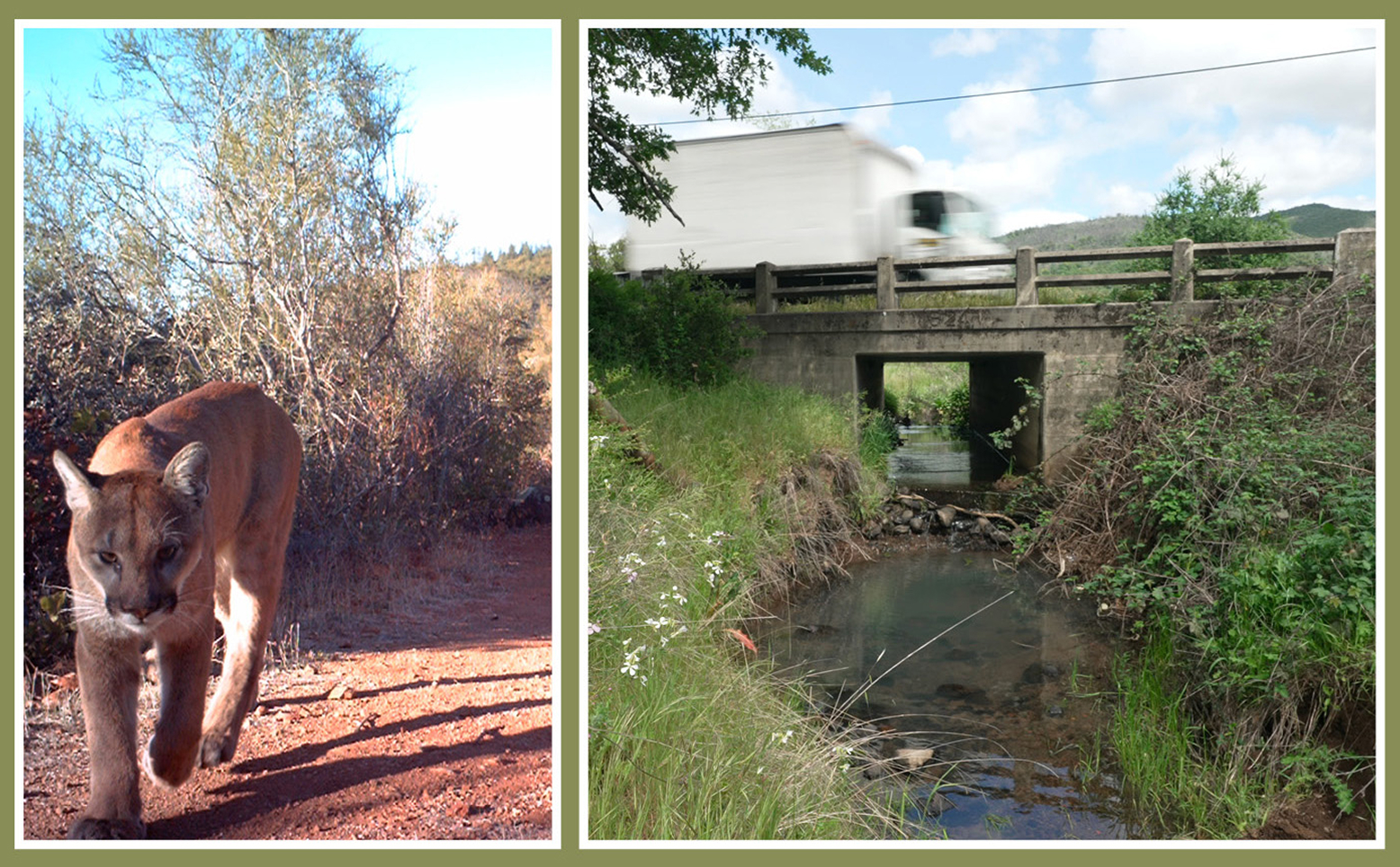
In Sonoma Valley, forested hills, meandering creeks, open grasslands, and oak woodlands stretch across the landscape. So does Highway 12. Although we usually think of the Glen Ellen area as the heart of the Wildlife Corridor, the California Department of Fish and Wildlife has identified nearly the entire valley, including the 13 miles of Hwy 12, as a barrier to wildlife movement. To determine where wildlife are crossing—or attempting to cross—the road, stewardship program manager Chris Carlson is launching a study to collect key data needed to understand what kind of movement improvements would have the greatest impact. That includes where these efforts are needed and what kinds of infrastructure or habitat improvement would help the greatest number of animals. Options might include overhead crossings, directional fencing to guide animals, or improvements to existing culverts so more species feel safe to use them. California Department of Fish and Wildlife and CalTrans have staffed up their wildlife connectivity program and are partnering with us on the new effort.
Over the last decade, our understanding of wildlife movement through the Sonoma Wildlife Corridor has evolved dramatically. For one, our seminal wildlife camera study in 2014 showed us the surprising plethora of animals using underpasses to cross the road—even a family of river otters! One of the biggest learnings, though, has been seeing how different animals make different choices based on their individual needs. For example, most mountain lions prefer to move through riparian corridors, which offer food, water, and cover, rather than across open grasslands. Adjacent lands must be connected by healthy habitat that makes sense for animals to travel through, not just sit side by side on a map. “You can do a landscape model, but unless you’re zooming in to a local level, it’s hard to know the best place to make conservation investments,” Chris says. “Fine-scale knowledge of local places is important.”
Even in an industrialized, modern world, animals are still finding ways to move across the landscape. Movement—for food, water, shelter, mates, or new territory—is a basic requirement of life. Yet across California, fences, roads, bright lights, noise, and sprawl increasingly block their paths. As climate change and development force species to shift their ranges, the ability to move freely through connected landscapes has never been more critical. In 2022, Governor Gavin Newsom launched the California Wildlife Reconnected initiative alongside state agencies and nonprofits to boost connectivity initiatives across the state, stating that connectivity is a key part of California’s 30×30 commitment.
When pathways are cut off, finding new ones presents immediate and long-term challenges. In the moment, wildlife have to use extra energy to avoid human activity like a busy road or even a well-trafficked trail. Over time, their altered behaviors and interactions can lead to increased stress, reduced fitness, genetic isolation, or even extirpation (local extinction). Populations confined to small, fragmented areas collapse when they outgrow the resources available. Physical barriers like tall or poorly designed fences may block migrations entirely, while clogged underpasses make once-viable routes more dangerous. One reason for that is the interspecies traffic jam. Studies have shown that mule deer avoid underpasses frequently used by mountain lions, and coyotes favored underpasses frequently used by small mammals like rodents and hares. Life is hard when you have to choose between the odds of getting squished by a car or eaten.
Fortunately, solutions exist. Large-scale wildlife crossings, like the Wallis Annenberg Crossing in Los Angeles, can be critical passageways, especially for larger animals, across major roads. When possible, though, it’s better to have many smaller crossings than one huge one. That way, animals have more options to choose from when making survival decisions for themselves. Closer to home, protecting and restoring wildlife corridors is just as vital. The Sonoma Valley Wildlife Corridor connects Sonoma Mountain across the valley floor to the Mayacamas range, bridging the Marin Coast and the Blue Ridge–Berryessa region. Since 1976, Sonoma Land Trust has protected more than 8,000 acres here, secured at-risk parcels in critical pinch points, and developed a long-term monitoring and management strategy to keep the corridor permeable for wildlife.
Another major part of the solution is addressing outdated fencing. Across our lands, we’re either removing fences or replacing them with wildlife-friendly designs that allow animals to pass through while still managing livestock. “It’s one of the most impactful ways private landowners can support healthy wildlife corridors,” says stewardship program manager Tom Tolliver, “and we encourage anyone who can to do the same.” Recently, we replaced a significant stretch of old fencing at Laufenburg Ranch and have more work planned for Pole Mountain.
By restoring habitat, replacing barriers, and studying wildlife movement in detail, we’re ensuring that animals in Sonoma Valley and beyond have the room they need to move, adapt, and thrive. Thank you to our dedicated volunteers whose hard work makes these on-the-ground changes possible.