Blog
striking a balance at live oaks ranch
by Trevor George
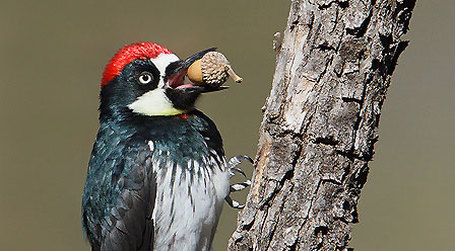
The acorn woodpecker (Melanerpes formicivorus) is a common species of bird that lives in oak woodlands ranging from Oregon down into Latin America and even parts of Colombia. Its primary characteristics are the bright red patch covering the crown of its head, a black and white clown-like face, and wide eyes with a black beak. If you take a stroll in our local woodlands, you’ll likely hear one or more drumming away on an old tree or dead branch. But, if you walk through the farmstead at Live Oaks Ranch, you’ll hear that drumming on the side of our barn!
www.allaboutbirds.org
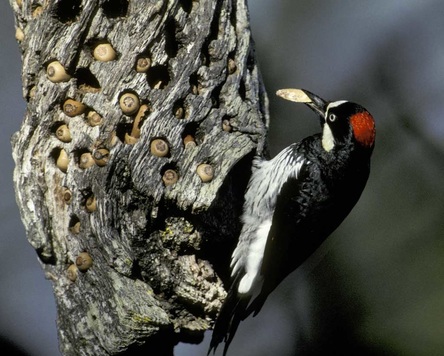
These woodpeckers will eat bugs and occasionally dine on tree sap, but they prefer to feast on acorns. They use their strong beaks to peck holes into wood where they’ll store their tirelessly collected spoils. For them, the barn turns out to be the perfect granary. In most cases, we would be excited to provide habitat for a native species. However, the holes pecked in the wood can lead to water damage, insect infestations, mold and other problems. Our infrastructure is important to our mission and the management of our preserves, so we must strike a balance for the benefit of the birds and for the rest of the preserve.
www.audubon.org
While acorn woodpeckers are not threatened in Sonoma County, they still are a native species experiencing significant habitat loss due to development, slow oak regeneration and other forms of habitat degradation. It’s important that we find a solution that does not harm or harass these birds.
I’ve begun by hanging flashy and holographic streamers where they like to perch and peck. The bright flashes and movement can discourage them from sitting comfortably as they attempt to turn the barn into a winter storehouse. I’ve also set up a fake bird of prey with a swiveling head — it will need to be moved periodically, before the woodpeckers realize that it is, in fact, quite harmless.
I’ve begun by hanging flashy and holographic streamers where they like to perch and peck. The bright flashes and movement can discourage them from sitting comfortably as they attempt to turn the barn into a winter storehouse. I’ve also set up a fake bird of prey with a swiveling head — it will need to be moved periodically, before the woodpeckers realize that it is, in fact, quite harmless.

A day after I set up these deterrents, I got a call from our caretaker announcing that the birds had not returned to the barn! But the good news was short-lived as the woodpeckers opted to move their business to the carport. I could post deterrents there as well, but this is a sign that the woodpeckers are lacking a better, more natural long-term structure to store this season’s proceeds. They prefer to create their holes in soft, dead wood, so one potential solution would be to move or set up a log nearby that might be a more preferable target for their needs. Maybe a stormy winter this year will yield such habitat by downing some trees or tree limbs in the nearby forest. This management challenge may continue for some time while I figure out what works — but it’s just another part of maintaining our infrastructure on wild lands.
Trevor George is a stewardship project manager at Sonoma Land Trust.