Blog
Revitalizing neighborhoods with green “infill”
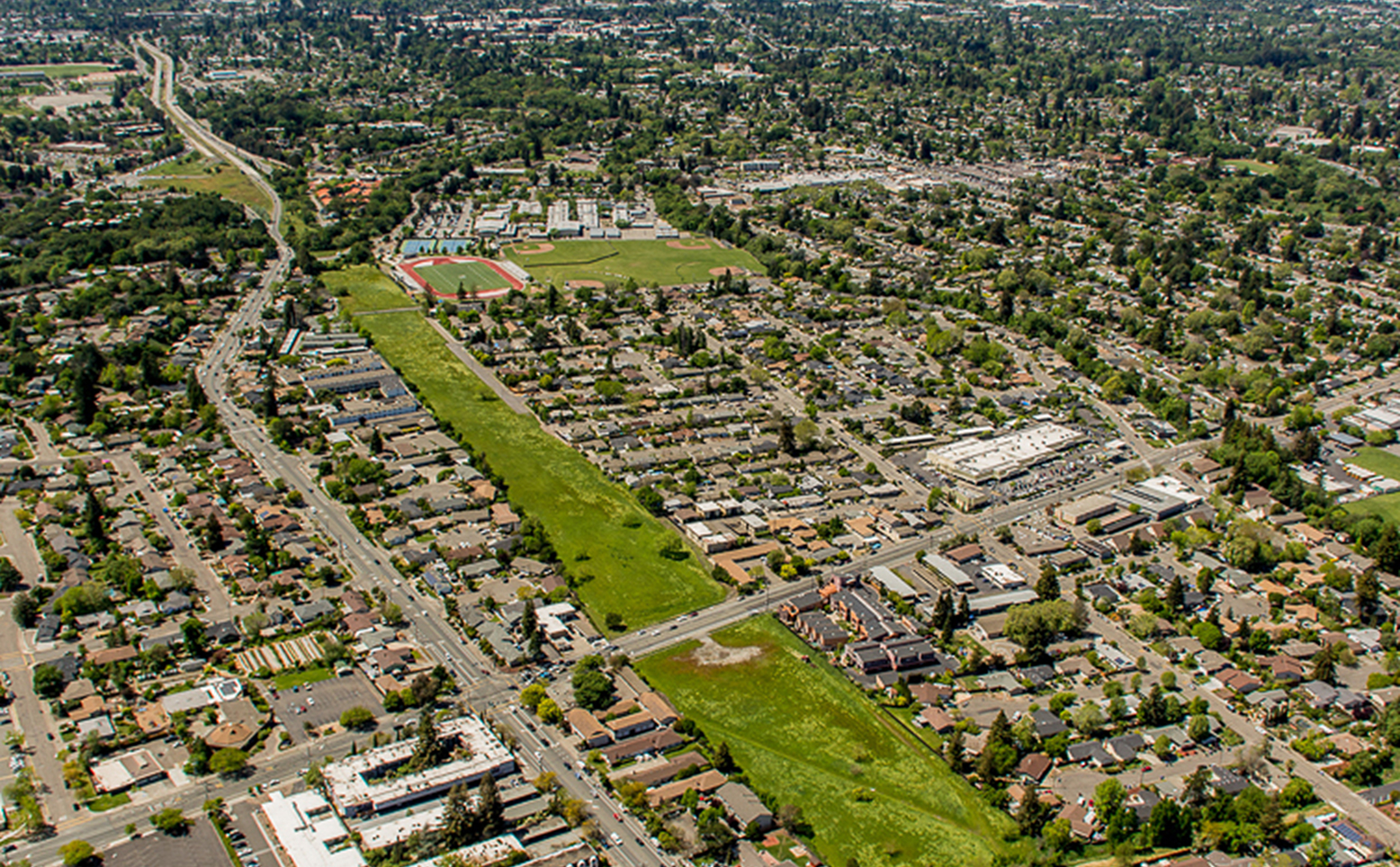
We often hear the term “infill” in reference to urban housing developments, but what if that same approach was applied to “infilling” our urban spaces with trees, plants, and water? Could we transform barren spaces into thriving ecosystems? Perhaps the answer can be found in the initial idea of transforming a vacant strip of land in the middle of Santa Rosa into a vibrant, green corridor, which provides the potential for this idea. Once planned as a four-lane extension of Highway 12, the Santa Rosa Southeast Greenway will reconnect neighborhoods with shade from trees, provide open space water catchment and storage, and increase access to cooler temperatures by naturally tempering an urban micro-climate.
What was once a dream shared by a handful of local residents has progressed into a vision for a central park that is now widely championed, and funded, by community members, local government, and agencies.
After more than a decade of planning, and spanning over 47-acres, this two-mile vacant corridor is finally on the home stretch to being transformed into a sprawling park in the heart of Sonoma County’s largest city – Santa Rosa!
The concept for greenways in American cities traces back to the 1800s with landscape plans that integrated natural spaces in urban environments being implemented across the country. But during the early part of the twentieth-century, Frederick Law Olmsted saw his once lauded idea for pedestrian greenways threatened by the automobile industry. As roads were laid down, they sliced paths through nature, disrupting the peaceful atmosphere of parks everywhere. Now, greenways across the country are reversing that paradigm by turning roads into green pedestrian pathways and removing barriers between communities.
Creating urban forests that shade homes and streets builds green connections that break up urban heat islands and provide numerous benefits. They create equitable access to cooler temperatures and decrease the risk of heat-related illnesses exacerbated by a warming climate. They lower temperatures in surrounding neighborhoods thereby decreasing utility costs associated with constantly running air conditioning units. And the mature trees produce clean air and water while at the same time capturing and storing carbon dioxide from our modern infrastructure. Greenways offer seemingly endless climate benefits including habitat for wildlife, spaces for outdoor education, room to recreate, pedestrian access to larger parks, and opportunities to come together with neighbors.
In the Sonoma County Climate Resilient Lands Strategy*, there is a check-list of criteria for projects like the Greenway that will help us build resilience and address rising temperatures through open spaces and parks.
“Developing green buffers with shade trees to provide relief from heat. Green buffers with shade trees around residential areas provide cooling while increasing permeable surfaces, which are important during rain events. Resilient lands – especially highly shaded lands and/or lands containing rivers, lakes, and coastline – provide residents with essential reprieves from heat.” (*excerpt from page 30)
Sonoma Land Trust is honored to play a role in the actualization of the Southeast Greenway and its timing could not be more needed as we seek solutions to a warming climate.
We would like to express our deepest sympathy to everyone who shares in the loss of Bob Gaiser, co-chair of the Southeast Greenway. We miss his wisdom, can-do attitude, warmth, and enthusiasm. He was a long-time partner and dear friend, and we reflect on all the good he did while he was with us and recognize that the Greenway will forever be tied to his legacy and lasting spirit. Thank you, Bob!