Blog
California’s pathways to 30×30: progress, challenges, and Prop. 4
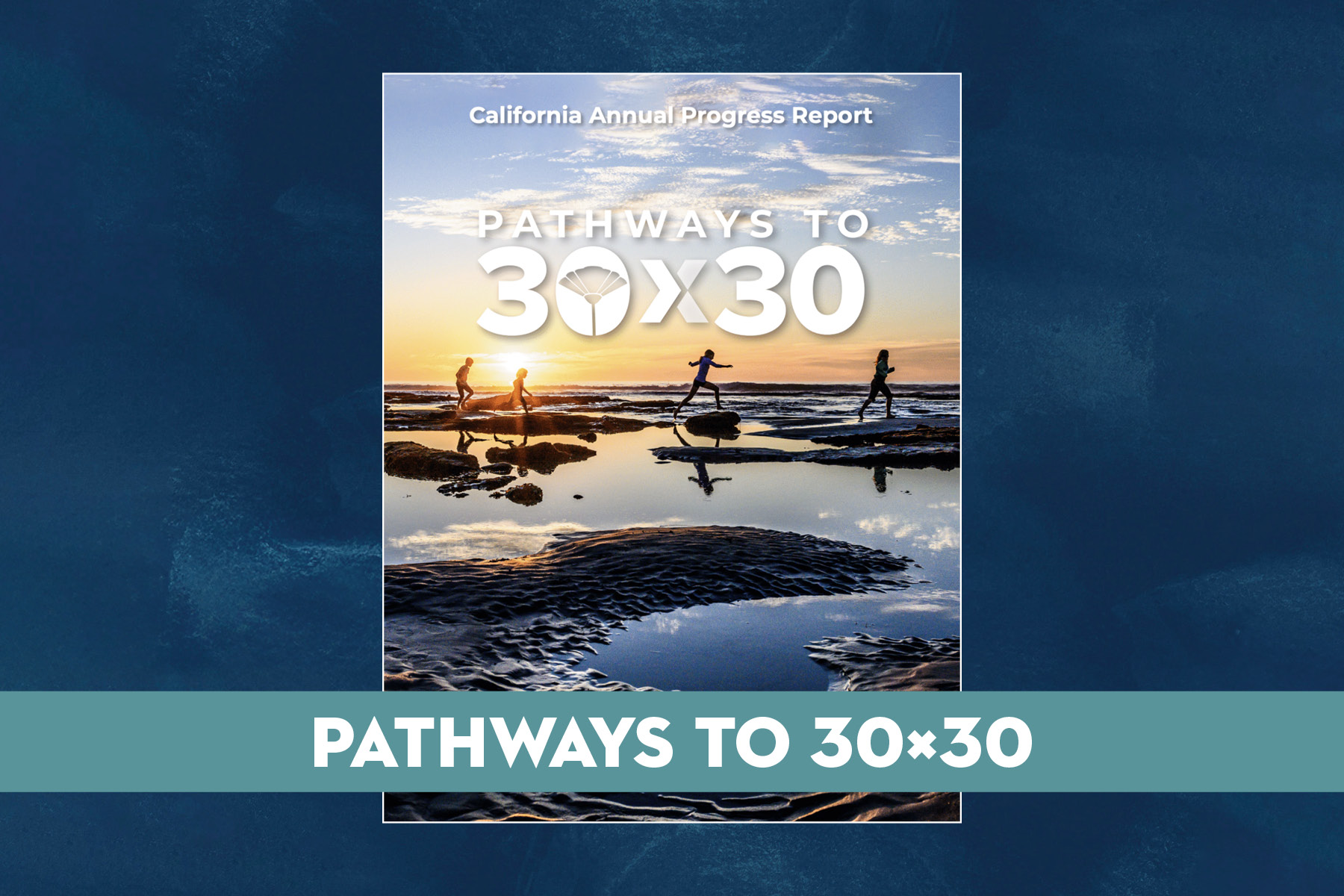
California has now passed the halfway mark in its effort to conserve 30% of its lands and coastal waters by 2030. According to the latest Pathways to 30×30 Annual Progress Report, the state has conserved 26.1% of its lands and 21.9% of its coastal waters.
Before we get into the numbers, it’s important to understand what qualifies as “conserved.” As defined by Pathways, qualified 30×30 conservation areas are “land and coastal water areas that are durably protected and managed to sustain functional ecosystems, both intact and restored, and the diversity of life that they support.” To be conserved, land and water must not only be protected from development, but also actively cared for over the long term through stewardship and adaptive management that integrates the best available science and Traditional Ecological Knowledge, ensuring ecosystems can function and respond to change over time.
Over the past year, California advanced its 30×30 goals by approximately one percentage point—adding about 853,000 acres of conserved land and 191,000 acres of coastal waters toward the totals. In a state as big as California, that one percentage point represents a huge amount of land and water, but we’ll need to pick up the pace if we want to reach 30% by 2030.
In November 2024, California voters approved Proposition 4, a climate and nature-focused bond intended to support biodiversity, climate resilience, and conservation work across the state. The approval of Prop 4 demonstrated strong public support—over 65% in Sonoma County—for protecting nature. However, much of the Prop 4 funding is currently frozen, creating uncertainty about when and how those resources will be mobilized to support 30×30 actions on the ground.
“Getting Prop 4 funds released is critical in advancing 30×30 goals,” Ariana Rickard, Policy Director, says. “We need our legislators to pass legislation to exempt Proposition 4 funds from the Administrative Procedure Act (APA) process. This will allow agencies—like CAL FIRE, Wildlife Conservation Board, the State Coastal Conservancy—to get Prop 4 funding out the door for urgent climate, wildfire resilience, water, and conservation projects.”
Meeting the 30×30 target will require conserving millions more acres of land and water over the next four years. This will demand sustained funding, strong political leadership, and coordination among local land trusts, tribes, public agencies, and community partners.
In Sonoma County, conservation efforts are making slow but meaningful strides. Local data from the Bay Area Greenprint shows that, as of January 2026, Sonoma County has conserved roughly 23% of its land base—up 1% from last year. If we were to rank Bay Area counties by the percentage of land protected by fee ownership or conservation easement, that puts us at 7th out of 9th place—above San Francisco but below Alameda counties. It’s not a competition, though! The more land and water protected, the better for everyone. We’re all in this together! It does however mean that we have to increase the pace and scale of this effort to reach our goals.
While land protection has advanced steadily, water conservation remains a key challenge across the state. Coastal waters and inland aquatic ecosystems—like freshwater streams and wetlands—are critical for biodiversity, carbon sequestration, and climate adaptation, yet they remain the areas furthest from 30×30 targets. Accelerating protection and restoration of marshes, estuaries, rivers, and coastal waters is an urgent priority.
Looking ahead, the path to 30×30 will depend on using public and private resources effectively. That includes making strategic investments, like those promised through Prop 4, paired with regional conservation strategies and community partnerships. Conservation at this scale will require sustained commitment and innovative approaches to protecting nature in a changing climate, both meteorological and political.
The progress documented in this latest report shows that 30×30 is attainable! California has built a strong foundation with clear conservation pathways in place, sustained funding mechanisms established, improved systems for data tracking, and active partnerships across tribes, land trusts, agencies, and communities statewide. The question now is less whether California can reach its conservation goals, but more how quickly and equitably we can get there—especially for our coastal waters.
Need a refresher on 30×30? Learn more about 30×30 here and how our work supports 30×30 here.