Blog
April 2025 eNews
Fire and flora: how wildfires reveal plant evolution
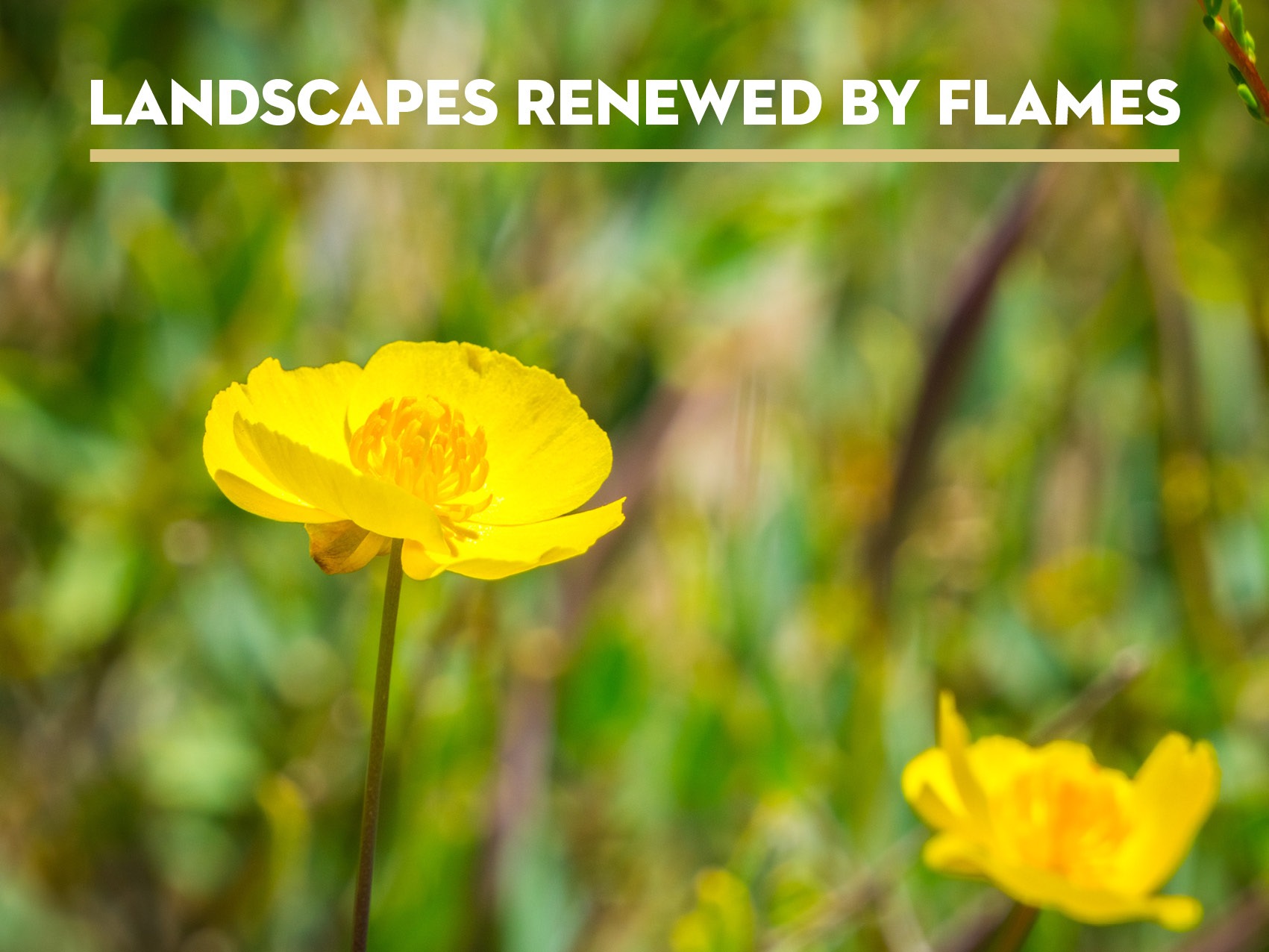
In the rugged landscapes of Sonoma County, the Nuns Fire of 2017 and the Kincade Fire of 2019 left their indelible mark on the land. Yet, beneath the charred earth and blackened forests, a powerful ecological story emerged—one of resilience and renewal. These wildfires have provided compelling evidence that plants in Northern California have evolved alongside fire, thriving and returning in its aftermath, with some reawakening after decades of dormancy.
Evolution Through Fire
For millions of years, plants have adapted to survive and even flourish in fire-prone environments. Many species in Northern California possess fire-adapted traits, such as underground bulbs and rhizomes, that allow them to regenerate after a blaze. However, some species go beyond mere survival; they depend on fire to reproduce. These “fire followers” have evolved strategies to take advantage of the nutrient-rich, open landscapes that wildfires leave behind.
Sonoma Land Trust’s Living Laboratory
At Sonoma Land Trust’s Glen Oaks Ranch and Secret Pasture Preserves, the impact of fire on botanical communities has been profound. One remarkable example is the Bush poppy (Dendromecon rigida), which thrives on open ground after a fire. With a short lifespan of six to ten years, this plant often disappears as other species outcompete it. However, its seeds lie dormant in the soil, awaiting the next blaze to complete their life cycle. Today, these golden blooms can be found on the ridge above Merganser Pond at Hood Mountain Regional Park
A Surge in Species Abundance
In the wake of the wildfires in 2017 and 2019, pre-eminent botanist Peter Warner conducted surveys on four Sonoma Land Trust properties, including Glen Oaks and Secret Pasture. Warner found 30% more plant species during post-fire surveys than he did during the same type of survey in 2015. Notably, this included surges in the abundance of certain rare species. Species that had been dormant for decades reappeared, revealing the hidden vitality that fire can unlock.
This phenomenon was echoed in the Fire Followers Campaign, a community science initiative led by the California Native Plant Society (CNPS). Through iNaturalist, tens of thousands of community scientists documented botanical finds in 2020 and 2021, further confirming the resurgence of fire-adapted species.
A Case for Prescribed Fire
While the resurgence of plants like the Bush poppy is a hopeful reminder of nature’s resilience, ecosystems and their diversity can suffer when humans alter natural fire regimes. In southern California, fire-adapted chaparral communities have been in decline because the fires have been too frequent, too intense, and too large. In our area, oak forests suffer from too little fire, which leads to a buildup of fuels and competing vegetation. Many communities have faced devastating losses from catastrophic wildfires too, as the recent 2025 Eaton Fire and Pacific Palisades reminded us. The challenge ahead lies in finding a way to foster a more “pyro-diverse” landscape—one that supports a mosaic of vegetation ages and conditions, reduces fuel loads, and protects both ecosystems and human communities.
The wildfires that tore through Sonoma County years ago revealed a deeper ecological truth: plants here have evolved with fire and thrive in its aftermath. From the resilient rhizomes beneath the soil to the vibrant blooms of the Bush poppy, these botanical communities demonstrate the power of adaptation. Looking to the future, what might happen if we embrace fire as a natural process and manage it carefully? Over time, we may see the vitality of these unique ecosystems grow even more.
Grab a guide and get outside
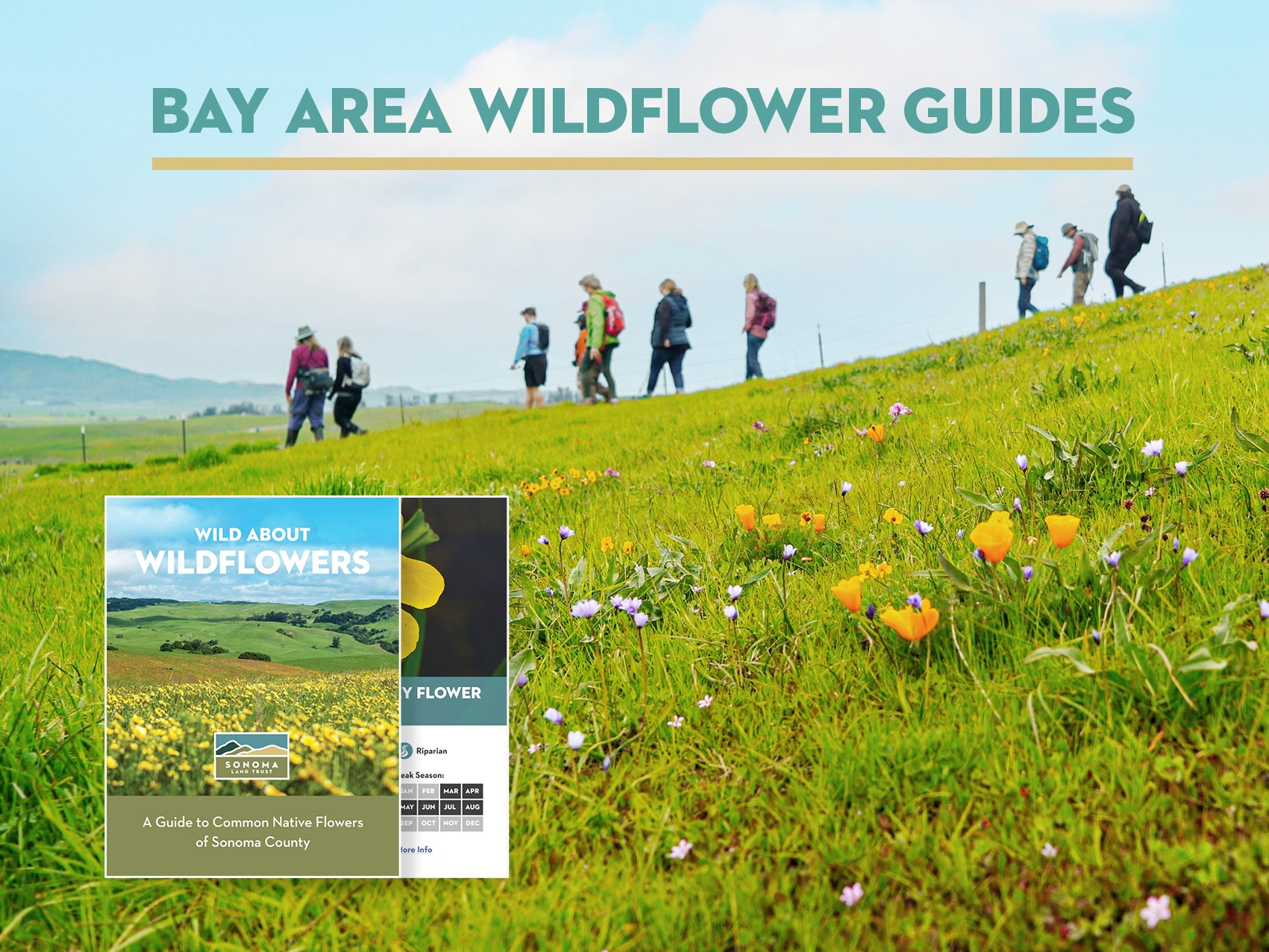
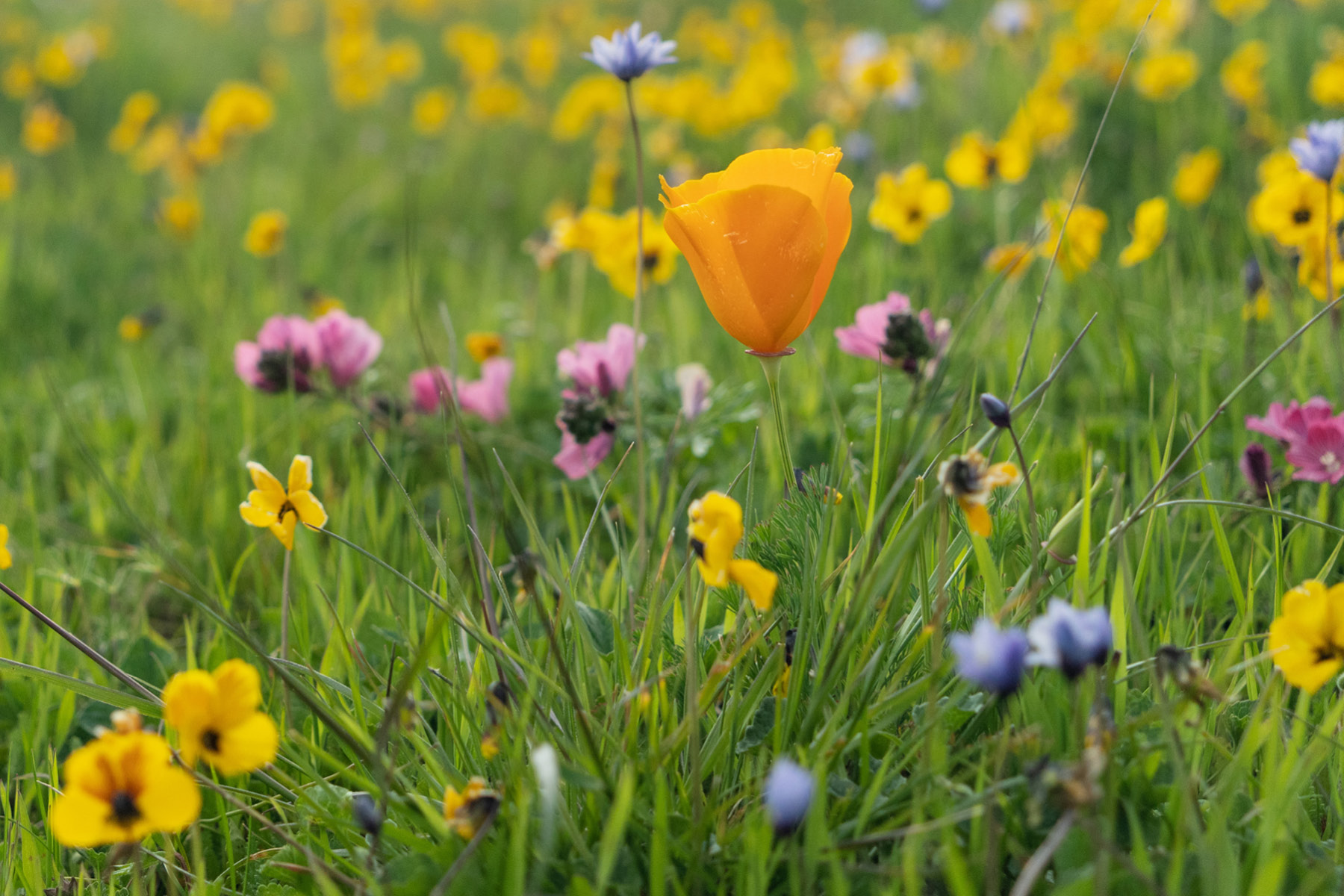
Want to learn more about wildflowers? Need a local guide to boost your wildflower ID skills? There are so many resources available. When outside and hiking, please remember that you are a part of nature and that your actions make a huge difference. Please stay on the main trails, pack out any trash, and respect these special and colorful places where wildflowers thrive.
Here’s that list of guides and articles from various organizations based in Sonoma County, the San Francisco Bay Area, and California. We hope they add a sense of adventure to your wanderings this spring.
Sonoma County Guides and Resources
- Wildflower Guide from Sonoma Land Trust;
- Wildflowers of Sonoma County by Sonoma County Regional Parks;
- LandPaths zine that includes wildflower ID and insight;
- Wildflowers on the Sonoma Coast – short article by The Wildlands Conservancy at Jenner Headlands;
- UC Master Gardener Program of Sonoma County – great resources on native plants (including wildflowers) to plant in gardens.
SF Bay Area Guides and Resources
- 21 Beautiful Native Wildflowers of Mount Diablo from Save Mount Diablo;
- Rare Botanical Gems – short article by Napa Land Trust;
- Jepson Prairie Wildflowers – longer article from Solano Land Trust;
- Wildflower Resources from Bay Nature.
Statewide Guides and Resources
- Calflora – A nonprofit database to learn about wild plants of California;
- California Plants to Color – Coloring pages made available by the US Forest Service;
- California Wildflowers Guide from California Native Plant Society;
- iNaturalist – If there is a particular wildflower you’d love to see, enter the name and see if there have been any observations near you.
Let us know what you find out there and enjoy your time outside!
Join the Legacy League
Join Sonoma Land Trust’s Legacy League and make a lasting impact—commit a future gift in your will or trust, and Dianne Brinson and Mark Radcliffe will donate $1,000 now, up to $30,000, to support critical conservation projects today.
News
Welcome Chloe!

Please join us in welcoming Chloe Howard to the Sonoma Land Trust team as the Community Engagement Programs Assistant! Chloe brings a passion for science and conservation to her role and shares her deep love of nature with the world.
Community events
Santa Rosa Earth Day Celebration
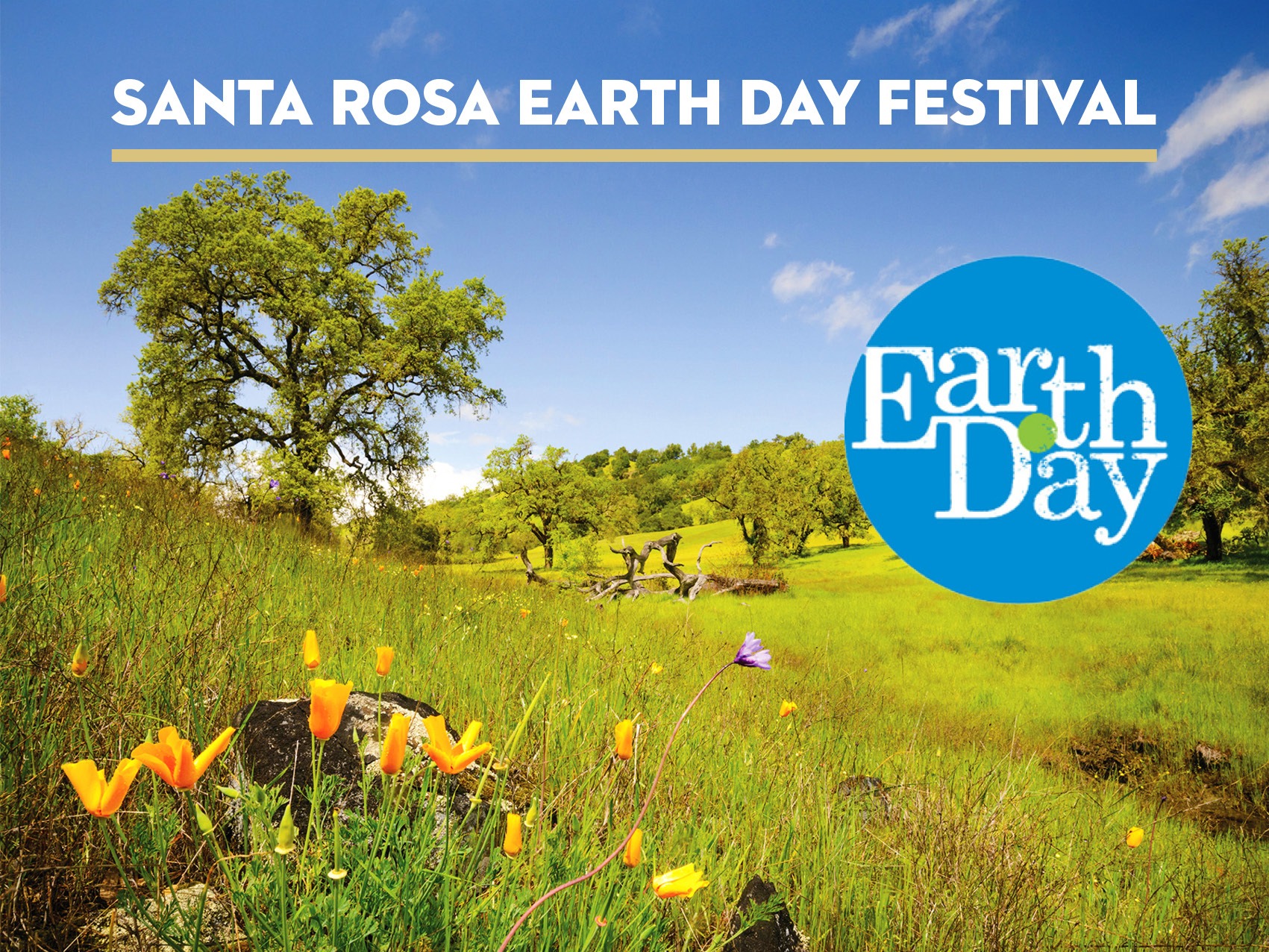
Date: Saturday April 26, 2025
Time: 12pm-4pm
Location: Santa Rosa Courthouse Square
Find our booth at the family-friendly, zero-waste Earth Day festival with live performing arts, great food, and inspiring exhibits that raise environmental awareness.
Cinco de Mayo
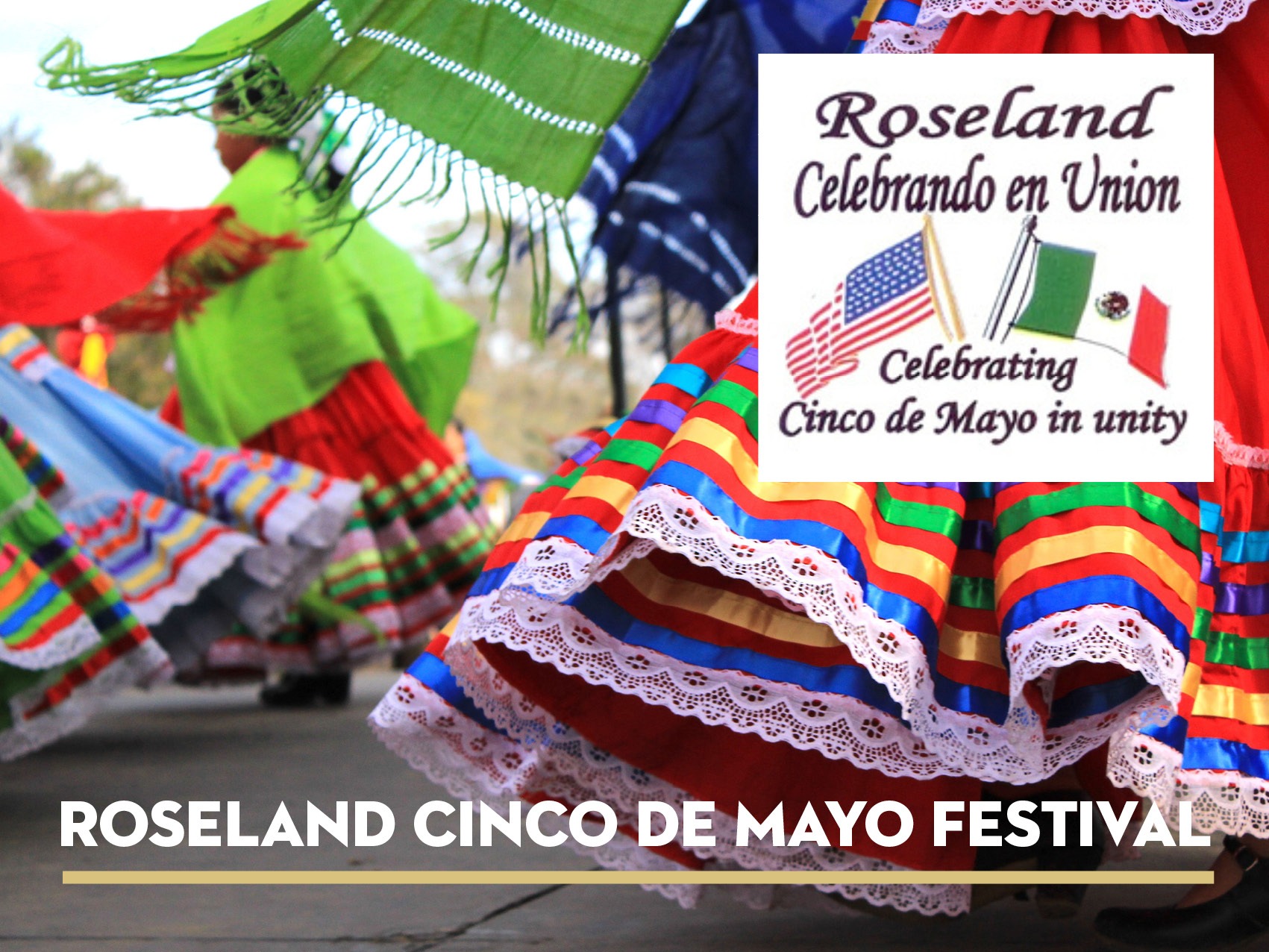
Date: Monday, May 5,
Time: 4pm-9pm
Location: Sebastopol Road
The festival features local entertainment, fun for the kids, informational booths, food trucks,, crowning the “Reina del Cinco de Mayo”, and an awesome low-rider car show.
Save the Date – Child in the Wild

Date: Sunday June 1
Time: 12pm-4pm
Location: Howarth Park
Child in the Wild: Niños en la naturaleza We are hosting our fourth annual family-friendly event with live music, crafts, bounce houses, food trucks, vendors, and more! Learn about the Southeast Greenway and share your vision for the new park.
Free outings
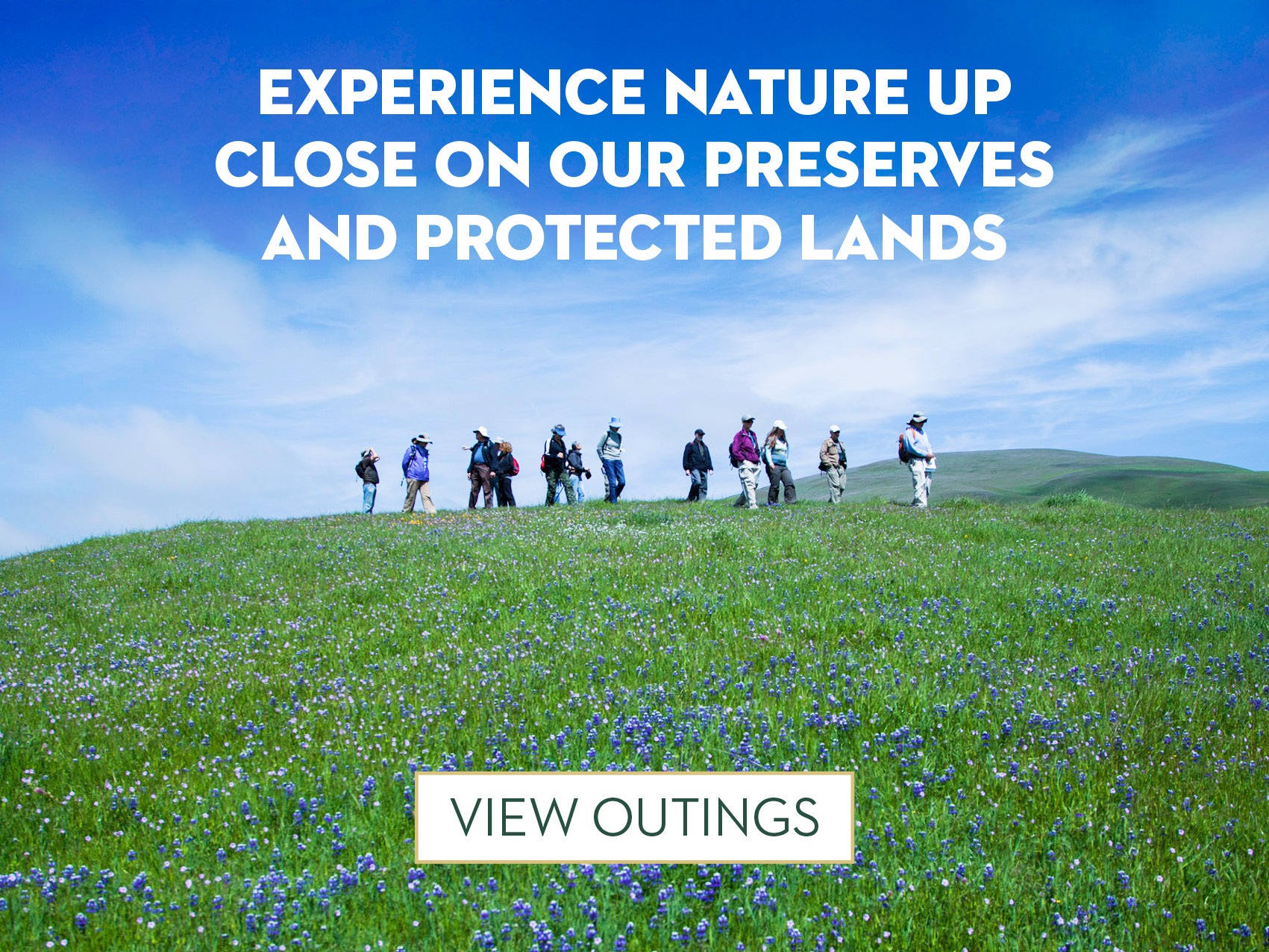
Join us out in nature this month! In addition to our monthly bilingual Familias al Aire Libre/Families Outdoors outing, we’re hosting a series of weekend hikes across the county, including wildflower walks.
Many of these hikes are in partnership with Sonoma County Ag + Open Space.
New Program!
Community in Nature: Wellness Wednesdays
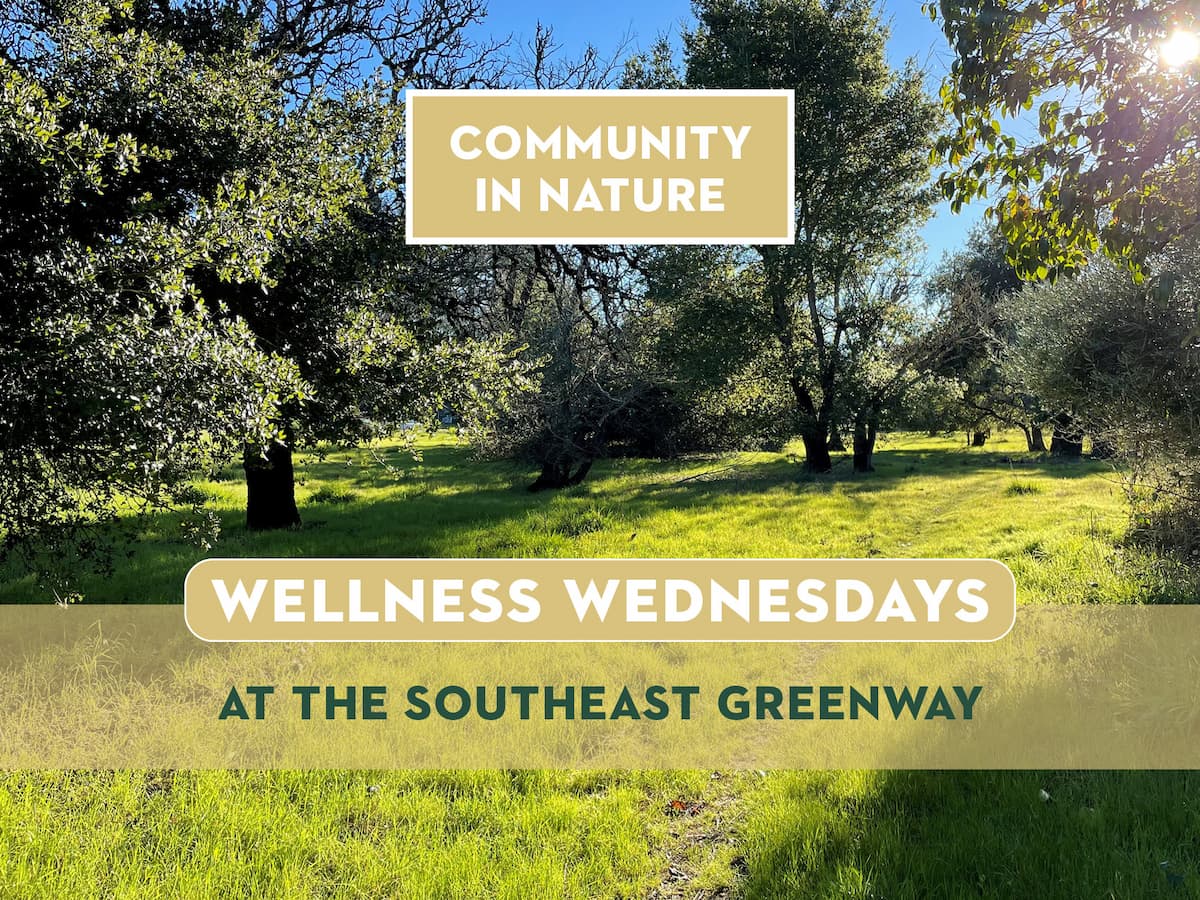
Dates: Wednesdays starting April 9
Time: 3pm-4pm
Location: At the future Santa Rosa Southeast Greenway park, by the Friedman Center
Pre-registration required: space is limited
Join us for Wellness Wednesdays featuring yoga, sound healing, and forest bathing.
Experience balance and connection with Sonoma Land Trust’s free Community in Nature program at the future Southeast Greenway.
Earth Day BioBlitz at the Southeast Greenway
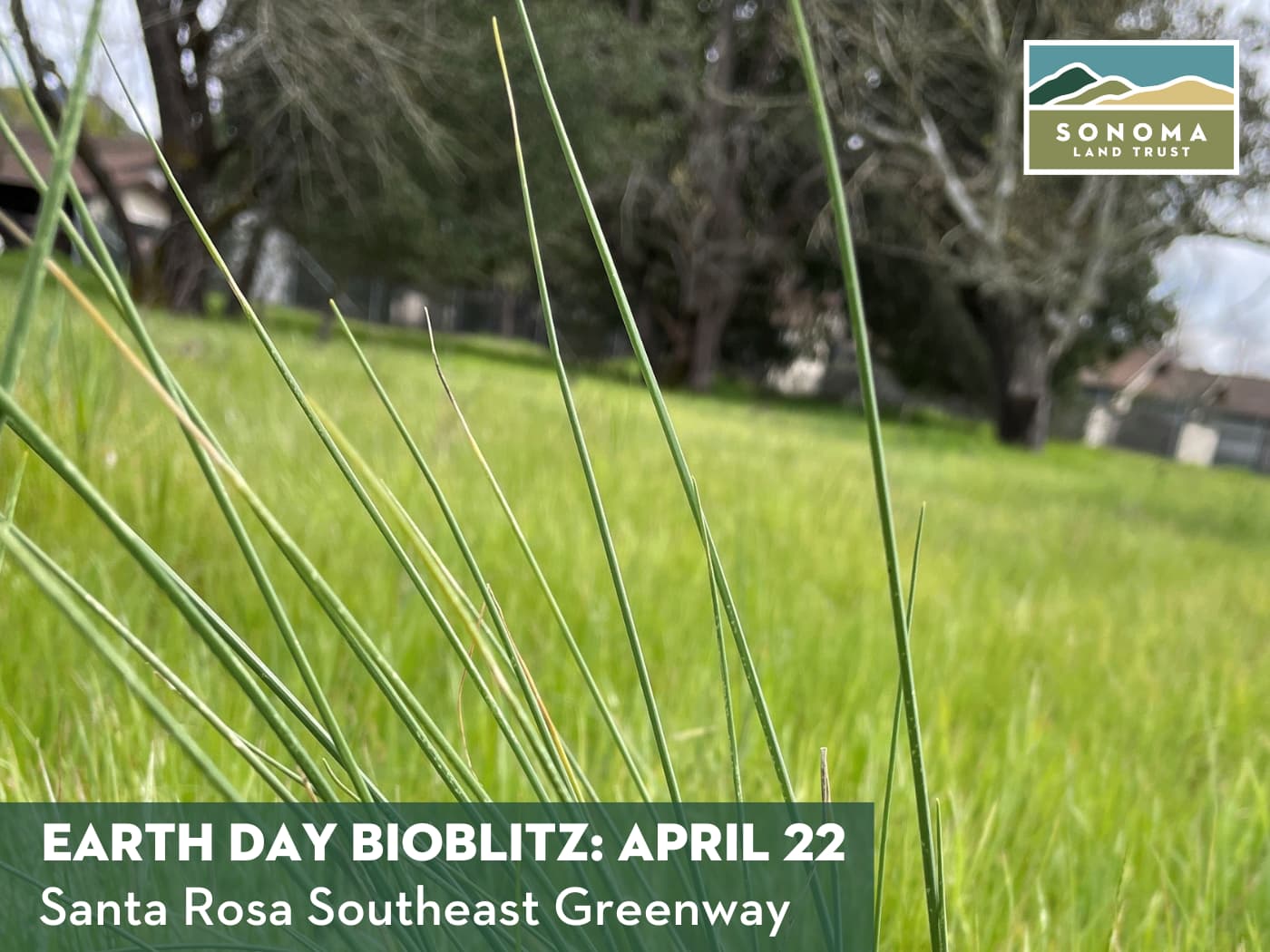
Date: April 22
Time: 4pm
Meet on Franquette Ave, east of Montgomery High School
Join Sonoma Land Trust and guest presenter Sarah Reid for an Earth Day Bioblitz on the Santa Rosa Southeast Greenway! We’ll start off the day with an orientation by Sarah Reid, who will teach us how to use the iNaturalist app and give us tips for getting the best photos for identification. Then feel free to wander the Southeast Greenway and take photos documenting all the nature you find!
Staff recommendation

This field guide from California Native Plant Society highlights over 1,200 wildflowers commonly found in California. It’s organized by flower color and family, which is so helpful. It also includes fun maps!